THE ADVENTURE COLLECTIVE® · Independent discovery and booking for outdoor travel

Explore Tulum’s clifftop ruins and swim in the cavernous Taak-bi-ha cenote on a private half-day tour. Perfect for travelers who want a concise mix of archaeology, geology and a refreshing cenote swim.
Explore Tulum’s clifftop ruins and swim in the cavernous Taak-bi-ha cenote on a private half-day tour. Perfect for travelers who want a concise mix of archaeology, geology and a refreshing cenote swim.
Stepping off the van, the Caribbean wind pushes across the cliff and the stone ruins seem to meet the sea halfway — the Castillo watches a coastline that still feels slightly wild. Visitors move through sunlit plazas where the bones of a trading port stand exposed, then drive inland to a cavern cenote where light filters into clear water and stalactites point like old teeth.
Verified experiences and guided adventures in the surrounding area.
Operated by Carey Tours Riviera Maya · Tulum, Quintana Roo
Stepping off the van, the Caribbean wind pushes across the cliff and the stone ruins seem to meet the sea halfway — the Castillo watches a coastline that still feels slightly wild. Visitors move through sunlit plazas where the bones of a trading port stand exposed, then drive inland to a cavern cenote where light filters into clear water and stalactites point like old teeth.
Tulum was a late-Postclassic Maya coastal fortress and trading hub; its limestone cliffs are part of a low karst coast carved by a network of subterranean rivers. Cenotes such as Taak-bi-ha are collapsed caverns that reveal those aquifers — fresh water that sustained Maya settlements and still supplies the peninsula. Culturally, the stopover between ruins and cenote ties pre-Hispanic history to living Yucatecan cuisine: the included regional lunch demonstrates local flavors and hospitality.
Practically, expect a half-day private tour (about six hours) with hotel pickup, a guided hour at the archaeological site, and a supervised swim/snorkel in a cavern cenote. Terrain ranges from packed-sand archaeological paths to uneven limestone steps and a short walk into the cenote chamber. Bring reef‑safe sunscreen, a hat, sturdy shoes for the ruins, and a swimsuit for the cave swim. Basic swimming ability is required for snorkeling. Midday heat is strong; hydrate and time photos for the softer morning or late-afternoon light.
This itinerary blends archaeology, geology and hands-on nature: ancient walls daring you to read their lines, and a cold freshwater cavern that rewards the plunge.
moderate.
6 hours.
Moderate fitness — able to walk on uneven ground, climb steps, and swim short distances for snorkeling.
Yes — private transportation with hotel pickup is included; confirm your pickup point at booking.
Basic swimming ability is required for snorkeling in the cenote; life jackets are typically provided for less confident swimmers.
Some parts are accessible, but the archaeological site and cenote involve steps and uneven paths; contact the operator for specific accommodations.
A regional Mexican lunch is included, usually served at a local restaurant after the cenote visit; notify operators of dietary restrictions when booking.
Tulum is a late-Postclassic Maya site that functioned as a fortified trading port; its walls reflect centuries of coastal trade and ritual use of freshwater cenotes.
Cenotes are part of the Yucatán’s fragile aquifer; use reef-safe products, avoid touching formations, and follow local rules to protect water quality.
Carey Tours Riviera Maya operates guided outdoor trips and adventures with an emphasis on safety, stewardship, and memorable experiences.
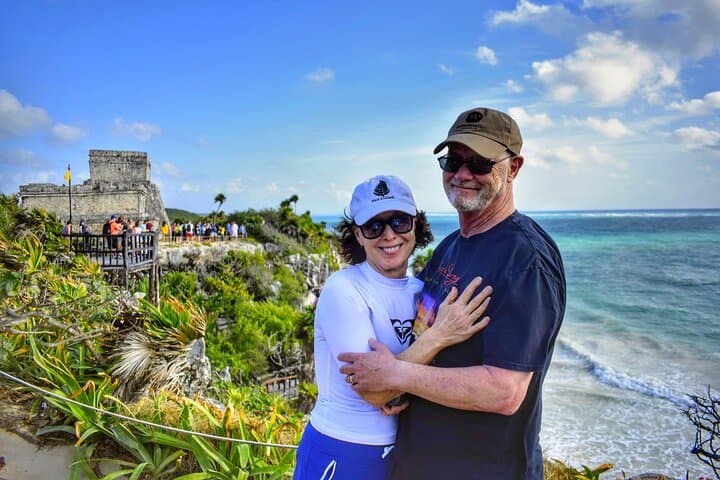


Stepping off the van, the Caribbean wind pushes across the cliff and the stone ruins seem to meet the sea halfway — the Castillo watches a coastline that still feels slightly wild. Visitors move through sunlit plazas where the bones of a trading port stand exposed, then drive inland to a cavern cenote where light filters into clear water and stalactites point like old teeth.
Stepping off the van, the Caribbean wind pushes across the cliff and the stone ruins seem to meet the sea halfway — the Castillo watches a coastline that still feels slightly wild. Visitors move through sunlit plazas where the bones of a trading port stand exposed, then drive inland to a cavern cenote where light filters into clear water and stalactites point like old teeth.
Tulum was a late-Postclassic Maya coastal fortress and trading hub; its limestone cliffs are part of a low karst coast carved by a network of subterranean rivers. Cenotes such as Taak-bi-ha are collapsed caverns that reveal those aquifers — fresh water that sustained Maya settlements and still supplies the peninsula. Culturally, the stopover between ruins and cenote ties pre-Hispanic history to living Yucatecan cuisine: the included regional lunch demonstrates local flavors and hospitality.
Practically, expect a half-day private tour (about six hours) with hotel pickup, a guided hour at the archaeological site, and a supervised swim/snorkel in a cavern cenote. Terrain ranges from packed-sand archaeological paths to uneven limestone steps and a short walk into the cenote chamber. Bring reef‑safe sunscreen, a hat, sturdy shoes for the ruins, and a swimsuit for the cave swim. Basic swimming ability is required for snorkeling. Midday heat is strong; hydrate and time photos for the softer morning or late-afternoon light.
This itinerary blends archaeology, geology and hands-on nature: ancient walls daring you to read their lines, and a cold freshwater cavern that rewards the plunge.