THE ADVENTURE COLLECTIVE® · Independent discovery and booking for outdoor travel

Drive from Athens to Cape Sounion for a private visit to the Temple of Poseidon—choose sunrise calm or dramatic sunset light. This 4‑hour private transfer covers pick-up from airport, port, or hotel and delivers focused time at one of Greece’s most iconic coastal ruins.
Drive from Athens to Cape Sounion for a private visit to the Temple of Poseidon—choose sunrise calm or dramatic sunset light. This 4‑hour private transfer covers pick-up from airport, port, or hotel and delivers focused time at one of Greece’s most iconic coastal ruins.
The sea wind arrives before the temple: salt on your skin, gulls wheel against a sky that can go from harsh blue to molten gold in an hour. The drive from Athens loosens the city’s geometry into coastal curves, and then Cape Sounion appears as a white silhouette on a rocky headland with the Doric columns of Poseidon's temple standing like an invitation.
Verified experiences and guided adventures in the surrounding area.
Operated by Beyond Tourz · Sounio, Attica
The sea wind arrives before the temple: salt on your skin, gulls wheel against a sky that can go from harsh blue to molten gold in an hour. The drive from Athens loosens the city’s geometry into coastal curves, and then Cape Sounion appears as a white silhouette on a rocky headland with the Doric columns of Poseidon's temple standing like an invitation.
Built of Pentelic marble in the mid-5th century BCE, the temple watches over the Aegean where the coastline drops 50–70 meters into the sea. Geologically, the headland is a mix of schist and limestone, which forms steep cliffs and small coves below—perfect perches for seabirds and for watching ships thread the Saronic Gulf. Local culture still marks the place as more than ruins: sailors historically used the cape as a navigational landmark and modern Athenians treat sunset visits as a ritual.
Expect a short uphill approach from the parking area—roughly 300–400 meters with stone steps and an elevation gain near 50–60 m. The guided private transfer handles logistics: pick-up from airport, port, or hotel, and you can choose morning light or sunset drama. Admission is typically paid on site.
Practical tips: wear sturdy shoes for uneven marble and packed-earth paths, bring sun protection and at least 1 liter of water per person, and allow 3–4 hours for transfer, visit, and photo stops. If you’re chasing light, sunset fills the columns with warm amber but draws crowds; mornings are quieter and better for detailed observation. Respect posted signs—do not climb the ruins—and consider a local guide to add archaeological context and ensure efficient timing for return to your pickup point.
easy.
4 hours.
Suitable for all fitness levels; includes a short uphill walk and some uneven stone surfaces
No—admission is typically paid on site; your private transfer covers transportation and guided time but not the entrance fee.
The booking lists a 240-minute (4‑hour) duration to allow travel, a site visit, and photo stops; travel time from Athens is about 1–1.5 hours each way depending on traffic.
Yes—the trip offers morning or sunset options; sunset is more atmospheric but busier, and pickup times adjust accordingly.
Access is limited—there are uneven stone paths and steps near the temple, so full wheelchair access is not available for the immediate ruins.
The Temple of Poseidon dates to the mid‑5th century BCE and served as a prominent maritime landmark and place of worship for ancient Greek sailors.
Erosion and visitor wear threaten the site; adhere to walkways and signage, avoid climbing on ruins, and support local guides who follow conservation practices.
Beyond Tourz operates guided outdoor trips and adventures with an emphasis on safety, stewardship, and memorable experiences.
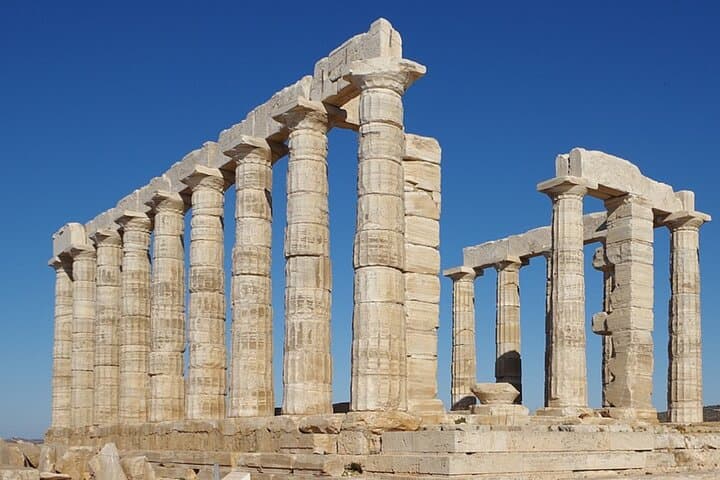
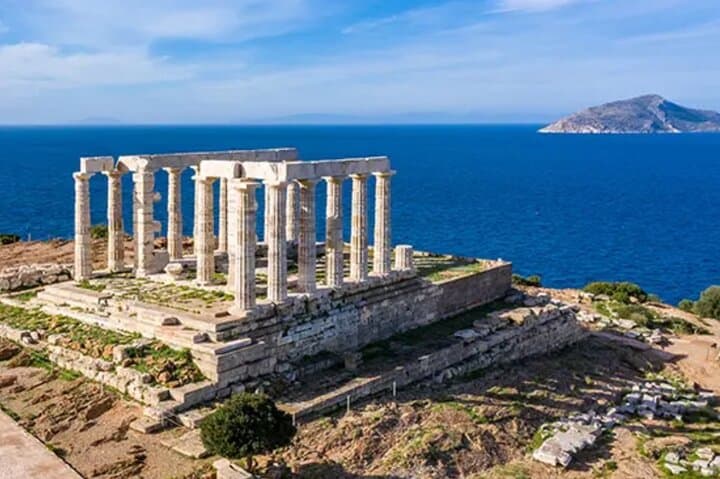
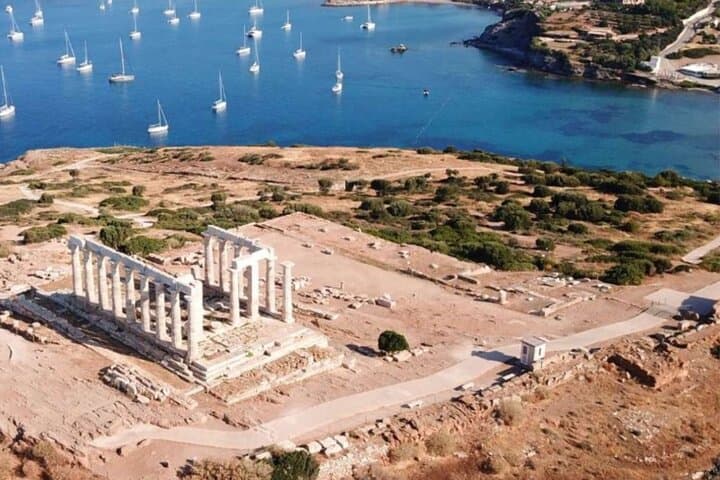
The sea wind arrives before the temple: salt on your skin, gulls wheel against a sky that can go from harsh blue to molten gold in an hour. The drive from Athens loosens the city’s geometry into coastal curves, and then Cape Sounion appears as a white silhouette on a rocky headland with the Doric columns of Poseidon's temple standing like an invitation.
The sea wind arrives before the temple: salt on your skin, gulls wheel against a sky that can go from harsh blue to molten gold in an hour. The drive from Athens loosens the city’s geometry into coastal curves, and then Cape Sounion appears as a white silhouette on a rocky headland with the Doric columns of Poseidon's temple standing like an invitation.
Built of Pentelic marble in the mid-5th century BCE, the temple watches over the Aegean where the coastline drops 50–70 meters into the sea. Geologically, the headland is a mix of schist and limestone, which forms steep cliffs and small coves below—perfect perches for seabirds and for watching ships thread the Saronic Gulf. Local culture still marks the place as more than ruins: sailors historically used the cape as a navigational landmark and modern Athenians treat sunset visits as a ritual.
Expect a short uphill approach from the parking area—roughly 300–400 meters with stone steps and an elevation gain near 50–60 m. The guided private transfer handles logistics: pick-up from airport, port, or hotel, and you can choose morning light or sunset drama. Admission is typically paid on site.
Practical tips: wear sturdy shoes for uneven marble and packed-earth paths, bring sun protection and at least 1 liter of water per person, and allow 3–4 hours for transfer, visit, and photo stops. If you’re chasing light, sunset fills the columns with warm amber but draws crowds; mornings are quieter and better for detailed observation. Respect posted signs—do not climb the ruins—and consider a local guide to add archaeological context and ensure efficient timing for return to your pickup point.