THE ADVENTURE COLLECTIVE® · Independent discovery and booking for outdoor travel

Skip the crowded buses and arrive ready to swim, soak, and explore. This private transfer to Grutas de Tolantongo delivers flexibility and comfort for a full day in Hidalgo’s thermal canyon.
Skip the crowded buses and arrive ready to swim, soak, and explore. This private transfer to Grutas de Tolantongo delivers flexibility and comfort for a full day in Hidalgo’s thermal canyon.
You step out of the van onto warm stone, steam lifting off a string of turquoise pools that thread the canyon like beaded glass. The air smells faintly of minerals and pine; the river ahead gurgles and dares you to follow its carved corridor upstream to a cave where hot water pours from the rock.
Verified experiences and guided adventures in the surrounding area.
Operated by Carlos San Roman · Ixmiquilpan, Hidalgo
You step out of the van onto warm stone, steam lifting off a string of turquoise pools that thread the canyon like beaded glass. The air smells faintly of minerals and pine; the river ahead gurgles and dares you to follow its carved corridor upstream to a cave where hot water pours from the rock.
The Tolantongo valley sits in Hidalgo’s rugged highlands, an intersection of volcanic flows and travertine-depositing springs. Local Otomí communities have long known these waters for healing and ritual; the site’s terraces and grottos are shaped by decades of mineral-laden runoff that builds stepped pools and narrow channels.
Culturally, the area is small-scale and service-oriented: family-run food stalls, rustic lodges, and vendors selling handwoven textiles. Geology and a temperate mountain climate produce a mix of pine slopes, exposed tufa, and a narrow canyon that channels the thermal river.
Practically, this private transfer removes the guesswork: expect roughly a 3–3.5 hour drive from Mexico City, arrival mid-morning, and a return in the late afternoon. The park involves stone steps, uneven trails along the river, and a cave grotto that can be slippery. Carry water, non-slip water shoes, and a small towel; lockers and changing areas exist but can be busy. Peak crowds build around midday on weekends—early arrival or late afternoons are quieter.
Plan for a moderate day: swim in warm, mineral-rich pools, hike short canyon stretches, and sit on sun-warmed terraces. With private transport you gain flexibility to pace exploration, take breaks at local food stalls, and exit before the busiest hours, leaving the canyon to its slow, steaming rhythm.
moderate.
7–9 hours.
Moderate fitness recommended: involves walking on uneven, stepped terrain and short hikes along the canyon.
Expect about 3 to 3.5 hours each way depending on traffic; the tour typically departs early morning and returns late afternoon.
Yes—there are shallow terraces suitable for kids, but supervision is required and non-slip footwear is recommended.
Towels are useful; the park has changing areas and lockers but availability can be limited on busy days and may require cash.
The grotto and many terraces involve steps and uneven surfaces, so access is limited for those with mobility impairments.
Local Otomí communities used the hot springs historically for ritual and therapeutic uses; the modern tourist site developed in the late 20th century around the natural terraces.
The site is sensitive to foot traffic and litter—stick to marked paths, avoid soaps in the springs, and support local services to incentivize sustainable management.
Carlos San Roman operates guided outdoor trips and adventures with an emphasis on safety, stewardship, and memorable experiences.

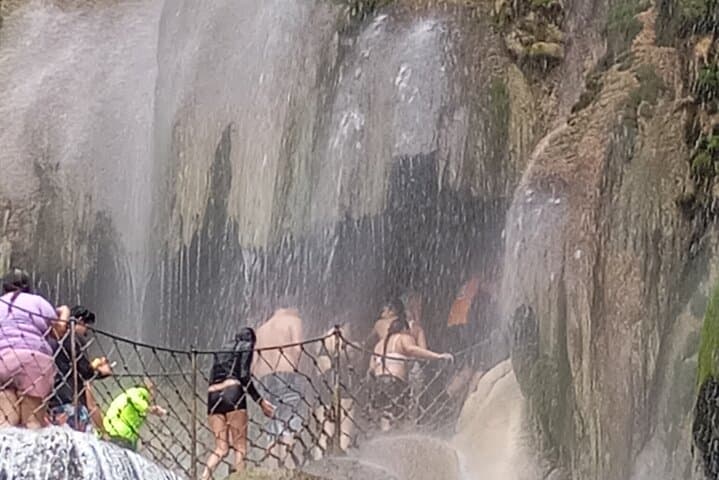
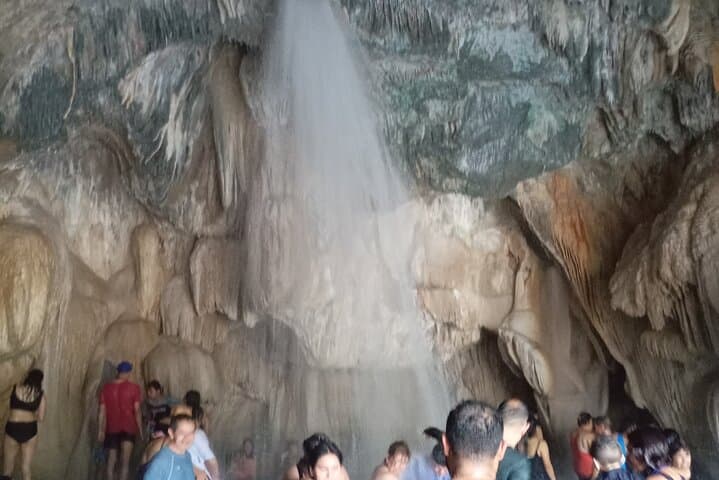
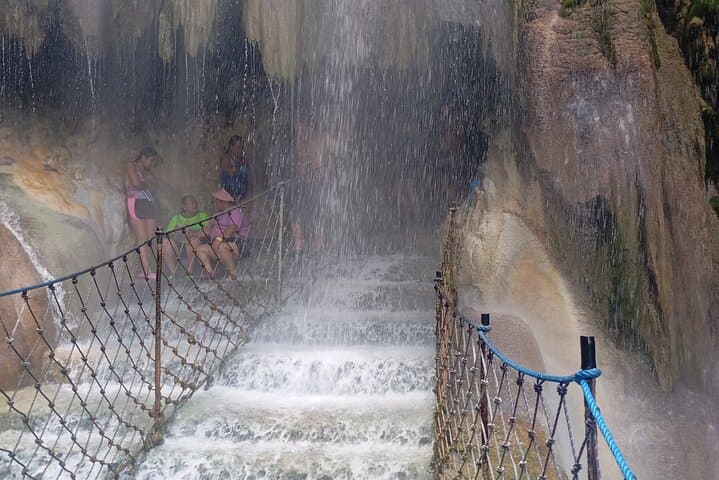
You step out of the van onto warm stone, steam lifting off a string of turquoise pools that thread the canyon like beaded glass. The air smells faintly of minerals and pine; the river ahead gurgles and dares you to follow its carved corridor upstream to a cave where hot water pours from the rock.
You step out of the van onto warm stone, steam lifting off a string of turquoise pools that thread the canyon like beaded glass. The air smells faintly of minerals and pine; the river ahead gurgles and dares you to follow its carved corridor upstream to a cave where hot water pours from the rock.
The Tolantongo valley sits in Hidalgo’s rugged highlands, an intersection of volcanic flows and travertine-depositing springs. Local Otomí communities have long known these waters for healing and ritual; the site’s terraces and grottos are shaped by decades of mineral-laden runoff that builds stepped pools and narrow channels.
Culturally, the area is small-scale and service-oriented: family-run food stalls, rustic lodges, and vendors selling handwoven textiles. Geology and a temperate mountain climate produce a mix of pine slopes, exposed tufa, and a narrow canyon that channels the thermal river.
Practically, this private transfer removes the guesswork: expect roughly a 3–3.5 hour drive from Mexico City, arrival mid-morning, and a return in the late afternoon. The park involves stone steps, uneven trails along the river, and a cave grotto that can be slippery. Carry water, non-slip water shoes, and a small towel; lockers and changing areas exist but can be busy. Peak crowds build around midday on weekends—early arrival or late afternoons are quieter.
Plan for a moderate day: swim in warm, mineral-rich pools, hike short canyon stretches, and sit on sun-warmed terraces. With private transport you gain flexibility to pace exploration, take breaks at local food stalls, and exit before the busiest hours, leaving the canyon to its slow, steaming rhythm.