THE ADVENTURE COLLECTIVE® · Independent discovery and booking for outdoor travel

A private door-to-door transfer from Da Nang delivers you to Ba Na Hills and the Golden Bridge for a full-day summit of panoramic views and heritage sites. This practical day trip pairs fast cable-car access with time to explore pagodas, French-inspired architecture and forested trails.
A private door-to-door transfer from Da Nang delivers you to Ba Na Hills and the Golden Bridge for a full-day summit of panoramic views and heritage sites. This practical day trip pairs fast cable-car access with time to explore pagodas, French-inspired architecture and forested trails.
Morning fog fingered the pines as the cable car rose above Mo Stream toward the Golden Bridge, a hand-shaped span that hooks the eye and slows your breath.
The ascent from the mountain station unwraps a patchwork of montane forest, limestone crags and terraced gardens, the city of Da Nang shrinking down the valley below.
Verified experiences and guided adventures in the surrounding area.
Operated by Hoi an local tour · Da Nang, Da Nang
Morning fog fingered the pines as the cable car rose above Mo Stream toward the Golden Bridge, a hand-shaped span that hooks the eye and slows your breath.
The ascent from the mountain station unwraps a patchwork of montane forest, limestone crags and terraced gardens, the city of Da Nang shrinking down the valley below.
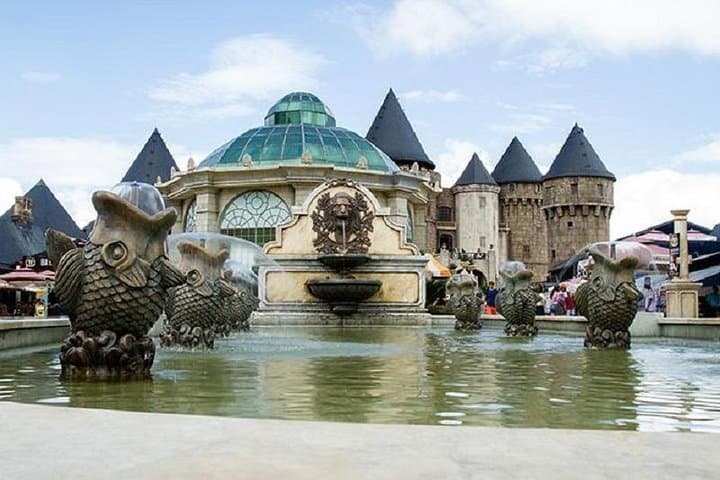
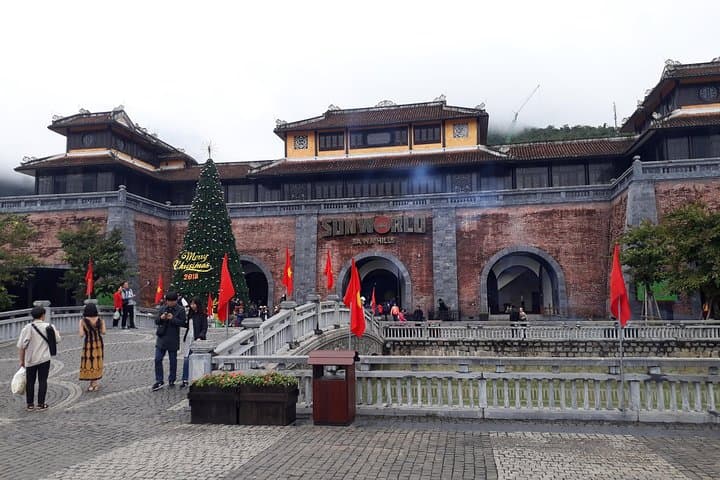
Bà Nà Hills was developed by the French in the early 20th century as a cool-weather retreat; modern development added the record-setting cable car system and a cluster of restored French-style buildings. Geologically the massif is an elevated granite and metamorphic complex whose altitude creates a microclimate commonly several degrees cooler than the coast—locals say the mountain can show four seasons in a single day.
Expect a mix of paved promenades, short stair climbs and elevated viewpoints: the Golden Bridge, Linh Ung pagoda and a large Buddha statue, plus themed attractions like a wine cellar and a small French opera-inspired house. Cultural notes: the summit blends colonial-era architecture with Vietnamese religious sites and contemporary tourism facilities.
Practical guidance: allow about seven hours for pickup, ascent by cable car, a relaxed lunch and return. Bring a light waterproof layer and sturdy walking shoes for steps and slick decking. Carry water and local cash for vendors; start early to avoid peak tour-bus traffic and aim to descend before late-afternoon cloud builds. Mobility access is reasonable for transfers and the cable car, but several viewpoints have steps—bring patience.
easy.
7 hours.
Suitable for most travelers who can walk short distances and manage stairs; not strenuous.
Typical door-to-door duration is about seven hours including cable car time, sightseeing and a relaxed lunch.
Yes—the cable car system provides step-free access to the summit, though some viewpoints and attractions have steps.
Children are welcome but infants must sit on an adult’s lap; bring appropriate supervision for stairs and viewpoints.
Yes—pickups can be arranged from Hoi An as many operators serve both cities; confirm your pickup point at booking.
Bà Nà was established as a French colonial hill station in the early 20th century; modern cable-car links and restorations transformed it into a major mountain resort.
High visitor numbers strain fragile montane vegetation—stick to paths, avoid feeding wildlife, and support local vendors to keep tourism benefits local.
Hoi an local tour operates guided outdoor trips and adventures with an emphasis on safety, stewardship, and memorable experiences.


Morning fog fingered the pines as the cable car rose above Mo Stream toward the Golden Bridge, a hand-shaped span that hooks the eye and slows your breath.
The ascent from the mountain station unwraps a patchwork of montane forest, limestone crags and terraced gardens, the city of Da Nang shrinking down the valley below.
Bà Nà Hills was developed by the French in the early 20th century as a cool-weather retreat; modern development added the record-setting cable car system and a cluster of restored French-style buildings. Geologically the massif is an elevated granite and metamorphic complex whose altitude creates a microclimate commonly several degrees cooler than the coast—locals say the mountain can show four seasons in a single day.
Expect a mix of paved promenades, short stair climbs and elevated viewpoints: the Golden Bridge, Linh Ung pagoda and a large Buddha statue, plus themed attractions like a wine cellar and a small French opera-inspired house. Cultural notes: the summit blends colonial-era architecture with Vietnamese religious sites and contemporary tourism facilities.
Practical guidance: allow about seven hours for pickup, ascent by cable car, a relaxed lunch and return. Bring a light waterproof layer and sturdy walking shoes for steps and slick decking. Carry water and local cash for vendors; start early to avoid peak tour-bus traffic and aim to descend before late-afternoon cloud builds. Mobility access is reasonable for transfers and the cable car, but several viewpoints have steps—bring patience.