THE ADVENTURE COLLECTIVE® · Independent discovery and booking for outdoor travel

Drive east from Yerevan to two of Armenia’s most striking cultural landscapes: the Hellenistic Garni Temple and the cliff-carved Geghard Monastery. This private half-day transfer pairs short walks with geological and historical highlights, ideal for travelers who want high-impact sites with minimal logistics.
Drive east from Yerevan to two of Armenia’s most striking cultural landscapes: the Hellenistic Garni Temple and the cliff-carved Geghard Monastery. This private half-day transfer pairs short walks with geological and historical highlights, ideal for travelers who want high-impact sites with minimal logistics.
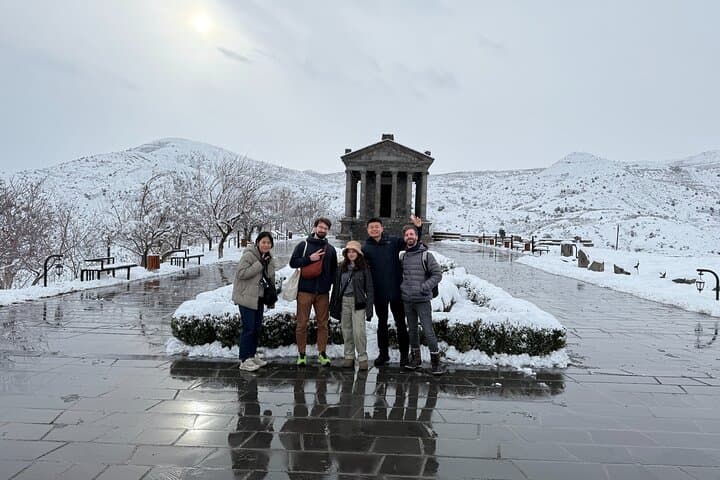
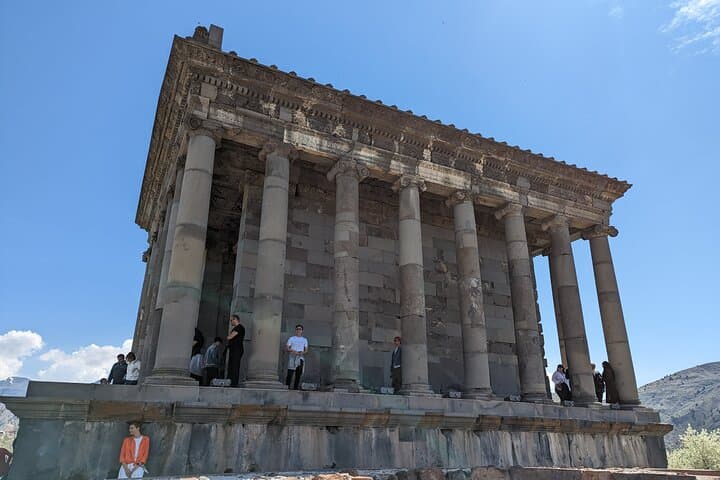
A morning drive east from Yerevan unfolds like a changing map: low hills give way to the carved cliffs of the Azat Valley, and the road dips toward a river that seems to dare you to look over its shoulder. Travelers arrive at Garni to find an Ionic temple standing defiantly above a horseshoe of dark basalt columns — the so-called Symphony of Stones — where the gorge’s geology reads like a page of volcanic history.
Verified experiences and guided adventures in the surrounding area.
Operated by Envoy Tours · Garni, Kotayk
A morning drive east from Yerevan unfolds like a changing map: low hills give way to the carved cliffs of the Azat Valley, and the road dips toward a river that seems to dare you to look over its shoulder. Travelers arrive at Garni to find an Ionic temple standing defiantly above a horseshoe of dark basalt columns — the so-called Symphony of Stones — where the gorge’s geology reads like a page of volcanic history.
Garni’s colonnaded temple dates to the Hellenistic period and survives as Armenia’s principal pre-Christian monument, a rare reminder of the country’s classical connections. A short ride farther brings you to Geghard, a medieval monastery partly hewn from living rock and enshrined by cliffs; it became a UNESCO World Heritage Site for its unique fusion of architecture and landscape. Local culture here folds together folk traditions, Soviet-era memorials (like Charents’ Arch higher on the ridge), and villages where lavash ovens still turn by hand.
Practically speaking, the trip is a half-day private transfer with brief walks at each site: uneven stone paths, a few steps into caves at Geghard, and viewpoints that reward modest exertion with broad valley views. Expect changeable weather in spring and autumn; summer brings strong sun. Bring water, a sun hat, modest clothing for sacred spaces, and comfortable shoes with good traction. Aim for an early start to avoid tour buses and to catch the light that sculpts both temple and cliff face, and leave room in your schedule to pause at a roadside bakery for fresh bread on the way back to the city.
easy.
4–5 hours.
Light walking ability, able to handle short uneven trails and stairs; mostly driven between sites.
The private transfer runs about 4–5 hours door-to-door, including stops for walks and short sightseeing at Garni and Geghard.
The tour includes the entrance ticket to Garni; bring a small amount of cash for any additional fees, donations, or purchases at Geghard and nearby vendors.
Yes — vehicles are child-friendly and infant seats are available; however, expect steps and uneven surfaces at Geghard that may limit stroller access on-site.
Photography is generally permitted in most areas, but respect signs and worshippers; flash or tripod use may be restricted in chapels.
Garni’s Ionic temple preserves Armenia’s pre-Christian architectural heritage, while Geghard grew as a monastic complex partially carved from bedrock and flourished in the medieval period.
Both sites are sensitive to foot traffic and erosion; follow marked paths, avoid climbing on fragile basalt columns, and support local conservation by using designated facilities and guides.
Envoy Tours operates guided outdoor trips and adventures with an emphasis on safety, stewardship, and memorable experiences.

A morning drive east from Yerevan unfolds like a changing map: low hills give way to the carved cliffs of the Azat Valley, and the road dips toward a river that seems to dare you to look over its shoulder. Travelers arrive at Garni to find an Ionic temple standing defiantly above a horseshoe of dark basalt columns — the so-called Symphony of Stones — where the gorge’s geology reads like a page of volcanic history.
A morning drive east from Yerevan unfolds like a changing map: low hills give way to the carved cliffs of the Azat Valley, and the road dips toward a river that seems to dare you to look over its shoulder. Travelers arrive at Garni to find an Ionic temple standing defiantly above a horseshoe of dark basalt columns — the so-called Symphony of Stones — where the gorge’s geology reads like a page of volcanic history.
Garni’s colonnaded temple dates to the Hellenistic period and survives as Armenia’s principal pre-Christian monument, a rare reminder of the country’s classical connections. A short ride farther brings you to Geghard, a medieval monastery partly hewn from living rock and enshrined by cliffs; it became a UNESCO World Heritage Site for its unique fusion of architecture and landscape. Local culture here folds together folk traditions, Soviet-era memorials (like Charents’ Arch higher on the ridge), and villages where lavash ovens still turn by hand.
Practically speaking, the trip is a half-day private transfer with brief walks at each site: uneven stone paths, a few steps into caves at Geghard, and viewpoints that reward modest exertion with broad valley views. Expect changeable weather in spring and autumn; summer brings strong sun. Bring water, a sun hat, modest clothing for sacred spaces, and comfortable shoes with good traction. Aim for an early start to avoid tour buses and to catch the light that sculpts both temple and cliff face, and leave room in your schedule to pause at a roadside bakery for fresh bread on the way back to the city.