THE ADVENTURE COLLECTIVE® · Independent discovery and booking for outdoor travel

Make the 90 km crossing between Skopje and Pristina stress-free with a private door-to-door transfer. This 2‑hour shuttle handles pickup, drop-off and optional stops — ideal for travelers who want a direct, comfortable transit between the two capitals.
Make the 90 km crossing between Skopje and Pristina stress-free with a private door-to-door transfer. This 2‑hour shuttle handles pickup, drop-off and optional stops — ideal for travelers who want a direct, comfortable transit between the two capitals.
You slide into an air-conditioned car in Skopje as the city’s concrete edges recede and the rolling hills press in, the Vardar River cutting a bright line that seems to dare you to slow down. The road to Pristina threads past low mountains, village turnoffs and occasional roadside cafés — a short cross-border corridor where landscapes change as quickly as the radio stations.
Verified experiences and guided adventures in the surrounding area.
Operated by Plus Travel Skopje · Skopje, Skopje
You slide into an air-conditioned car in Skopje as the city’s concrete edges recede and the rolling hills press in, the Vardar River cutting a bright line that seems to dare you to slow down. The road to Pristina threads past low mountains, village turnoffs and occasional roadside cafés — a short cross-border corridor where landscapes change as quickly as the radio stations.
The route covers roughly 90 km but routinely takes about two hours because of traffic and border formalities. Historically this corridor has connected Ottoman-era trade routes and, later, Yugoslav arterial roads; today it’s a practical link between North Macedonia and Kosovo used by business travelers, families and small tour groups. Geology shifts from the metamorphic ridges around Skopje to limestone valleys approaching Pristina; you’ll notice the slope and stone types at roadside quarries and river cuttings.
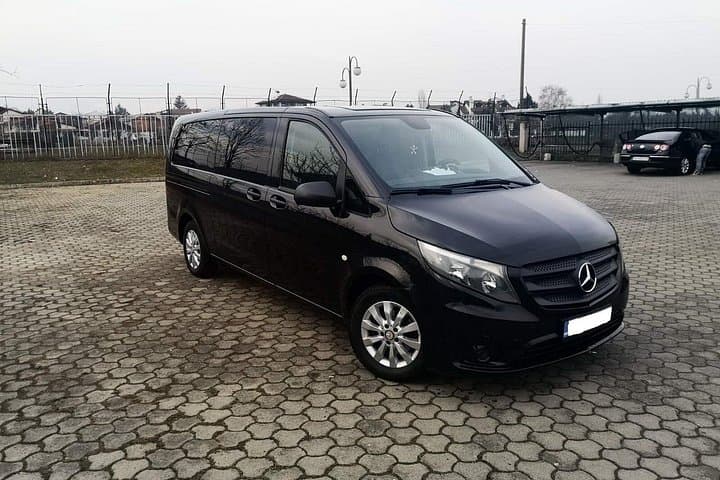
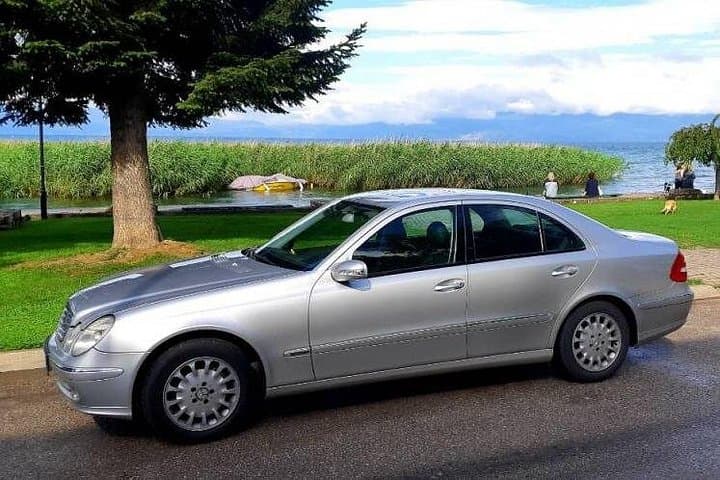
Travel feels local: drivers know the best coffee stop and how long passport control takes. The transfer is private — small cars for up to three, vans for up to eight — with optional stops for coffee or a quick lunch if time allows. Expect standard road surfaces, variable traffic around city exits, and straightforward customs checks at the border.
Practical guidance: carry your passport and any required visas, allow extra time for peak traffic, and confirm pickup address and timing in advance. Infant seats are available on request; luggage space is limited in compact vehicles. For comfort, bring a light jacket for mountain breezes and a phone charger — the trip is short, but small details make it smoother.
easy.
2 hours.
No special fitness required — suitable for all mobility levels
The route is about 90 km and typically takes around 2 hours door-to-door, though traffic and border checks can extend the duration.
A valid passport is required; check visa requirements for your nationality before travel and have any supporting documents ready.
Yes — the private transfer can include a short stop for coffee or a quick lunch if time allows; mention preferences when booking.
Cars accommodate up to 3 passengers; minivans up to 8. Luggage space is limited in smaller cars, so pack accordingly or request a larger vehicle if needed.
This corridor has long tied Ottoman trade routes and later Yugoslav road networks, making the Skopje–Pristina link culturally and economically significant in the Balkans.
Stick to paved roads and designated stops; reducing idling during waits and using the provided air conditioning sparingly helps lower local emissions and roadside impact.
Plus Travel Skopje operates guided outdoor trips and adventures with an emphasis on safety, stewardship, and memorable experiences.


You slide into an air-conditioned car in Skopje as the city’s concrete edges recede and the rolling hills press in, the Vardar River cutting a bright line that seems to dare you to slow down. The road to Pristina threads past low mountains, village turnoffs and occasional roadside cafés — a short cross-border corridor where landscapes change as quickly as the radio stations.
You slide into an air-conditioned car in Skopje as the city’s concrete edges recede and the rolling hills press in, the Vardar River cutting a bright line that seems to dare you to slow down. The road to Pristina threads past low mountains, village turnoffs and occasional roadside cafés — a short cross-border corridor where landscapes change as quickly as the radio stations.
The route covers roughly 90 km but routinely takes about two hours because of traffic and border formalities. Historically this corridor has connected Ottoman-era trade routes and, later, Yugoslav arterial roads; today it’s a practical link between North Macedonia and Kosovo used by business travelers, families and small tour groups. Geology shifts from the metamorphic ridges around Skopje to limestone valleys approaching Pristina; you’ll notice the slope and stone types at roadside quarries and river cuttings.
Travel feels local: drivers know the best coffee stop and how long passport control takes. The transfer is private — small cars for up to three, vans for up to eight — with optional stops for coffee or a quick lunch if time allows. Expect standard road surfaces, variable traffic around city exits, and straightforward customs checks at the border.
Practical guidance: carry your passport and any required visas, allow extra time for peak traffic, and confirm pickup address and timing in advance. Infant seats are available on request; luggage space is limited in compact vehicles. For comfort, bring a light jacket for mountain breezes and a phone charger — the trip is short, but small details make it smoother.