THE ADVENTURE COLLECTIVE® · Independent discovery and booking for outdoor travel

Travel between Porto and Lisbon at your own pace with a private transfer that stops at up to four highlights—Aveiro’s canals, Costa Nova’s striped houses, Coimbra’s university, Nazaré’s surf, or the walled Óbidos. Expect a full-day, flexible itinerary tailored to small groups.
Travel between Porto and Lisbon at your own pace with a private transfer that stops at up to four highlights—Aveiro’s canals, Costa Nova’s striped houses, Coimbra’s university, Nazaré’s surf, or the walled Óbidos. Expect a full-day, flexible itinerary tailored to small groups.
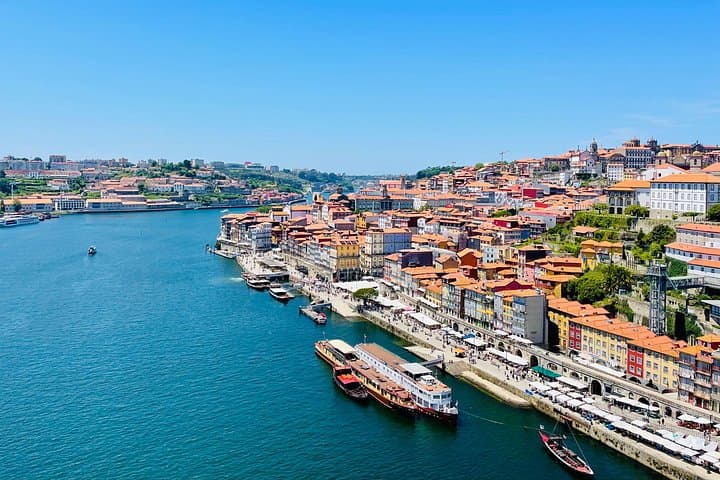
A morning in Porto begins with the hush of tiled façades and the low hum of an engine as a private Mercedes SUV pulls up outside your hotel.
Windows slide down to reveal Atlantic light; the road unwinds south and the country opens in stages—salt flats and canals, wind-polished dunes, medieval ramparts—each stop a different tempo on a single-day route.
Verified experiences and guided adventures in the surrounding area.
Operated by Castro Travel Portugal · Porto, Porto District
A morning in Porto begins with the hush of tiled façades and the low hum of an engine as a private Mercedes SUV pulls up outside your hotel.
Windows slide down to reveal Atlantic light; the road unwinds south and the country opens in stages—salt flats and canals, wind-polished dunes, medieval ramparts—each stop a different tempo on a single-day route.
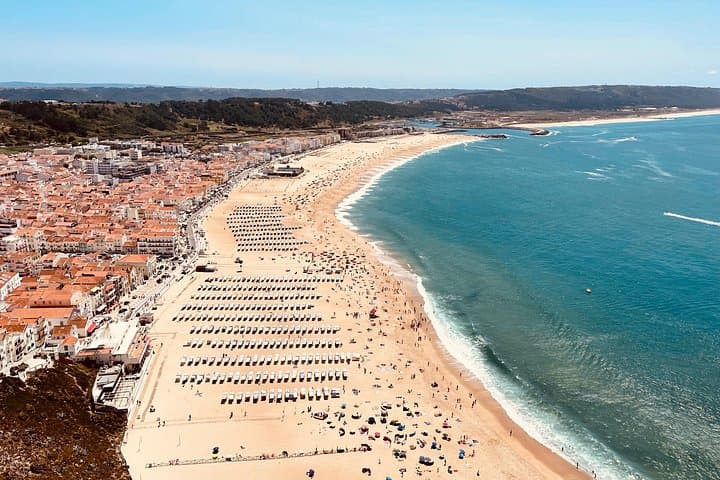
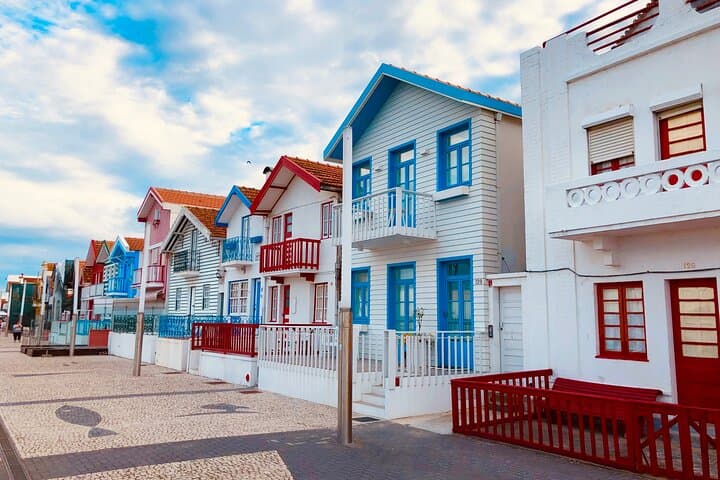
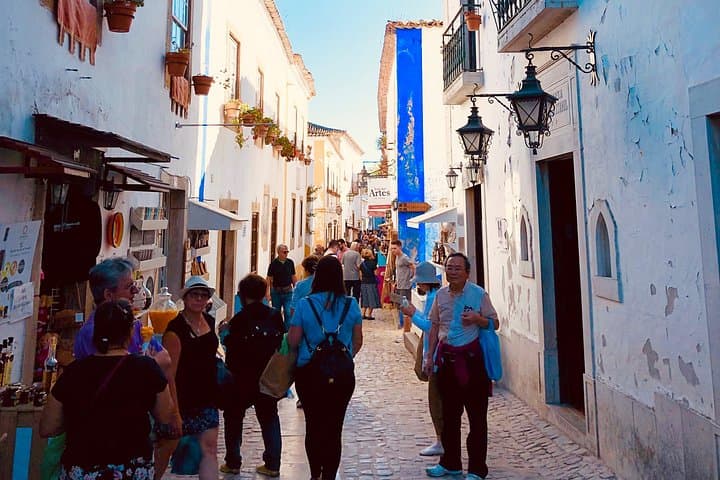
This corridor between Porto and Lisbon threads centuries of maritime and monastic history. Aveiro’s canals speak to a lagoon economy of salt and seaweed harvesters while Costa Nova’s striped houses echo a fishing culture that learned to laugh at the Atlantic’s moods. Coimbra’s university precinct preserves Baroque learning and student song; Óbidos’ stone walls remember medieval fairs and defensive prayer. Nazaré’s cliffs are carved by the same geology that sculpts Portugal’s wild surf, where ocean swells still dare the bravest surfers.
Practical guidance is straightforward: choose up to four stops based on priorities—coastal views, historic centers, or pilgrimage sites—and expect a full day on the road (about nine hours including stops). Bring layers; Atlantic mornings can be cool, afternoons sunnier and windier along the coast. Plan time at each stop (roughly 60–90 minutes) for a meaningful visit: a boat ride in Aveiro, a walk on Costa Nova’s sand, the Joanina Library in Coimbra, or the ramparts of Óbidos.
Comfortable shoes, sun protection, and a daypack make the day easier. The driver manages traffic and logistics; travelers should carry any entrance fees or tickets they want to book ahead. This transfer converts a point-to-point journey into a curated sampler of central Portugal—efficient, personal, and flexible for small groups.
easy.
9 hours.
Suitable for travelers of most fitness levels; walking at stops involves short to moderate strolls
The full transfer with stops is approximately 9 hours, including travel time and 60–90 minute visits at each chosen stop.
Yes—the service allows up to four customized stops from the suggested list; specify preferences when booking.
No—admission fees to museums or monuments are generally not included; bring cash or card to purchase tickets on-site.
Yes—request child seats or accessibility accommodations at booking so the driver can prepare the vehicle appropriately.
This route traces Portugal’s maritime and academic heritage—Aveiro developed around salt flats and canals, Coimbra hosts one of Europe’s oldest universities, and Óbidos preserves a medieval walled town.
Coastal erosion and sand dune sensitivity around Nazaré and Costa Nova require visitors to stick to marked paths; practice low-impact tourism at pilgrimage sites like Fátima by respecting quiet zones.
Castro Travel Portugal operates guided outdoor trips and adventures with an emphasis on safety, stewardship, and memorable experiences.
A morning in Porto begins with the hush of tiled façades and the low hum of an engine as a private Mercedes SUV pulls up outside your hotel.
Windows slide down to reveal Atlantic light; the road unwinds south and the country opens in stages—salt flats and canals, wind-polished dunes, medieval ramparts—each stop a different tempo on a single-day route.
A morning in Porto begins with the hush of tiled façades and the low hum of an engine as a private Mercedes SUV pulls up outside your hotel.
Windows slide down to reveal Atlantic light; the road unwinds south and the country opens in stages—salt flats and canals, wind-polished dunes, medieval ramparts—each stop a different tempo on a single-day route.
This corridor between Porto and Lisbon threads centuries of maritime and monastic history. Aveiro’s canals speak to a lagoon economy of salt and seaweed harvesters while Costa Nova’s striped houses echo a fishing culture that learned to laugh at the Atlantic’s moods. Coimbra’s university precinct preserves Baroque learning and student song; Óbidos’ stone walls remember medieval fairs and defensive prayer. Nazaré’s cliffs are carved by the same geology that sculpts Portugal’s wild surf, where ocean swells still dare the bravest surfers.
Practical guidance is straightforward: choose up to four stops based on priorities—coastal views, historic centers, or pilgrimage sites—and expect a full day on the road (about nine hours including stops). Bring layers; Atlantic mornings can be cool, afternoons sunnier and windier along the coast. Plan time at each stop (roughly 60–90 minutes) for a meaningful visit: a boat ride in Aveiro, a walk on Costa Nova’s sand, the Joanina Library in Coimbra, or the ramparts of Óbidos.
Comfortable shoes, sun protection, and a daypack make the day easier. The driver manages traffic and logistics; travelers should carry any entrance fees or tickets they want to book ahead. This transfer converts a point-to-point journey into a curated sampler of central Portugal—efficient, personal, and flexible for small groups.