THE ADVENTURE COLLECTIVE® · Independent discovery and booking for outdoor travel

A private six- to seven-hour transfer linking Mexico City and Acapulco with a two-hour cultural stop at Palacio de Cortés in Cuernavaca. Perfect for travelers who want a comfortable drive with a focused historic detour.
A private six- to seven-hour transfer linking Mexico City and Acapulco with a two-hour cultural stop at Palacio de Cortés in Cuernavaca. Perfect for travelers who want a comfortable drive with a focused historic detour.
You leave Mexico City's high plateau with the city’s muffled hum behind you and the road unspooling toward a lower coast. The highway drops through scrub and pine, then gives way to the warmer valleys around Cuernavaca—the brief stop at Palacio de Cortés cuts the drive into a human-scale moment of stone, shade and history.
Verified experiences and guided adventures in the surrounding area.
Operated by Europe Journey - Private Sightseeing Transfers and Day Tours · Cuernavaca, Morelos
You leave Mexico City's high plateau with the city’s muffled hum behind you and the road unspooling toward a lower coast. The highway drops through scrub and pine, then gives way to the warmer valleys around Cuernavaca—the brief stop at Palacio de Cortés cuts the drive into a human-scale moment of stone, shade and history.
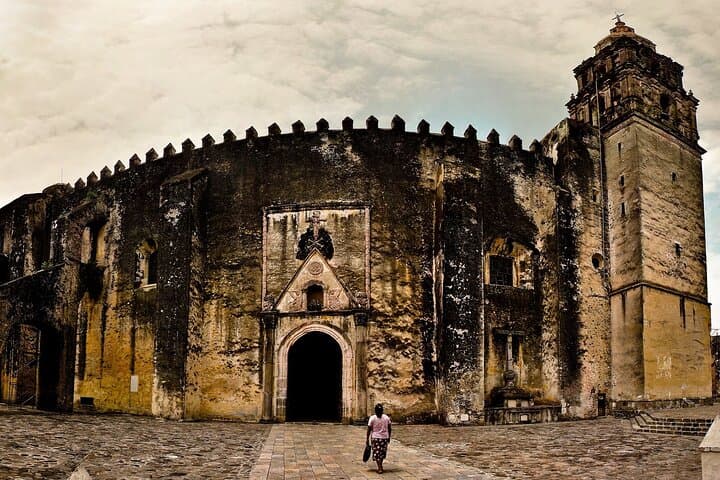
The 16th-century palace, built by Hernán Cortés in 1526 atop earlier Aztec foundations, is one of the region’s clearest links between colonial architecture and local heritage. Cuernavaca itself sits lower than Mexico City and enjoys a temperate climate that influenced gardens, public spaces, and the city’s role as a retreat through the 19th and 20th centuries. Geologically, the route descends from the Trans-Mexican Volcanic Belt toward the Pacific coastal plain; expect sweeping valley views and a change from cooler, high-elevation air to coastal humidity as you continue to Acapulco.
Practically, the transfer is a straightforward private drive (about 6–7 hours total including the two-hour stop). Vehicles are air-conditioned and drivers typically speak English. Use the Cuernavaca stop to stretch, visit the museum rooms, and take photos of the palace’s stone facades and murals. Keep an eye on seasonal rains—summer downpours can slow progress—and schedule pick-up times to avoid Mexico City rush-hour. Bring ID, a refillable water bottle, light layers for elevation changes, and small cash for market snacks. The service is transport-first, with a cultural pause: efficient, comfortable, and useful for travelers who prefer a private, narrated transit between two very different Mexican cities.
easy.
6–7 hours (including 2-hour stop).
Minimal fitness required; ability to sit for several hours and walk on uneven museum floors during the stop.
Yes—private pickup is standard; you'll select a pickup point and provide flight or arrival details at booking.
Extensions depend on operator availability and will affect total transfer time and price—request changes when booking.
Drivers typically stop at service areas and the Palacio de Cortés has visitor facilities; bring hand sanitizer for convenience.
Accessibility varies by vehicle; note mobility needs at booking so the provider can arrange an appropriate vehicle when possible.
Palacio de Cortés was erected in 1526 on the site of an older Aztec structure and now houses regional artifacts and interpretive exhibits about Morelos’ past.
Historic sites in Cuernavaca manage tourism through controlled visitor flow; travelers should stick to marked paths and minimize single-use plastics to reduce impact.
Europe Journey - Private Sightseeing Transfers and Day Tours operates guided outdoor trips and adventures with an emphasis on safety, stewardship, and memorable experiences.
You leave Mexico City's high plateau with the city’s muffled hum behind you and the road unspooling toward a lower coast. The highway drops through scrub and pine, then gives way to the warmer valleys around Cuernavaca—the brief stop at Palacio de Cortés cuts the drive into a human-scale moment of stone, shade and history.
You leave Mexico City's high plateau with the city’s muffled hum behind you and the road unspooling toward a lower coast. The highway drops through scrub and pine, then gives way to the warmer valleys around Cuernavaca—the brief stop at Palacio de Cortés cuts the drive into a human-scale moment of stone, shade and history.
The 16th-century palace, built by Hernán Cortés in 1526 atop earlier Aztec foundations, is one of the region’s clearest links between colonial architecture and local heritage. Cuernavaca itself sits lower than Mexico City and enjoys a temperate climate that influenced gardens, public spaces, and the city’s role as a retreat through the 19th and 20th centuries. Geologically, the route descends from the Trans-Mexican Volcanic Belt toward the Pacific coastal plain; expect sweeping valley views and a change from cooler, high-elevation air to coastal humidity as you continue to Acapulco.
Practically, the transfer is a straightforward private drive (about 6–7 hours total including the two-hour stop). Vehicles are air-conditioned and drivers typically speak English. Use the Cuernavaca stop to stretch, visit the museum rooms, and take photos of the palace’s stone facades and murals. Keep an eye on seasonal rains—summer downpours can slow progress—and schedule pick-up times to avoid Mexico City rush-hour. Bring ID, a refillable water bottle, light layers for elevation changes, and small cash for market snacks. The service is transport-first, with a cultural pause: efficient, comfortable, and useful for travelers who prefer a private, narrated transit between two very different Mexican cities.