THE ADVENTURE COLLECTIVE® · Independent discovery and booking for outdoor travel

Skip trains and taxis: a private, English–French speaking driver ferries you from Fez to Casablanca in a comfortable air‑conditioned vehicle. Expect 3.5–4 hours of highway travel with scenic shifts from inland hills to the Atlantic coast.
Skip trains and taxis: a private, English–French speaking driver ferries you from Fez to Casablanca in a comfortable air‑conditioned vehicle. Expect 3.5–4 hours of highway travel with scenic shifts from inland hills to the Atlantic coast.
Morning light lifts off Fez’s tiled roofs as a driver waits curbside, engine ready and air conditioning humming. The medieval medina falls away in minutes; the highway carries passengers across the Saïss plain and down from the Middle Atlas foothills toward the Atlantic, a steady ribbon of olives, low villages and highway rest stops.
Verified experiences and guided adventures in the surrounding area.
Operated by Fez Excursions · Fez, Fès-Meknès
Morning light lifts off Fez’s tiled roofs as a driver waits curbside, engine ready and air conditioning humming. The medieval medina falls away in minutes; the highway carries passengers across the Saïss plain and down from the Middle Atlas foothills toward the Atlantic, a steady ribbon of olives, low villages and highway rest stops.
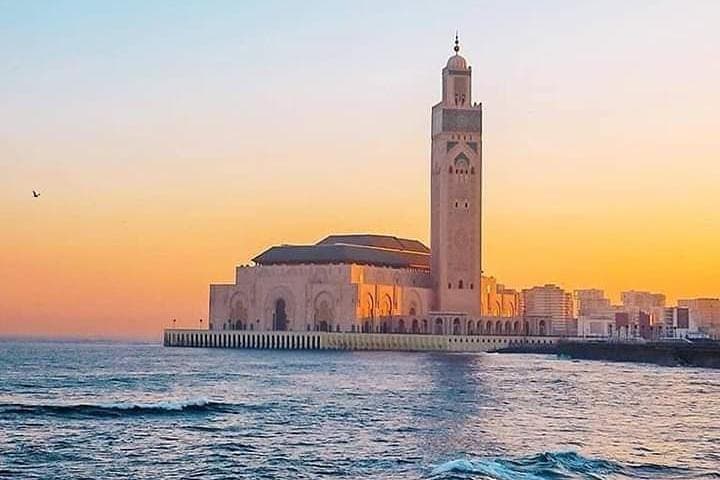
This short corridor maps Morocco’s layers: Fez’s 9th‑century role as a scholarly capital, the French protectorate’s imprint on Casablanca’s boulevards, and geology that shifts from interior limestone and basalt to coastal sedimentary plains. The route covers roughly 285–300 km and drops about 300–400 meters in elevation overall—mostly uneventful highway driving, but with changing light and landscape that mark the distance between inland history and coastal modernity.
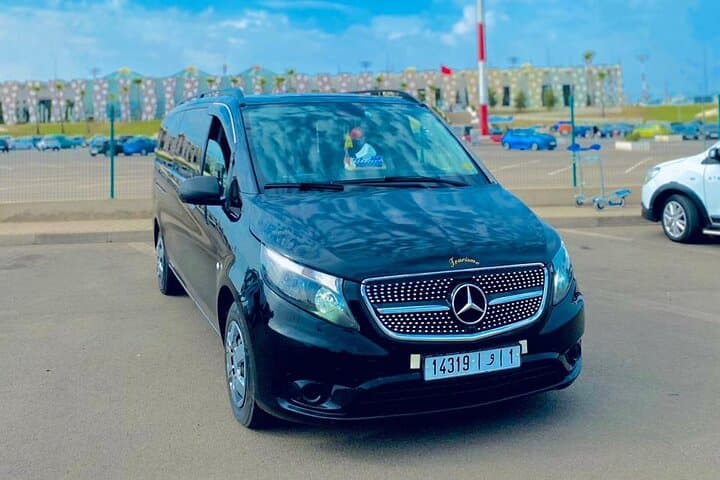
A private transfer simplifies the logistics: an English–French speaking driver, a modern air‑conditioned vehicle, and door‑to‑door pickup remove the uncertainty of public transport or multiple taxis. Expect about 3.5–4 hours depending on traffic and time of day; airport drop‑offs need extra buffer for security and check‑in. Confirm pickup location and flight details in advance, stow essentials in a small day bag, and keep travel documents handy.
Comfort tips: charge your devices, bring water and a light layer for the coastal breeze, and allow extra time when approaching Casablanca during peak hours. A brief, efficient way to move between two contrasting Moroccan worlds—practical, predictable, and quietly revealing.
easy.
3.5–4 hours.
Minimal fitness required; able to sit for several hours comfortably
Typical door‑to‑door travel time is 3.5–4 hours, depending on traffic and exact pickup/drop‑off locations.
Drivers will meet at agreed pickup points—narrow medina alleys may require a nearby rendezvous rather than curbside access; confirm a gate or landmark ahead of time.
Yes, the service uses modern, air‑conditioned cars suitable for travelers and luggage; request vehicle size if you have oversized baggage.
Infant seats are available and the transfer lists wheelchair accessibility—note your needs when booking so arrangements can be confirmed.
Fez grew into a major medieval intellectual and religious center from the 9th century, while Casablanca expanded rapidly under French protectorate planning in the 20th century.
Minimize roadside waste—pack out plastics—and choose local drivers who follow road safety and fuel‑efficient practices to reduce the trip’s environmental footprint.
Fez Excursions operates guided outdoor trips and adventures with an emphasis on safety, stewardship, and memorable experiences.


Morning light lifts off Fez’s tiled roofs as a driver waits curbside, engine ready and air conditioning humming. The medieval medina falls away in minutes; the highway carries passengers across the Saïss plain and down from the Middle Atlas foothills toward the Atlantic, a steady ribbon of olives, low villages and highway rest stops.
Morning light lifts off Fez’s tiled roofs as a driver waits curbside, engine ready and air conditioning humming. The medieval medina falls away in minutes; the highway carries passengers across the Saïss plain and down from the Middle Atlas foothills toward the Atlantic, a steady ribbon of olives, low villages and highway rest stops.
This short corridor maps Morocco’s layers: Fez’s 9th‑century role as a scholarly capital, the French protectorate’s imprint on Casablanca’s boulevards, and geology that shifts from interior limestone and basalt to coastal sedimentary plains. The route covers roughly 285–300 km and drops about 300–400 meters in elevation overall—mostly uneventful highway driving, but with changing light and landscape that mark the distance between inland history and coastal modernity.
A private transfer simplifies the logistics: an English–French speaking driver, a modern air‑conditioned vehicle, and door‑to‑door pickup remove the uncertainty of public transport or multiple taxis. Expect about 3.5–4 hours depending on traffic and time of day; airport drop‑offs need extra buffer for security and check‑in. Confirm pickup location and flight details in advance, stow essentials in a small day bag, and keep travel documents handy.
Comfort tips: charge your devices, bring water and a light layer for the coastal breeze, and allow extra time when approaching Casablanca during peak hours. A brief, efficient way to move between two contrasting Moroccan worlds—practical, predictable, and quietly revealing.