THE ADVENTURE COLLECTIVE® · Independent discovery and booking for outdoor travel

Skip public transport and glide from Brussels to Le Havre with a private driver and a two‑hour stop to explore Étretat’s chalk arches. This transfer blends efficient travel with a coastal walk and panoramic photo opportunities.
Skip public transport and glide from Brussels to Le Havre with a private driver and a two‑hour stop to explore Étretat’s chalk arches. This transfer blends efficient travel with a coastal walk and panoramic photo opportunities.
The road opens under an overcast Belgian sky and, hour by hour, the flat fields give way to rolling Norman countryside until the white cliffs of Étretat appear like a sudden shoreline argument with the sea.
Verified experiences and guided adventures in the surrounding area.
Operated by Europe Journey - Private Sightseeing Transfers and Day Tours · Étretat, Normandy
The road opens under an overcast Belgian sky and, hour by hour, the flat fields give way to rolling Norman countryside until the white cliffs of Étretat appear like a sudden shoreline argument with the sea.
This private door‑to‑door transfer links Brussels and Le Havre with a two‑hour stop at Étretat’s famous chalk arches. The cliffs are sculpted from chalk and flint—the same geology that drew Impressionists like Monet and writers such as Maupassant—creating dramatic natural arches (Falaise d’Aval) and a pebble beach that smells of salt and seaweed.
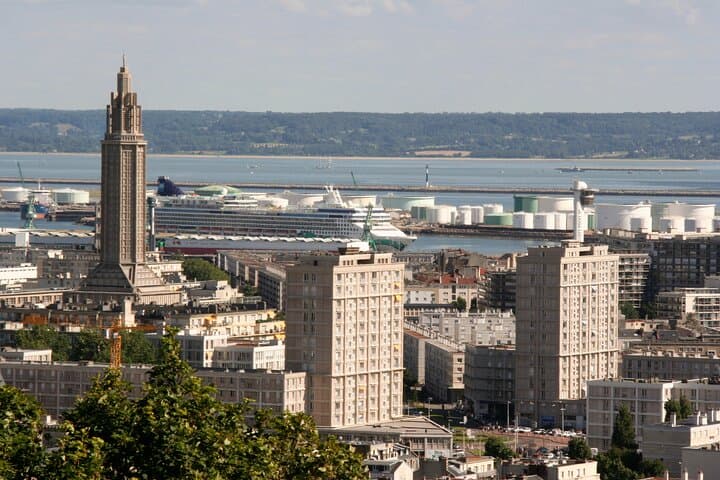
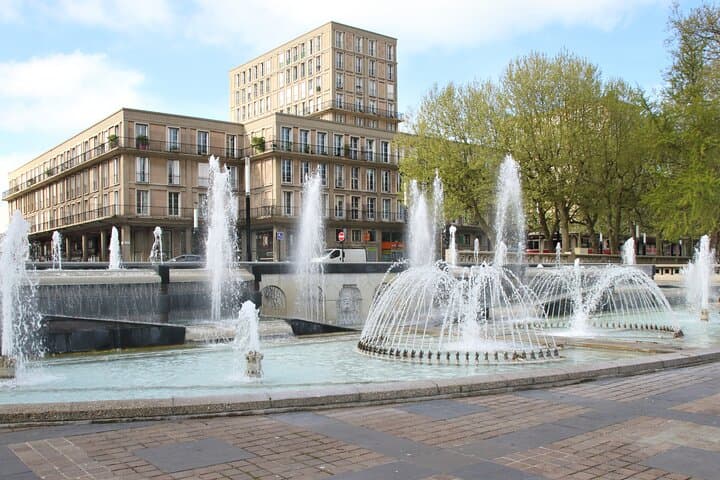
Le Havre waits at journey’s end: a working port rebuilt after World War II by architect Auguste Perret, its reinforced concrete grids now a UNESCO landmark and home to MuMa, one of France’s finest collections of nineteenth‑ and twentieth‑century painting.
Practically: expect roughly 4–5 hours driving (300–330 km) plus the two‑hour stop for walks, photos, and a quick café break. Vehicles range from sedans to large vans; bottled water is provided and drivers speak English but are not licensed guides. The route is wheelchair‑accessible, infants sit on laps, and pets (service animals) are permitted. For safety and comfort bring sturdy shoes for the cliff path, windproof layers (coastal winds are strong), and ID for border crossing within Schengen.
Timing matters—mornings are quieter at Étretat; late afternoon light favors photography. If you want extra stops (Honfleur or the Seine estuary), request an extended itinerary when booking. Cancellation for full refund is possible up to 24 hours before departure.
easy.
7–8 hours.
Suitable for all fitness levels; requires short, easy walks at Étretat over pebbles and coastal paths
No—the driver is an experienced local long‑distance driver who speaks English and can share local knowledge but is not a licensed guide.
Yes—extensions are possible on request and may incur extra charges depending on availability and distance.
Yes—transportation options and surfaces are wheelchair accessible; confirm vehicle size and assistance needs at booking.
Full refunds are available if you cancel at least 24 hours before the scheduled departure time.
Étretat’s cliffs attracted 19th‑century painters and writers; nearby Le Havre was extensively rebuilt after WWII by Auguste Perret and is recognized by UNESCO for its postwar architecture.
Coastal erosion is ongoing—stick to marked paths to protect fragile cliffs and nesting birds; carry out all trash and avoid stepping on exposed vegetation.
Europe Journey - Private Sightseeing Transfers and Day Tours operates guided outdoor trips and adventures with an emphasis on safety, stewardship, and memorable experiences.
The road opens under an overcast Belgian sky and, hour by hour, the flat fields give way to rolling Norman countryside until the white cliffs of Étretat appear like a sudden shoreline argument with the sea.
The road opens under an overcast Belgian sky and, hour by hour, the flat fields give way to rolling Norman countryside until the white cliffs of Étretat appear like a sudden shoreline argument with the sea.
This private door‑to‑door transfer links Brussels and Le Havre with a two‑hour stop at Étretat’s famous chalk arches. The cliffs are sculpted from chalk and flint—the same geology that drew Impressionists like Monet and writers such as Maupassant—creating dramatic natural arches (Falaise d’Aval) and a pebble beach that smells of salt and seaweed.
Le Havre waits at journey’s end: a working port rebuilt after World War II by architect Auguste Perret, its reinforced concrete grids now a UNESCO landmark and home to MuMa, one of France’s finest collections of nineteenth‑ and twentieth‑century painting.
Practically: expect roughly 4–5 hours driving (300–330 km) plus the two‑hour stop for walks, photos, and a quick café break. Vehicles range from sedans to large vans; bottled water is provided and drivers speak English but are not licensed guides. The route is wheelchair‑accessible, infants sit on laps, and pets (service animals) are permitted. For safety and comfort bring sturdy shoes for the cliff path, windproof layers (coastal winds are strong), and ID for border crossing within Schengen.
Timing matters—mornings are quieter at Étretat; late afternoon light favors photography. If you want extra stops (Honfleur or the Seine estuary), request an extended itinerary when booking. Cancellation for full refund is possible up to 24 hours before departure.