THE ADVENTURE COLLECTIVE® · Independent discovery and booking for outdoor travel

Trade Auckland traffic for volcanic horizons on a private transfer to the Tongariro Alpine Crossing. This 2-day option adds a Taupō overnight and removes the driving logistics so you can focus on the hike.
Trade Auckland traffic for volcanic horizons on a private transfer to the Tongariro Alpine Crossing. This 2-day option adds a Taupō overnight and removes the driving logistics so you can focus on the hike.
The van slips out of Auckland before dawn, the city lights fading as the highway opens and the North Island’s rough backbone takes shape. By mid-morning the air smells different — colder, mineral-rich — and the volcanic cones of Tongariro National Park begin to push above the plains. On the trail, steam vents and rust-red scoria confront you; the Emerald Lakes sit like spilled jewels against black lava.
Verified experiences and guided adventures in the surrounding area.
Operated by Kiwi Road Tours · Taupo, Waikato
The van slips out of Auckland before dawn, the city lights fading as the highway opens and the North Island’s rough backbone takes shape. By mid-morning the air smells different — colder, mineral-rich — and the volcanic cones of Tongariro National Park begin to push above the plains. On the trail, steam vents and rust-red scoria confront you; the Emerald Lakes sit like spilled jewels against black lava.
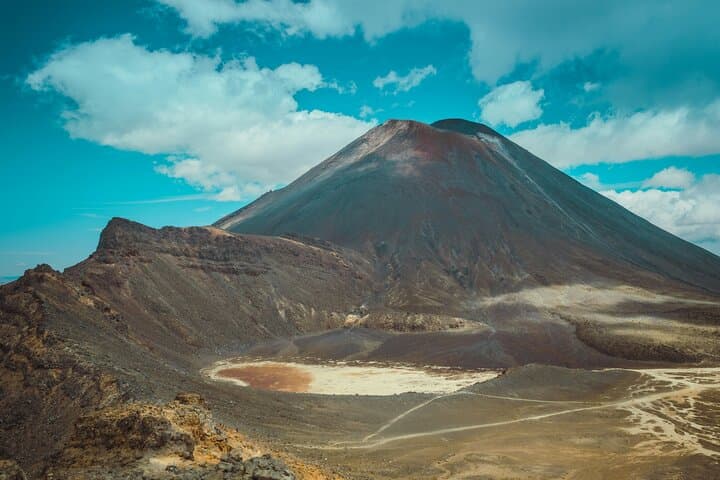
Tongariro’s landscape is volcanic narrative: three active centers (Ruapehu, Ngauruhoe, Tongariro) carved by eruptions, glaciation and ongoing geothermal activity. The park is a UNESCO World Heritage site and a place of deep cultural significance to Ngāti Tūwharetoa, whose legends and protections shape how the land is visited today.
Expect a full day on the crossing — roughly 19.4 km across mixed terrain: packed volcanic ash, loose scree on the Devil’s Staircase, exposed ridgelines and steep descents toward the carpark. Weather changes fast; wind and sun alternate with sleet. The private transfer format turns logistics into comfort: early pickup from Auckland, an overnight in Taupō or the National Park village, and a relaxed return to your accommodation.
Practical guidance: start very early, carry 2–3 liters of water, layered windproof clothing, and sturdy boots with good tread for scree. Allow 6–8 hours for the crossing itself and buffer for stops and changing weather. Respect cultural sites, stay on marked trail, and check DoC or operator weather updates before you set out. The trip pairs grand volcanic scenery with clear, achievable logistics — ideal for hikers who want the crossing without the drive stress.
challenging.
6–8 hours (on trail); 2 days door-to-door.
Suitable for hikers with good cardiovascular fitness and experience on sustained ascents/descents; expect steep sections and loose scree.
The standard route is about 19.4 km (12 miles) and most hikers take 6–8 hours depending on fitness and stops.
Yes—most hikers finish at a different carpark; private transfers in this product handle logistics so you don’t need to arrange separate shuttles.
Fit beginners with proper gear can complete it, but the steep Devil’s Staircase and exposure make it best for those comfortable with sustained uphill and loose terrain.
Alpine weather changes quickly: sun, wind, rain or snow can occur any season—check DoC and operator forecasts and be prepared to turn back.
Tongariro National Park was the first in the world to be gifted by indigenous owners to a nation for preservation (Te Heuheu Tūkino IV gifted the peaks in 1887), creating a model combining conservation and Māori guardianship.
Stay on marked trails to protect fragile alpine vegetation; the area is vulnerable to erosion and trampling, and DoC encourages 'pack in, pack out' practices.
Kiwi Road Tours operates guided outdoor trips and adventures with an emphasis on safety, stewardship, and memorable experiences.
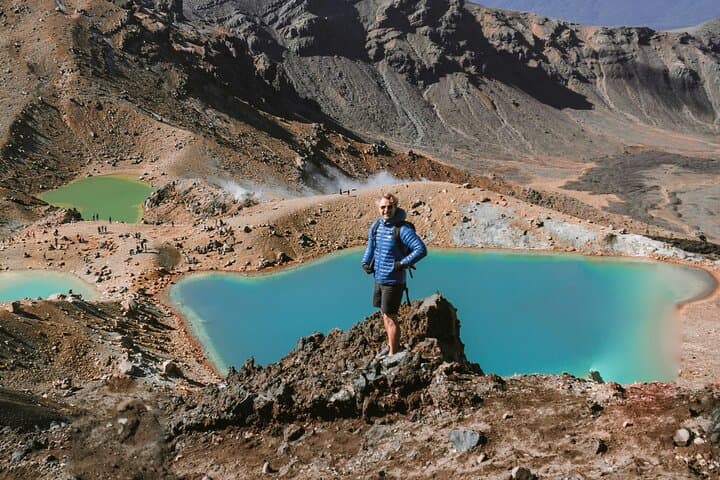
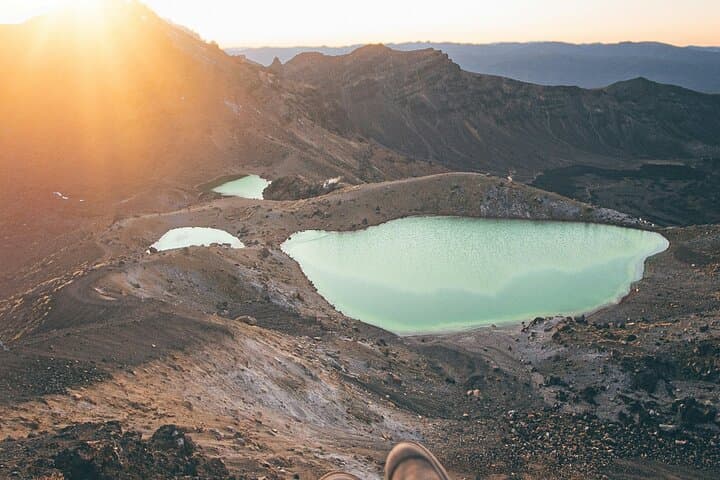
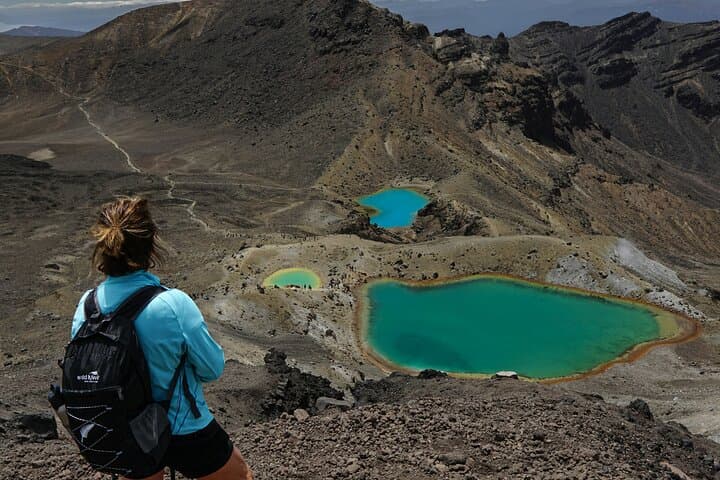
The van slips out of Auckland before dawn, the city lights fading as the highway opens and the North Island’s rough backbone takes shape. By mid-morning the air smells different — colder, mineral-rich — and the volcanic cones of Tongariro National Park begin to push above the plains. On the trail, steam vents and rust-red scoria confront you; the Emerald Lakes sit like spilled jewels against black lava.
The van slips out of Auckland before dawn, the city lights fading as the highway opens and the North Island’s rough backbone takes shape. By mid-morning the air smells different — colder, mineral-rich — and the volcanic cones of Tongariro National Park begin to push above the plains. On the trail, steam vents and rust-red scoria confront you; the Emerald Lakes sit like spilled jewels against black lava.
Tongariro’s landscape is volcanic narrative: three active centers (Ruapehu, Ngauruhoe, Tongariro) carved by eruptions, glaciation and ongoing geothermal activity. The park is a UNESCO World Heritage site and a place of deep cultural significance to Ngāti Tūwharetoa, whose legends and protections shape how the land is visited today.
Expect a full day on the crossing — roughly 19.4 km across mixed terrain: packed volcanic ash, loose scree on the Devil’s Staircase, exposed ridgelines and steep descents toward the carpark. Weather changes fast; wind and sun alternate with sleet. The private transfer format turns logistics into comfort: early pickup from Auckland, an overnight in Taupō or the National Park village, and a relaxed return to your accommodation.
Practical guidance: start very early, carry 2–3 liters of water, layered windproof clothing, and sturdy boots with good tread for scree. Allow 6–8 hours for the crossing itself and buffer for stops and changing weather. Respect cultural sites, stay on marked trail, and check DoC or operator weather updates before you set out. The trip pairs grand volcanic scenery with clear, achievable logistics — ideal for hikers who want the crossing without the drive stress.