THE ADVENTURE COLLECTIVE® · Independent discovery and booking for outdoor travel

Make the route between Chefchaouen and Fes part of your experience, not just a commute. This private transfer winds through the Rif Mountains with optional stops at village viewpoints and short hikes along the way.
Make the route between Chefchaouen and Fes part of your experience, not just a commute. This private transfer winds through the Rif Mountains with optional stops at village viewpoints and short hikes along the way.
Early light paints Chefchaouen’s blue alleys a cool indigo as you slide into an air-conditioned vehicle and head east, the town shrinking behind a patchwork of terraced fields. The road climbs into the Rif, ridgelines daring your gaze and villages clinging to slopes like careful hands holding history.
Verified experiences and guided adventures in the surrounding area.
Early light paints Chefchaouen’s blue alleys a cool indigo as you slide into an air-conditioned vehicle and head east, the town shrinking behind a patchwork of terraced fields. The road climbs into the Rif, ridgelines daring your gaze and villages clinging to slopes like careful hands holding history.
This route traces centuries of movement between Fes — an ancient imperial capital and center of learning since the 9th century — and Chefchaouen, founded in 1471 as a mountain refuge. Geologically the Rif rises from folded sedimentary layers and red soils; you’ll see abrupt rock outcrops and green gullies carved by seasonal streams that push water toward the plains below.
Culturally the drive crosses small Berber and Arab villages where livestock and mopeds share narrow streets, and where local markets pulse with olives, goat cheese, and charcoal. Drivers know the best roadside viewpoints and small cafés; ask to pause at Ras El Maa in Chefchaouen or the Akchour trailhead if you want a short walk.
Practical notes: expect a 4–5 hour trip for the roughly 200 km route on paved but often winding roads. Vehicles range from sedans to 4x4s with flexible pickup/drop-off at riads or hotels. Bring sun protection and a reusable water bottle, and pack light if the driver needs to stow luggage on a roof rack. If you’re prone to motion sickness, request a larger vehicle and sit in front; seat belts are recommended. Plan transfers to avoid Fes peak traffic in mornings and evenings for the smoothest ride.
easy.
4–5 hours.
No special fitness required beyond the ability to sit for several hours; brief walks at stops may be uneven.
The direct drive covers roughly 200 km and typically takes 4–5 hours depending on stops and traffic.
Yes — most private drivers will accommodate reasonable short stops like viewpoints, cafés, or the Akchour trailhead if agreed beforehand.
Vehicles range from sedans to minivans and 4x4s; all licensed vehicles should have seat belts — request a larger vehicle if you need more space or stability.
Luggage is usually accommodated inside or on a roof rack; inform the operator of oversized items in advance to confirm space and any extra fees.
Chefchaouen was established in 1471 as a mountain stronghold; Fes grew from a 9th-century settlement into a major medieval center of scholarship and craft.
The Rif is sensitive to erosion and water scarcity — stick to paved roads, avoid off-road driving, and minimize single-use plastics to reduce impact.
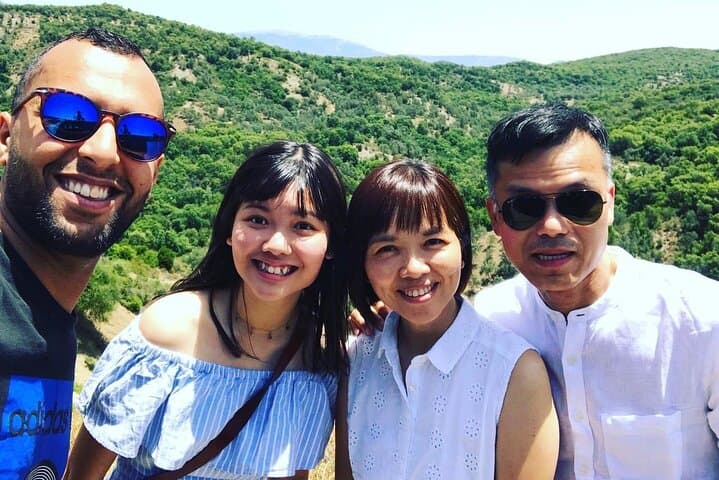
Early light paints Chefchaouen’s blue alleys a cool indigo as you slide into an air-conditioned vehicle and head east, the town shrinking behind a patchwork of terraced fields. The road climbs into the Rif, ridgelines daring your gaze and villages clinging to slopes like careful hands holding history.
Early light paints Chefchaouen’s blue alleys a cool indigo as you slide into an air-conditioned vehicle and head east, the town shrinking behind a patchwork of terraced fields. The road climbs into the Rif, ridgelines daring your gaze and villages clinging to slopes like careful hands holding history.
This route traces centuries of movement between Fes — an ancient imperial capital and center of learning since the 9th century — and Chefchaouen, founded in 1471 as a mountain refuge. Geologically the Rif rises from folded sedimentary layers and red soils; you’ll see abrupt rock outcrops and green gullies carved by seasonal streams that push water toward the plains below.
Culturally the drive crosses small Berber and Arab villages where livestock and mopeds share narrow streets, and where local markets pulse with olives, goat cheese, and charcoal. Drivers know the best roadside viewpoints and small cafés; ask to pause at Ras El Maa in Chefchaouen or the Akchour trailhead if you want a short walk.
Practical notes: expect a 4–5 hour trip for the roughly 200 km route on paved but often winding roads. Vehicles range from sedans to 4x4s with flexible pickup/drop-off at riads or hotels. Bring sun protection and a reusable water bottle, and pack light if the driver needs to stow luggage on a roof rack. If you’re prone to motion sickness, request a larger vehicle and sit in front; seat belts are recommended. Plan transfers to avoid Fes peak traffic in mornings and evenings for the smoothest ride.