THE ADVENTURE COLLECTIVE® · Independent discovery and booking for outdoor travel

Explore Armenia’s spiritual heart on a private 4–5 hour tour from Yerevan to St. Hripsime, Echmiadzin Cathedral and the ruins of Zvartnots. This guided visit combines early Christian history, compact temple architecture, and quiet local culture with practical, flexible pacing.
Explore Armenia’s spiritual heart on a private 4–5 hour tour from Yerevan to St. Hripsime, Echmiadzin Cathedral and the ruins of Zvartnots. This guided visit combines early Christian history, compact temple architecture, and quiet local culture with practical, flexible pacing.
You arrive from Yerevan along a low, sun-baked plain where the road opens and the stone crowns of Echmiadzin come into view—whitewashed church towers framed by cypress and plane trees. The guide leads you first to St. Hripsime, where cool shadow and the hush of prayer contrast with the bright fields beyond. The church’s compact, robust form speaks to early Armenian masonry: simple, heavy walls and a central dome that has anchored local worship since the 4th century.
Verified experiences and guided adventures in the surrounding area.
Operated by SkyHai Travel · Vagharshapat (Echmiadzin), Armavir Province
You arrive from Yerevan along a low, sun-baked plain where the road opens and the stone crowns of Echmiadzin come into view—whitewashed church towers framed by cypress and plane trees. The guide leads you first to St. Hripsime, where cool shadow and the hush of prayer contrast with the bright fields beyond. The church’s compact, robust form speaks to early Armenian masonry: simple, heavy walls and a central dome that has anchored local worship since the 4th century.
History is close at hand here. Echmiadzin is the spiritual seat of the Armenian Apostolic Church; its cathedral traces roots to Armenia’s adoption of Christianity in AD 301. A short drive west brings you to the circular ruins of Zvartnots, a 7th-century experiment in height and light that was felled by an earthquake but still frames the sky with broken columns.
Culturally, Vagharshapat is unhurried—tea houses and small workshops sit a few blocks from basilicas where bell-keepers tend rituals older than many nations. Geologically the plain is alluvium and tuff underfoot; the ash and volcanic stones explain the local palette of carved khachkars.
Practical guidance: allow 4–5 hours for a relaxed private tour, bring modest clothing for church interiors, comfortable shoes for courtyards and light walking, and sun protection. Photography is usually allowed outside and in many interiors but follow the guide; bottled water and snacks are typically provided. A morning visit avoids the heat and late-afternoon light is best for photographing Zvartnots’ ruin against the sky.
easy.
4–5 hours.
Suitable for most fitness levels; involves short walks, standing and negotiating steps or uneven ground.
This private tour listing notes admissions are not included; confirm with the operator whether museum or site fees will be covered in your booking.
Tours typically offer pickup from Yerevan hotels; provide your pickup point at booking so the driver can route accordingly.
Yes—this itinerary is described as physically easy; infants may need to sit on laps and some areas have steps rather than stroller access.
Photography is generally permitted in exterior areas; interior or relic photography can be restricted—follow your guide and posted signs.
Echmiadzin became the administrative and spiritual center of the Armenian Apostolic Church after Armenia adopted Christianity in the early 4th century; Zvartnots was a 7th-century cathedral that collapsed after an earthquake.
Sites are sensitive to visitor wear—stay on marked paths, avoid touching carved stones and support local conservation efforts by following guide instructions.
SkyHai Travel operates guided outdoor trips and adventures with an emphasis on safety, stewardship, and memorable experiences.
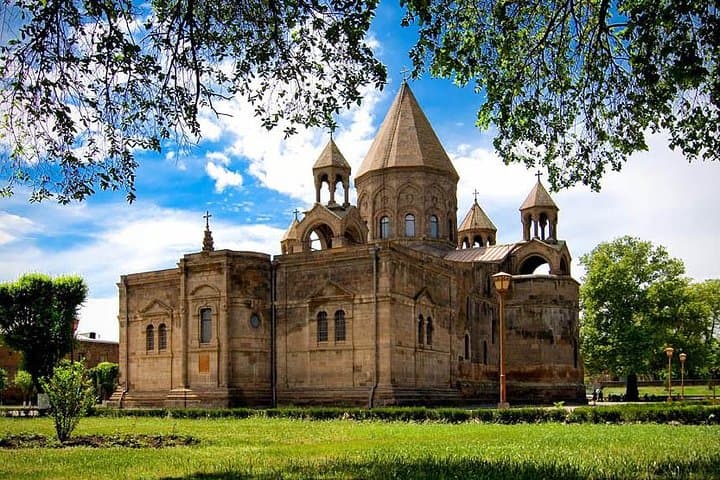
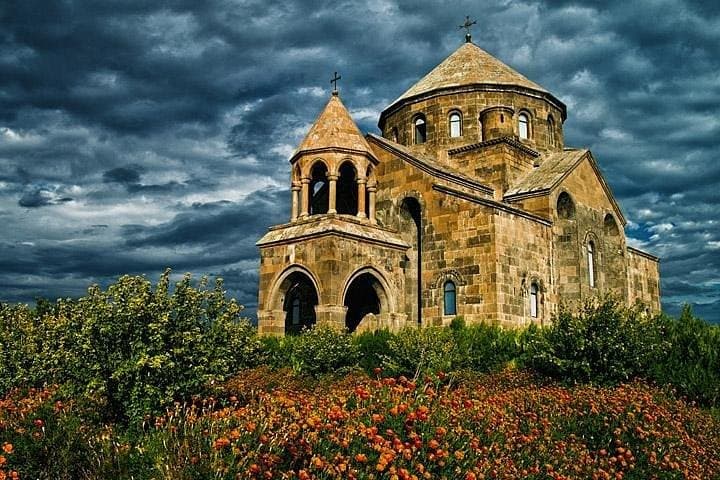
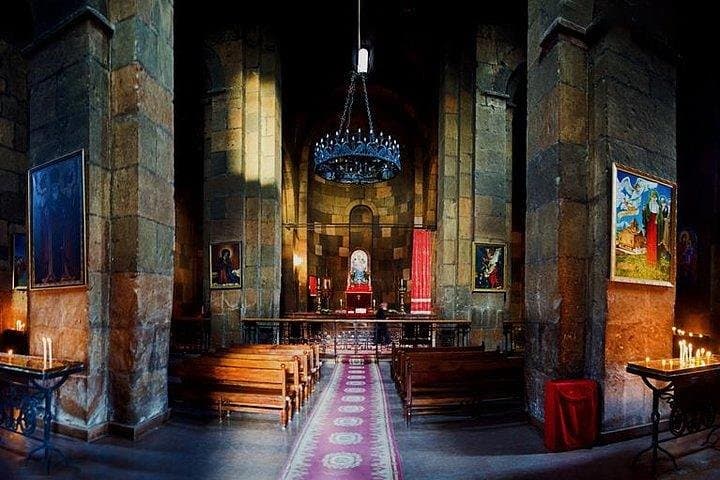
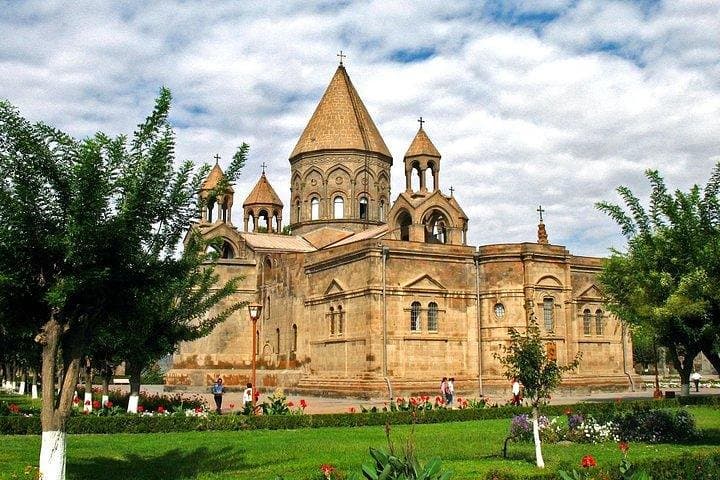
You arrive from Yerevan along a low, sun-baked plain where the road opens and the stone crowns of Echmiadzin come into view—whitewashed church towers framed by cypress and plane trees. The guide leads you first to St. Hripsime, where cool shadow and the hush of prayer contrast with the bright fields beyond. The church’s compact, robust form speaks to early Armenian masonry: simple, heavy walls and a central dome that has anchored local worship since the 4th century.
You arrive from Yerevan along a low, sun-baked plain where the road opens and the stone crowns of Echmiadzin come into view—whitewashed church towers framed by cypress and plane trees. The guide leads you first to St. Hripsime, where cool shadow and the hush of prayer contrast with the bright fields beyond. The church’s compact, robust form speaks to early Armenian masonry: simple, heavy walls and a central dome that has anchored local worship since the 4th century.
History is close at hand here. Echmiadzin is the spiritual seat of the Armenian Apostolic Church; its cathedral traces roots to Armenia’s adoption of Christianity in AD 301. A short drive west brings you to the circular ruins of Zvartnots, a 7th-century experiment in height and light that was felled by an earthquake but still frames the sky with broken columns.
Culturally, Vagharshapat is unhurried—tea houses and small workshops sit a few blocks from basilicas where bell-keepers tend rituals older than many nations. Geologically the plain is alluvium and tuff underfoot; the ash and volcanic stones explain the local palette of carved khachkars.
Practical guidance: allow 4–5 hours for a relaxed private tour, bring modest clothing for church interiors, comfortable shoes for courtyards and light walking, and sun protection. Photography is usually allowed outside and in many interiors but follow the guide; bottled water and snacks are typically provided. A morning visit avoids the heat and late-afternoon light is best for photographing Zvartnots’ ruin against the sky.