THE ADVENTURE COLLECTIVE® · Independent discovery and booking for outdoor travel

A full-day private transfer from Siem Reap to the cliff-top Preah Vihear Temple and the remote 10th-century complex at Koh Ker. Expect long drives, a 4WD summit approach, steep stone steps, and wide panoramic views across the Cambodian plain.
A full-day private transfer from Siem Reap to the cliff-top Preah Vihear Temple and the remote 10th-century complex at Koh Ker. Expect long drives, a 4WD summit approach, steep stone steps, and wide panoramic views across the Cambodian plain.
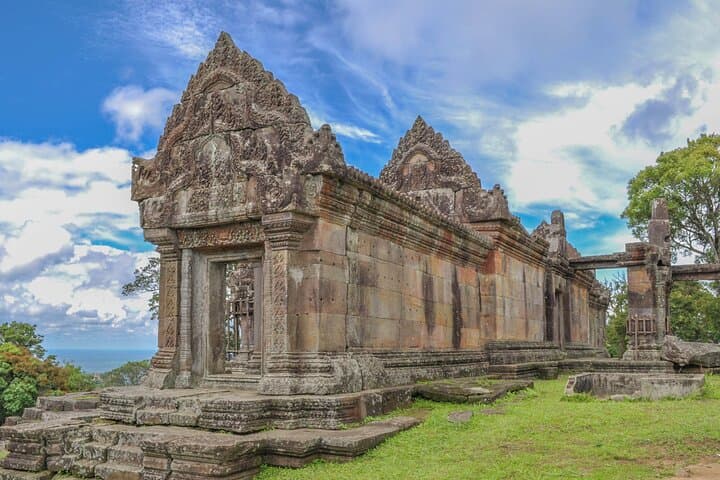
You arrive before the heat builds: a low-slung road unspools from Siem Reap into scrub and rice fields, and the Dângrêk ridge looms ahead, sharp as a promise. The climb finishes in a different world — stone causeways and carved lintels perched above a wide plain, wind pushing history across the terrace.
Verified experiences and guided adventures in the surrounding area.
Operated by Around Cambodia Travel · Siem Reap, Siem Reap Province
You arrive before the heat builds: a low-slung road unspools from Siem Reap into scrub and rice fields, and the Dângrêk ridge looms ahead, sharp as a promise. The climb finishes in a different world — stone causeways and carved lintels perched above a wide plain, wind pushing history across the terrace.
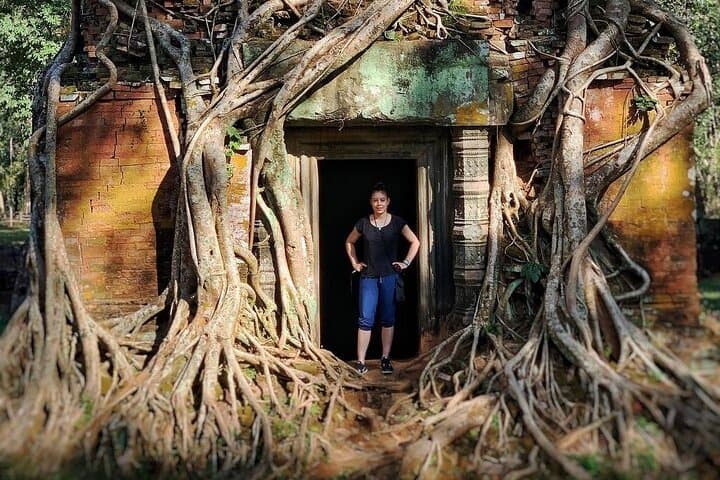
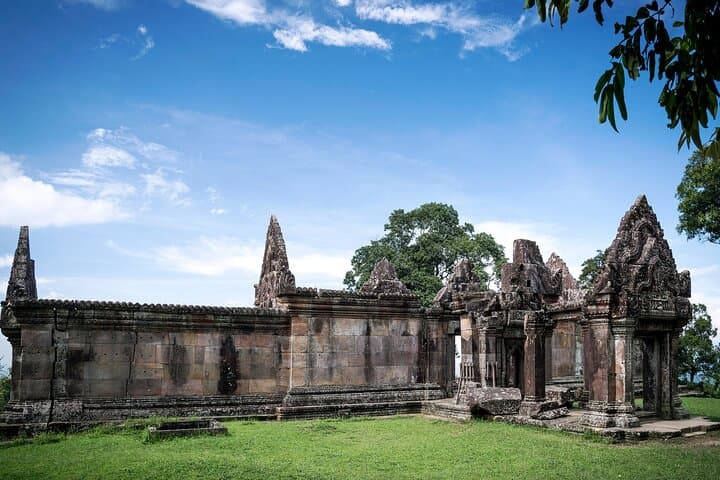
Prasat Preah Vihear crowns the range at roughly 525–625 meters above sea level, its long north–south axis breaking from typical Khmer plans. Built and modified across centuries of the Khmer Empire, the temple became a UNESCO World Heritage Site in 2008 for both its architecture and dramatic siting. Koh Ker, reached later in the day, is a 10th-century temple complex and brief Khmer capital, a scatter of laterite mounds, pyramid-prasat profiles, and intimate shrines often shaded by tamarind and dipterocarp trees.
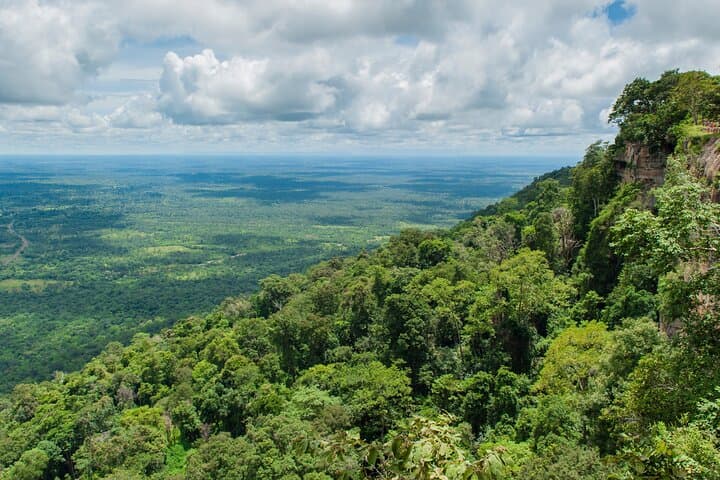
Geology here is limestone and sandstone rising from plains; the cliffs give wide sightlines that once marked strategic as well as spiritual choices. Culturally, these sites remain living places — local vendors and village markets punctuate the drive, and guides often point out family shrines and colonial-era roadworks.
Practically: expect a 2–3 hour drive each way from Siem Reap with a switch to 4WD for the final ascent, uneven stone staircases, and strong sun. Bring water (2L+), sun protection, and sturdy shoes; plan for 9 hours total. Entrance fees and permits may not be included, and photography rules change seasonally. Travel with a guide, leave no trace on fragile carvings, and time your visit for morning or late afternoon light to avoid midday heat.
moderate.
9 hours.
Moderate — able to walk on uneven stone steps and handle several short uphill sections; some stamina for a long day in heat
Plan on roughly 2–3 hours each way to Preah Vihear depending on traffic and stops; Koh Ker adds additional driving within the day.
Admission is often not included in tour prices — confirm with your operator and carry local currency for fees and permits.
The ascent to the summit uses a 4WD road and then short walks and stone staircases; it’s not technical but involves uneven steps and exposed sections.
Drone rules vary by site and change frequently; check beforehand with your guide and obtain any necessary permits — many heritage sites restrict drones.
Preah Vihear and Koh Ker are products of the Khmer Empire’s expansion; Koh Ker briefly served as a capital in the 10th century and Preah Vihear reflects centuries of royal modifications.
These sites are archaeologically fragile — stick to paths, avoid touching carved surfaces, and hire local guides to support preservation and local economies.
Around Cambodia Travel operates guided outdoor trips and adventures with an emphasis on safety, stewardship, and memorable experiences.
You arrive before the heat builds: a low-slung road unspools from Siem Reap into scrub and rice fields, and the Dângrêk ridge looms ahead, sharp as a promise. The climb finishes in a different world — stone causeways and carved lintels perched above a wide plain, wind pushing history across the terrace.
You arrive before the heat builds: a low-slung road unspools from Siem Reap into scrub and rice fields, and the Dângrêk ridge looms ahead, sharp as a promise. The climb finishes in a different world — stone causeways and carved lintels perched above a wide plain, wind pushing history across the terrace.
Prasat Preah Vihear crowns the range at roughly 525–625 meters above sea level, its long north–south axis breaking from typical Khmer plans. Built and modified across centuries of the Khmer Empire, the temple became a UNESCO World Heritage Site in 2008 for both its architecture and dramatic siting. Koh Ker, reached later in the day, is a 10th-century temple complex and brief Khmer capital, a scatter of laterite mounds, pyramid-prasat profiles, and intimate shrines often shaded by tamarind and dipterocarp trees.
Geology here is limestone and sandstone rising from plains; the cliffs give wide sightlines that once marked strategic as well as spiritual choices. Culturally, these sites remain living places — local vendors and village markets punctuate the drive, and guides often point out family shrines and colonial-era roadworks.
Practically: expect a 2–3 hour drive each way from Siem Reap with a switch to 4WD for the final ascent, uneven stone staircases, and strong sun. Bring water (2L+), sun protection, and sturdy shoes; plan for 9 hours total. Entrance fees and permits may not be included, and photography rules change seasonally. Travel with a guide, leave no trace on fragile carvings, and time your visit for morning or late afternoon light to avoid midday heat.