THE ADVENTURE COLLECTIVE® · Independent discovery and booking for outdoor travel

A full-day private drive from Aswan visits Kom Ombo’s twin temple and Edfu’s towering Temple of Horus. Expect guided history, manageable walking, and strong sunlight — ideal for culture-minded travelers who want a compact Nile-era immersion.
A full-day private drive from Aswan visits Kom Ombo’s twin temple and Edfu’s towering Temple of Horus. Expect guided history, manageable walking, and strong sunlight — ideal for culture-minded travelers who want a compact Nile-era immersion.
Morning light cuts across the Nile as your private vehicle slips away from Aswan, the city’s minarets shrinking in the rearview. The road follows the river’s curve, palm groves and orange fields giving way to raised temple platforms that command the floodplain.
Verified experiences and guided adventures in the surrounding area.
Operated by Egypt Tours Online · Aswan, Aswan Governorate
Morning light cuts across the Nile as your private vehicle slips away from Aswan, the city’s minarets shrinking in the rearview. The road follows the river’s curve, palm groves and orange fields giving way to raised temple platforms that command the floodplain.
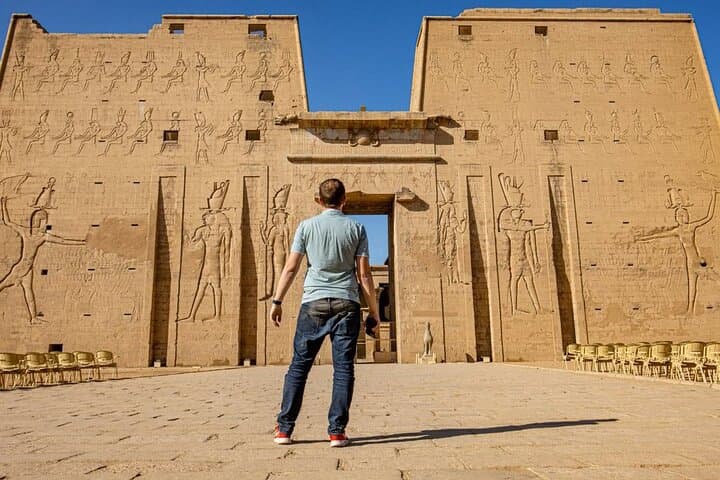
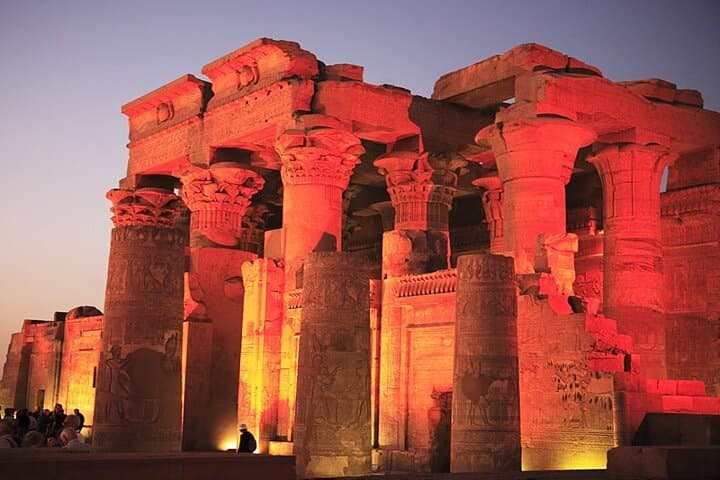
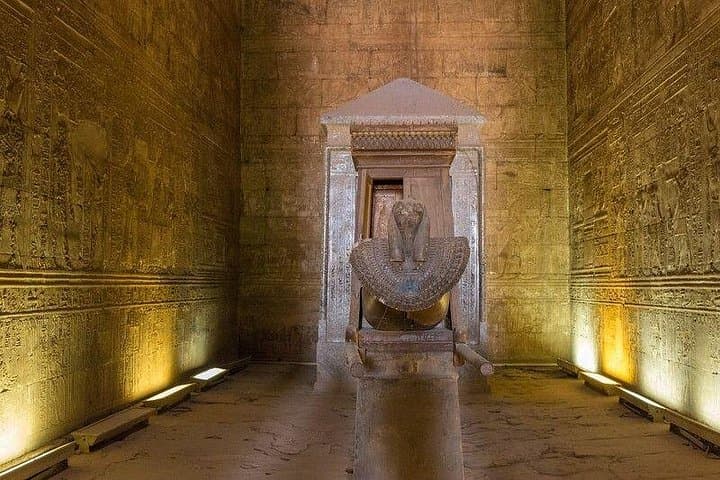
Kom Ombo rises first: a symmetrical, double-temple with twin entrances that once served two cults — the crocodile-headed Sobek and the falcon god Horus. Carved reliefs line sandstone walls; priests’ graffiti and a small on-site museum of mummified crocodiles add texture to the visit. Further north, Edfu’s Temple of Horus unfolds in near-perfect preservation — towering pylons, long processional courts, and mythic reliefs that narrate Horus’s battle with Seth.
These sites sit on Pharaonic foundations with layers of Ptolemaic reconstruction, revealing shifts in ritual, politics, and Nile-driven economy. The geology is simple: local sandstone quarried and dressed into axial temples aligned to Nile-facing approaches, their solidity surviving millennia of riverine change.
Practicalities shape the day: expect a 9-hour round trip with moderate walking on uneven stone floors and hot sun exposure. Guided explanations make the iconography come alive, while lunch options commonly feature local Egyptian dishes. Bring sun protection, comfortable walking shoes with grip, and a camera with extra battery. Passport copy is required at booking; your pickup and drop-off from Aswan hotels keeps logistics simple. Time your visit for morning or late afternoon light to avoid peak heat and to see these temples’ reliefs in high contrast.
easy.
9 hours.
Basic walking fitness required — able to stand and walk on uneven surfaces for multiple short periods
Entry fees are typically included when booked through this private tour; confirm at booking to avoid surprises.
Expect about 45–90 minutes of driving between sites depending on traffic and stops; the full tour is around nine hours including transfers.
The tour involves walking on uneven stone and steps; it’s not recommended for those with serious mobility or spinal issues — check with the operator for assistance options.
Yes — the tour is family-friendly, but parents should supervise near high steps and temple edges and bring sun protection for kids.
Kom Ombo and Edfu were major cult centers in the Ptolemaic era built atop earlier Egyptian foundations; Edfu’s inscriptions record local law, medicine, and festival rites.
Tourism is managed to protect fragile sandstone reliefs and archaeological contexts; visitors should stay on designated paths and avoid touching carved surfaces.
Egypt Tours Online operates guided outdoor trips and adventures with an emphasis on safety, stewardship, and memorable experiences.
Morning light cuts across the Nile as your private vehicle slips away from Aswan, the city’s minarets shrinking in the rearview. The road follows the river’s curve, palm groves and orange fields giving way to raised temple platforms that command the floodplain.
Morning light cuts across the Nile as your private vehicle slips away from Aswan, the city’s minarets shrinking in the rearview. The road follows the river’s curve, palm groves and orange fields giving way to raised temple platforms that command the floodplain.
Kom Ombo rises first: a symmetrical, double-temple with twin entrances that once served two cults — the crocodile-headed Sobek and the falcon god Horus. Carved reliefs line sandstone walls; priests’ graffiti and a small on-site museum of mummified crocodiles add texture to the visit. Further north, Edfu’s Temple of Horus unfolds in near-perfect preservation — towering pylons, long processional courts, and mythic reliefs that narrate Horus’s battle with Seth.
These sites sit on Pharaonic foundations with layers of Ptolemaic reconstruction, revealing shifts in ritual, politics, and Nile-driven economy. The geology is simple: local sandstone quarried and dressed into axial temples aligned to Nile-facing approaches, their solidity surviving millennia of riverine change.
Practicalities shape the day: expect a 9-hour round trip with moderate walking on uneven stone floors and hot sun exposure. Guided explanations make the iconography come alive, while lunch options commonly feature local Egyptian dishes. Bring sun protection, comfortable walking shoes with grip, and a camera with extra battery. Passport copy is required at booking; your pickup and drop-off from Aswan hotels keeps logistics simple. Time your visit for morning or late afternoon light to avoid peak heat and to see these temples’ reliefs in high contrast.