THE ADVENTURE COLLECTIVE® · Independent discovery and booking for outdoor travel

A private full-day from Luxor that pairs the celestial reliefs of Dendera’s Hathor Temple with the pilgrimage power of Abydos. This guided route mixes archaeology, manageable walks, and scenic Nile plain driving.
A private full-day from Luxor that pairs the celestial reliefs of Dendera’s Hathor Temple with the pilgrimage power of Abydos. This guided route mixes archaeology, manageable walks, and scenic Nile plain driving.
Morning light cuts across the Nile plain as a private vehicle eases out of Luxor, the city shrinking into palm-lined fields while the road threads small villages and low desert ridges. The first stop, Dendera, opens with cool stone corridors and ceilings carved with constellations; the Hathor Temple’s reliefs hold the conversation here, their carved faces watching the same sun that steers your shadow along the colonnade.
Verified experiences and guided adventures in the surrounding area.
Operated by Pharaonic Vision Tours · Luxor, Luxor Governorate
Morning light cuts across the Nile plain as a private vehicle eases out of Luxor, the city shrinking into palm-lined fields while the road threads small villages and low desert ridges. The first stop, Dendera, opens with cool stone corridors and ceilings carved with constellations; the Hathor Temple’s reliefs hold the conversation here, their carved faces watching the same sun that steers your shadow along the colonnade.
Dendera and Abydos occupy two different chapters of Egypt’s religious geography: Dendera honors Hathor and preserves one of the rare complete zodiac reliefs, while Abydos was a pilgrimage site tied to Osiris and the afterlife. Geology is simple—Pharaonic builders chose raised limestone and sandstone beds that resist Nile floods—so temples sit slightly above the floodplain. Culturally the sites draw on millennia of ritual, with Abydos’ King List and the mysterious Osirion revealing both royal ambition and devotional practice.
Expect well-preserved reliefs, a hypostyle hall at Dendera, and the long processional axis at Abydos. The day is paced: roughly 1.5 hours drive between stops, 2–3 hours exploring each site, and time to rest on the return to Luxor.
Practical guidance: wear sturdy, cushioned shoes for uneven floors, bring sun protection and a refillable water bottle, and carry a light layer for early mornings or temple interiors. Photography rules vary—ask your guide. Respect barriers and avoid touching painted reliefs to help preserve these millennia-old surfaces.
easy.
6–8 hours.
Suitable for most fitness levels; requires walking on flat to uneven stone surfaces for extended periods.
Yes — entrance to Dendera and Abydos is included as part of this private tour.
Pickup and drop-off in Luxor are included; confirm your hotel pickup point at booking.
Both sites have uneven stone paths and steps; access is limited for wheelchairs—contact the operator for specific accommodations.
Expect several hours of moderate walking with periods standing to view reliefs; there are rest areas but bring comfortable footwear.
Dendera’s temple complex was completed over Ptolemaic and Roman periods and houses the famed Dendera Zodiac; Abydos became a major cult center for Osiris and contains the funeral cult inscriptions that drew ancient pilgrims.
Both sites are managed under Egypt’s antiquities authorities; visitors should avoid touching reliefs, stay on marked paths, and minimize plastic waste to help ongoing preservation efforts.
Pharaonic Vision Tours operates guided outdoor trips and adventures with an emphasis on safety, stewardship, and memorable experiences.
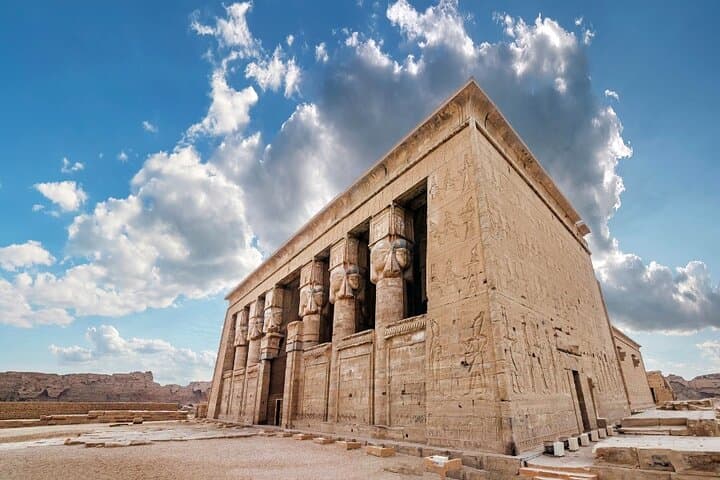
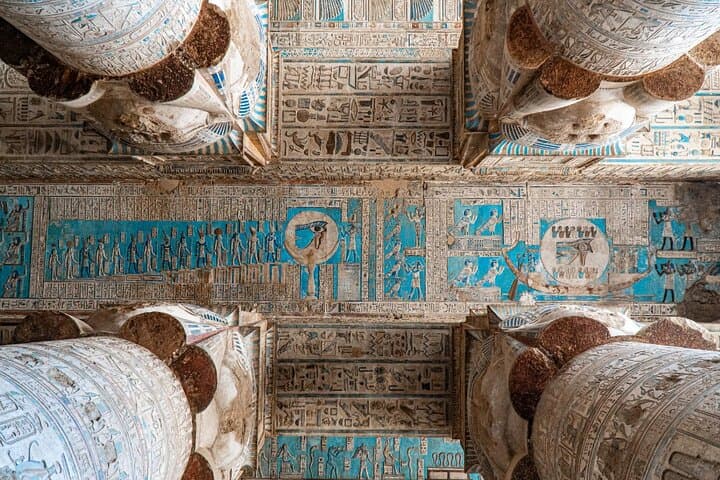
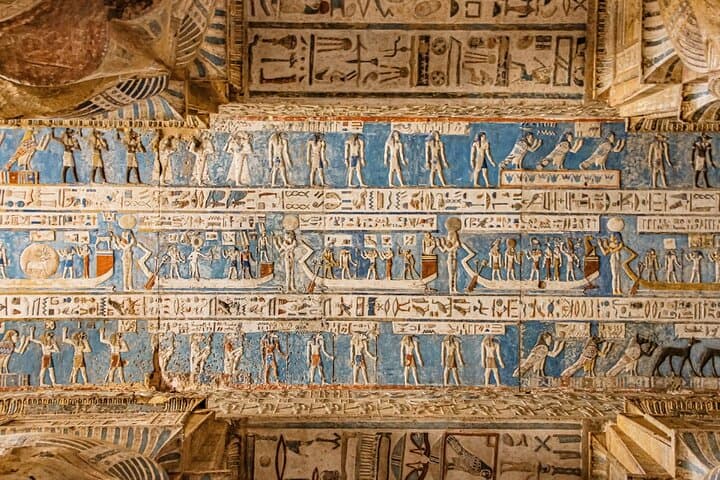
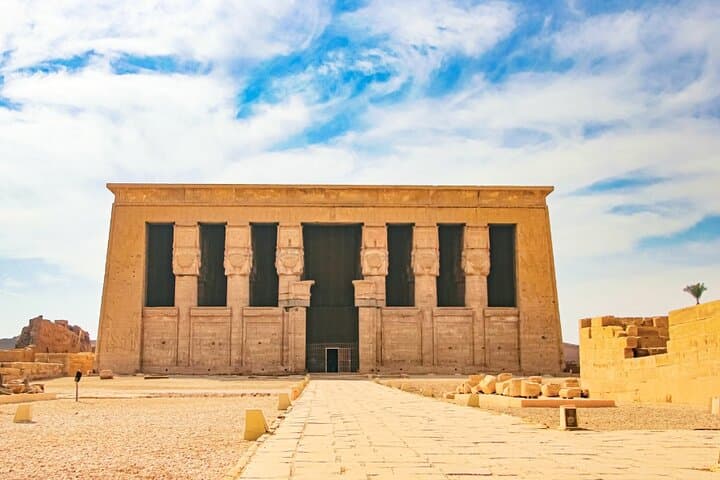
Morning light cuts across the Nile plain as a private vehicle eases out of Luxor, the city shrinking into palm-lined fields while the road threads small villages and low desert ridges. The first stop, Dendera, opens with cool stone corridors and ceilings carved with constellations; the Hathor Temple’s reliefs hold the conversation here, their carved faces watching the same sun that steers your shadow along the colonnade.
Morning light cuts across the Nile plain as a private vehicle eases out of Luxor, the city shrinking into palm-lined fields while the road threads small villages and low desert ridges. The first stop, Dendera, opens with cool stone corridors and ceilings carved with constellations; the Hathor Temple’s reliefs hold the conversation here, their carved faces watching the same sun that steers your shadow along the colonnade.
Dendera and Abydos occupy two different chapters of Egypt’s religious geography: Dendera honors Hathor and preserves one of the rare complete zodiac reliefs, while Abydos was a pilgrimage site tied to Osiris and the afterlife. Geology is simple—Pharaonic builders chose raised limestone and sandstone beds that resist Nile floods—so temples sit slightly above the floodplain. Culturally the sites draw on millennia of ritual, with Abydos’ King List and the mysterious Osirion revealing both royal ambition and devotional practice.
Expect well-preserved reliefs, a hypostyle hall at Dendera, and the long processional axis at Abydos. The day is paced: roughly 1.5 hours drive between stops, 2–3 hours exploring each site, and time to rest on the return to Luxor.
Practical guidance: wear sturdy, cushioned shoes for uneven floors, bring sun protection and a refillable water bottle, and carry a light layer for early mornings or temple interiors. Photography rules vary—ask your guide. Respect barriers and avoid touching painted reliefs to help preserve these millennia-old surfaces.