THE ADVENTURE COLLECTIVE® · Independent discovery and booking for outdoor travel

Walk across a working farm to stand within meters of the world’s largest accessible mainland gannet colony. This private, three-hour tour combines geology, Maori history, and practical conservation insights—ideal for nature-minded travelers.
Walk across a working farm to stand within meters of the world’s largest accessible mainland gannet colony. This private, three-hour tour combines geology, Maori history, and practical conservation insights—ideal for nature-minded travelers.
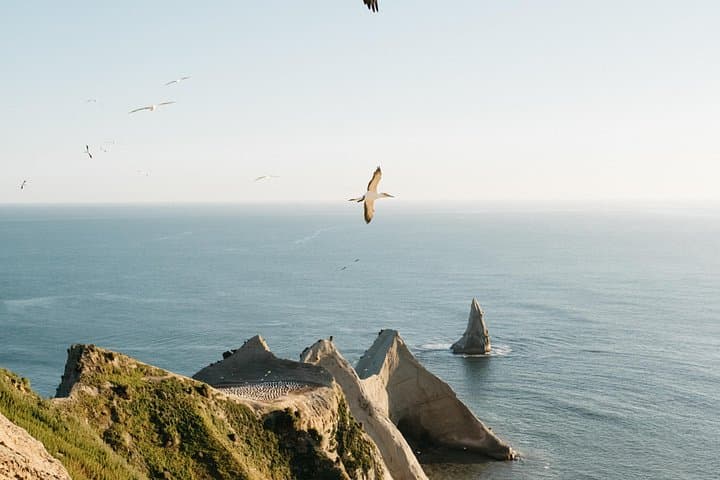
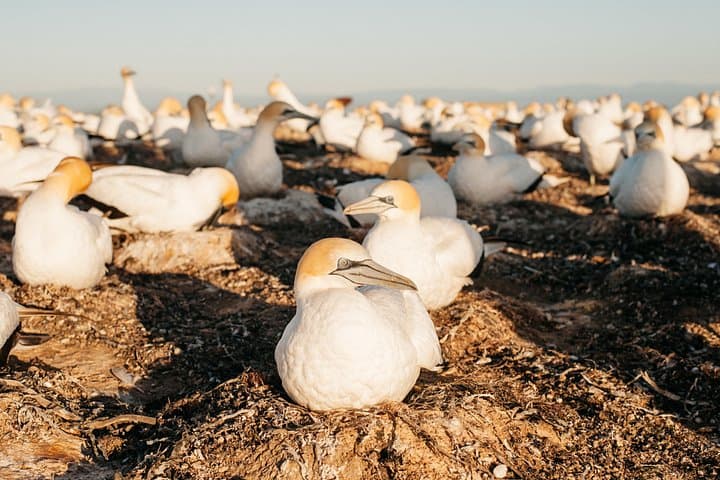
You step out onto a windswept headland where the Pacific pushes against steep cliffs and the air smells of salt and guano; the colony’s white bodies and golden crowns glitter like a moving reef. On a private tour across New Zealand’s largest privately owned wildlife sanctuary, guides thread the story of the land—farm tracks, Maori place names, and the volcanic cliffs that rise from Hawke’s Bay—into every stop.
Verified experiences and guided adventures in the surrounding area.
Operated by Gannet Safaris Overland · Napier, Hawke's Bay
You step out onto a windswept headland where the Pacific pushes against steep cliffs and the air smells of salt and guano; the colony’s white bodies and golden crowns glitter like a moving reef. On a private tour across New Zealand’s largest privately owned wildlife sanctuary, guides thread the story of the land—farm tracks, Maori place names, and the volcanic cliffs that rise from Hawke’s Bay—into every stop.
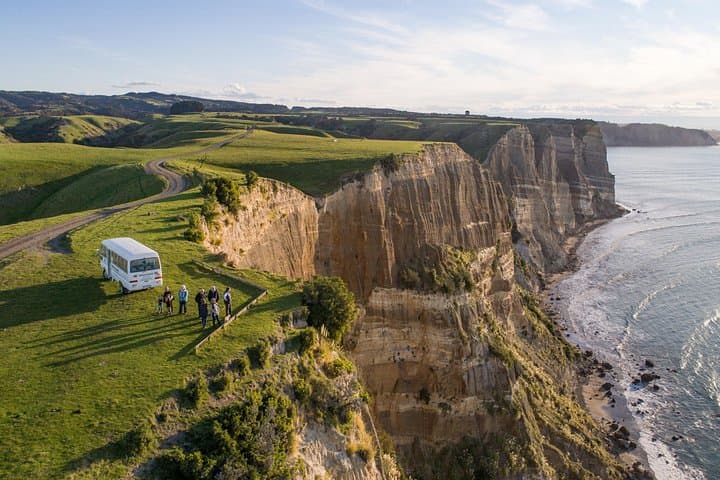
Geology here is blunt and visible: marine terraces, pumice layers, and the eroded sandstone cliffs that gannets choose for nesting. The site is Te Kauwae-a-Māui to local iwi, and farming families have managed these paddocks for generations; today pasture and predator control programs support one of the few large mainland seabird colonies. Culture and natural history collide at the lookout, where you can watch breeding pairs, diving arcs, and noisy courtship displays from a regulated viewing area.
Practically, expect roughly a three-hour excursion over farm roads and compacted tracks with short, uneven sections. The tour includes interpretation about farming practices and conservation, a stop at a dramatic lookout, and close but respectful proximity to birds—meters, not feet—while guides enforce distance to avoid disturbance. Bring layered windproof clothing, good shoes, binoculars, and a camera with a zoom. Midday light is harsh; early morning or late afternoon offers better photography and calmer seas.
This is a hands-on wildlife viewing trip with a clear conservation focus—an opportunity to see gannets at scale while learning how human stewardship maintains access and safety for both birds and people.
easy.
3 hours.
Suitable for most fitness levels; requires short walks on uneven farm tracks and stable footing on lookout platforms.
Guided viewing areas put you within metres but not at the nest level; guides enforce buffer zones to avoid disturbing breeding birds.
Yes—infants and small children can use strollers on the farm roads, but expect uneven ground near viewpoints and keep children close.
Late spring through summer typically shows active nesting and chick-rearing; early mornings and late afternoons offer better light and calmer winds.
Most travelers base themselves in Napier or Hastings; private pickup options are often available—confirm pickup point when booking.
The cape carries Māori place names and stories; European farming converted coastal tussock into pasture, and generations of landowners now balance farming with wildlife access.
The colony sits on privately managed land where predator control and visitor rules limit disturbance; staying on paths and following guides helps protect breeding success.
Gannet Safaris Overland operates guided outdoor trips and adventures with an emphasis on safety, stewardship, and memorable experiences.

You step out onto a windswept headland where the Pacific pushes against steep cliffs and the air smells of salt and guano; the colony’s white bodies and golden crowns glitter like a moving reef. On a private tour across New Zealand’s largest privately owned wildlife sanctuary, guides thread the story of the land—farm tracks, Maori place names, and the volcanic cliffs that rise from Hawke’s Bay—into every stop.
You step out onto a windswept headland where the Pacific pushes against steep cliffs and the air smells of salt and guano; the colony’s white bodies and golden crowns glitter like a moving reef. On a private tour across New Zealand’s largest privately owned wildlife sanctuary, guides thread the story of the land—farm tracks, Maori place names, and the volcanic cliffs that rise from Hawke’s Bay—into every stop.
Geology here is blunt and visible: marine terraces, pumice layers, and the eroded sandstone cliffs that gannets choose for nesting. The site is Te Kauwae-a-Māui to local iwi, and farming families have managed these paddocks for generations; today pasture and predator control programs support one of the few large mainland seabird colonies. Culture and natural history collide at the lookout, where you can watch breeding pairs, diving arcs, and noisy courtship displays from a regulated viewing area.
Practically, expect roughly a three-hour excursion over farm roads and compacted tracks with short, uneven sections. The tour includes interpretation about farming practices and conservation, a stop at a dramatic lookout, and close but respectful proximity to birds—meters, not feet—while guides enforce distance to avoid disturbance. Bring layered windproof clothing, good shoes, binoculars, and a camera with a zoom. Midday light is harsh; early morning or late afternoon offers better photography and calmer seas.
This is a hands-on wildlife viewing trip with a clear conservation focus—an opportunity to see gannets at scale while learning how human stewardship maintains access and safety for both birds and people.