THE ADVENTURE COLLECTIVE® · Independent discovery and booking for outdoor travel

Travel off the beaten path to Banteay Chhmar, a late 12th–early 13th century Khmer temple complex with sweeping bas-reliefs and few visitors. This private tour delivers cultural context, quiet exploration, and practical tips for a full-day trip from Siem Reap.
Travel off the beaten path to Banteay Chhmar, a late 12th–early 13th century Khmer temple complex with sweeping bas-reliefs and few visitors. This private tour delivers cultural context, quiet exploration, and practical tips for a full-day trip from Siem Reap.
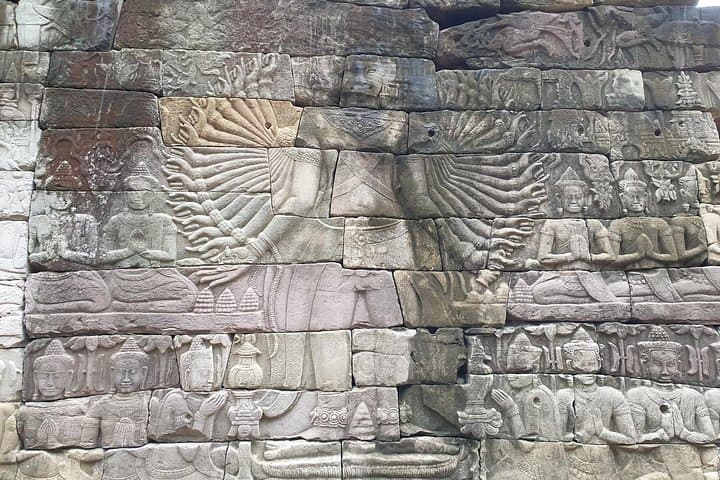
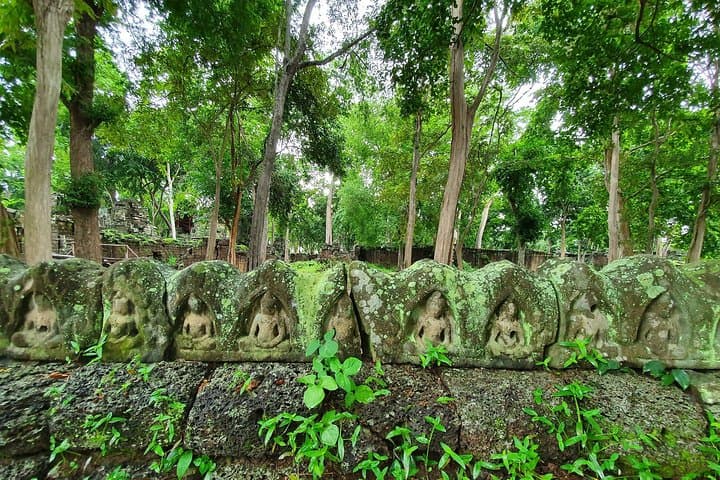
A hot breeze parts the tall grass as the van eases off the main road and the temple walls appear through a curtain of trees—stone faces peering from shadow, bas-reliefs worn soft by time. Banteay Chhmar sits at the edge of Cambodia’s northwest plains, a quiet complex of galleries, towers and moats that rewards the effort of a longer day trip with near-solitude.
Verified experiences and guided adventures in the surrounding area.
Operated by Tour Guide-Siem Reap · Banteay Chhmar, Banteay Meanchey
A hot breeze parts the tall grass as the van eases off the main road and the temple walls appear through a curtain of trees—stone faces peering from shadow, bas-reliefs worn soft by time. Banteay Chhmar sits at the edge of Cambodia’s northwest plains, a quiet complex of galleries, towers and moats that rewards the effort of a longer day trip with near-solitude.
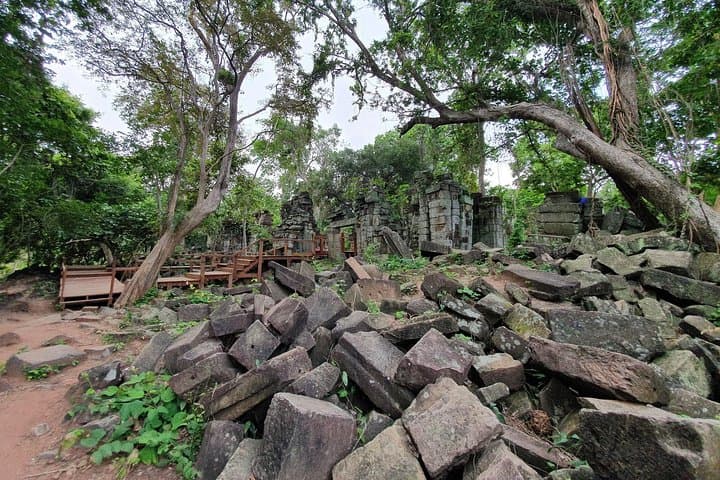
Built under Jayavarman VII in the late 12th–early 13th century, the site echoes Angkorian planning: enclosures, causeways and carved panels that record military campaigns and everyday life. The sandstone blocks carry the memory of centuries; where restoration has lagged, vegetation leans into crevices and termites and rain have reshaped contours. The surrounding countryside—rice paddies, palm groves, the occasional ox-cart—gives a clear sense of living history: villagers working land that has fed civilizations for a millennium.
Expect a cultural, low-impact walk rather than a strenuous trek. Your guide will point out the outer gallery bas-reliefs, the central sanctuary, and smaller satellite prasats; if time allows you may visit Prasat Banteay Toap or pause at Spean Toap (Soldier Bridge) for context on local transport routes.
Practicalities: travel time from Siem Reap is roughly two hours each way, so plan for a 5–6 hour excursion. Wear sturdy shoes for uneven sandstone, bring sun protection and at least 1–2 liters of water, and carry mosquito repellent for shaded corners. Because conservation is limited, avoid climbing fragile walls and follow your guide’s route to minimize impact. The payoff is direct: a rarely visited Angkorian city where the stones still speak, and you have the room to listen.
easy.
5–6 hours.
Suitable for most fitness levels; involves walking on uneven ground for up to a few hours.
Expect about two hours each way by air-conditioned vehicle; the full tour runs roughly 5–6 hours including transfers.
Yes—terrain is uneven but the tour is low-intensity; arrange pickup/drop-off and infant seats if needed and note some steps may be steep.
Check your booking details—private tour inclusions vary; many operators include guide and transport but entrance fees may be charged locally.
No—many surfaces are fragile. Avoid touching or climbing to protect the stone and follow your guide’s instructions.
Constructed under King Jayavarman VII, Banteay Chhmar is a large late-12th/early-13th century temple-city whose bas-reliefs recall Bayon-style scenes of war and daily life.
The complex has seen limited large-scale restoration; visitors should avoid touching carvings, support local guides and respect restricted areas to minimize further erosion.
Tour Guide-Siem Reap operates guided outdoor trips and adventures with an emphasis on safety, stewardship, and memorable experiences.

A hot breeze parts the tall grass as the van eases off the main road and the temple walls appear through a curtain of trees—stone faces peering from shadow, bas-reliefs worn soft by time. Banteay Chhmar sits at the edge of Cambodia’s northwest plains, a quiet complex of galleries, towers and moats that rewards the effort of a longer day trip with near-solitude.
A hot breeze parts the tall grass as the van eases off the main road and the temple walls appear through a curtain of trees—stone faces peering from shadow, bas-reliefs worn soft by time. Banteay Chhmar sits at the edge of Cambodia’s northwest plains, a quiet complex of galleries, towers and moats that rewards the effort of a longer day trip with near-solitude.
Built under Jayavarman VII in the late 12th–early 13th century, the site echoes Angkorian planning: enclosures, causeways and carved panels that record military campaigns and everyday life. The sandstone blocks carry the memory of centuries; where restoration has lagged, vegetation leans into crevices and termites and rain have reshaped contours. The surrounding countryside—rice paddies, palm groves, the occasional ox-cart—gives a clear sense of living history: villagers working land that has fed civilizations for a millennium.
Expect a cultural, low-impact walk rather than a strenuous trek. Your guide will point out the outer gallery bas-reliefs, the central sanctuary, and smaller satellite prasats; if time allows you may visit Prasat Banteay Toap or pause at Spean Toap (Soldier Bridge) for context on local transport routes.
Practicalities: travel time from Siem Reap is roughly two hours each way, so plan for a 5–6 hour excursion. Wear sturdy shoes for uneven sandstone, bring sun protection and at least 1–2 liters of water, and carry mosquito repellent for shaded corners. Because conservation is limited, avoid climbing fragile walls and follow your guide’s route to minimize impact. The payoff is direct: a rarely visited Angkorian city where the stones still speak, and you have the room to listen.