THE ADVENTURE COLLECTIVE® · Independent discovery and booking for outdoor travel

Explore Pachacamac’s sun-worn pyramids and the site museum on a private four-hour tour from Lima. Learn the layers of pre-Hispanic ritual life while walking ceremonial ramps and viewing artifacts that reveal 2,000 years of coastal Peruvian history.
Explore Pachacamac’s sun-worn pyramids and the site museum on a private four-hour tour from Lima. Learn the layers of pre-Hispanic ritual life while walking ceremonial ramps and viewing artifacts that reveal 2,000 years of coastal Peruvian history.
You step out of Lima’s traffic and the coast’s heat eases into a wide, dry plain where earth and stone keep their own memory. The path into Pachacamac opens onto sun-baked plazas, stepped adobe pyramids with long ceremonial ramps, and the low-lying silhouette of Pyramid II that once drew pilgrims from across the central coast.
Verified experiences and guided adventures in the surrounding area.
Operated by D'Sunqu Lima · Lurín, Lima
You step out of Lima’s traffic and the coast’s heat eases into a wide, dry plain where earth and stone keep their own memory. The path into Pachacamac opens onto sun-baked plazas, stepped adobe pyramids with long ceremonial ramps, and the low-lying silhouette of Pyramid II that once drew pilgrims from across the central coast.
For more than two millennia Pachacamac functioned as an oracle and ritual center for successive cultures—Lima, Wari (Huari), Ichma and later the Inca—before Spanish conquest dismantled key symbols. The site’s museums collect carved wooden idols, ceramics and ritual offerings that map a layered regional history. Geologically, the sanctuary sits on coastal desert with windblown sands and compacted adobe, which explains the mellow, eroded profiles of its pyramids and the deep channels cut by ancient runoff.
A practical visit lasts about four hours: museum orientation, a guided walk to Pyramid II, a tour of the main plazas and a look at the old Qhapaq Ñan route used by pilgrims. Expect warm sun, dry air, and flat but uneven adobe surfaces—good footing matters. Guides explain iconography and ritual practice while pointing out conservation issues: fragile adobe, restricted climbing, and ongoing archaeological work.
Bring sun protection, plenty of water, and a camera with a polarizer for the intense coastal light. Morning visits are cooler and quieter; late afternoon offers long shadows across ramped faces but can be windy. The experience is part history lesson, part open-air museum—direct, tactile and revealing about the coastal cultures that shaped pre-Hispanic Peru.
easy.
4 hours.
Suitable for most fitness levels; requires walking on flat but uneven terrain for up to a couple of hours.
The private tour is approximately four hours and includes hotel pickup, private transport, entrance to the Pachacamac Archaeological Zone, a guided walk through key structures and access to the site museum.
Much of the site and the transport are wheelchair accessible, but some uneven outdoor areas may be challenging—check with the operator for specific arrangements.
Climbing on preserved structures is prohibited to protect fragile adobe; drone use is typically restricted and requires prior permission from authorities.
Bring sun protection, comfortable shoes, a filled water bottle, and your passport if required for identification; the operator provides bottled water and a guided experience.
Pachacamac served as a major oracle and pilgrimage center on Peru’s central coast for over 2,000 years, occupied by Lima, Huari, Ichma and Inca cultures before Spanish contact.
Ongoing conservation focuses on stabilizing adobe structures and regulating visitor access; follow signage and guide instructions to minimize impact.
D'Sunqu Lima operates guided outdoor trips and adventures with an emphasis on safety, stewardship, and memorable experiences.
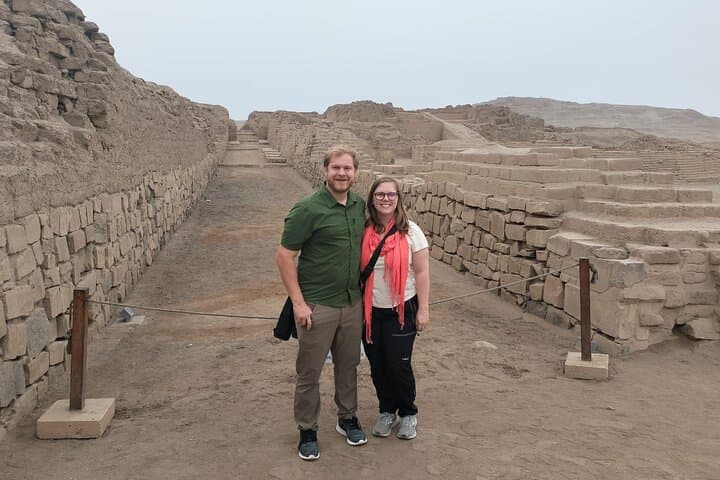
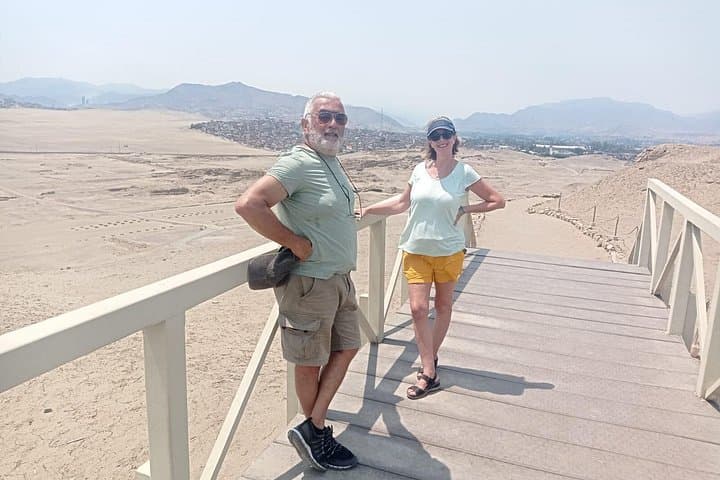
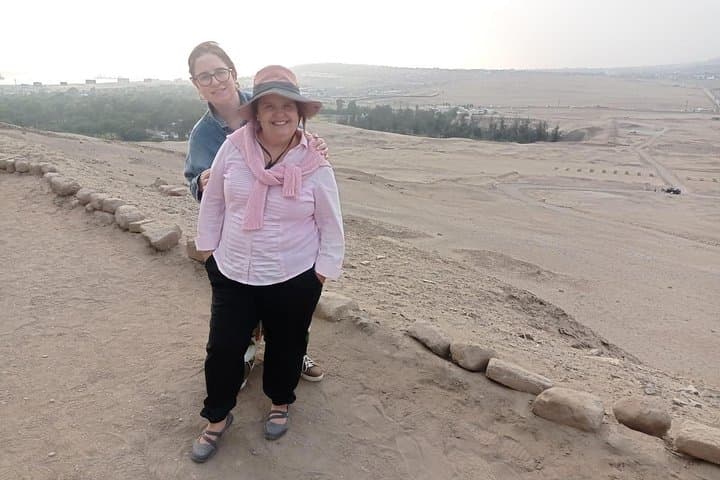
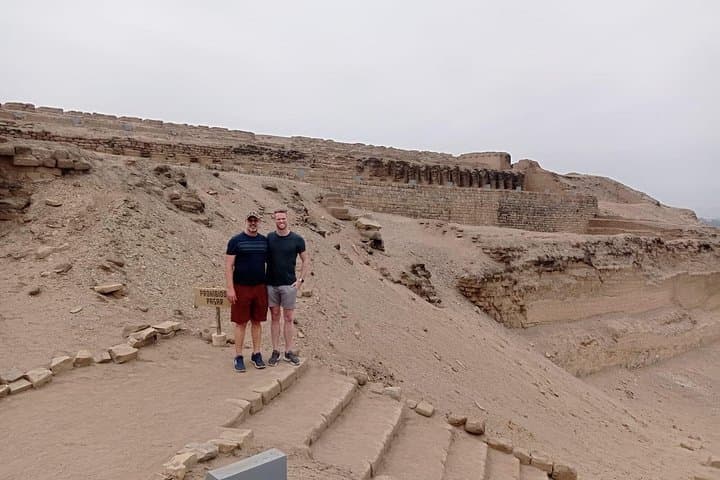
You step out of Lima’s traffic and the coast’s heat eases into a wide, dry plain where earth and stone keep their own memory. The path into Pachacamac opens onto sun-baked plazas, stepped adobe pyramids with long ceremonial ramps, and the low-lying silhouette of Pyramid II that once drew pilgrims from across the central coast.
You step out of Lima’s traffic and the coast’s heat eases into a wide, dry plain where earth and stone keep their own memory. The path into Pachacamac opens onto sun-baked plazas, stepped adobe pyramids with long ceremonial ramps, and the low-lying silhouette of Pyramid II that once drew pilgrims from across the central coast.
For more than two millennia Pachacamac functioned as an oracle and ritual center for successive cultures—Lima, Wari (Huari), Ichma and later the Inca—before Spanish conquest dismantled key symbols. The site’s museums collect carved wooden idols, ceramics and ritual offerings that map a layered regional history. Geologically, the sanctuary sits on coastal desert with windblown sands and compacted adobe, which explains the mellow, eroded profiles of its pyramids and the deep channels cut by ancient runoff.
A practical visit lasts about four hours: museum orientation, a guided walk to Pyramid II, a tour of the main plazas and a look at the old Qhapaq Ñan route used by pilgrims. Expect warm sun, dry air, and flat but uneven adobe surfaces—good footing matters. Guides explain iconography and ritual practice while pointing out conservation issues: fragile adobe, restricted climbing, and ongoing archaeological work.
Bring sun protection, plenty of water, and a camera with a polarizer for the intense coastal light. Morning visits are cooler and quieter; late afternoon offers long shadows across ramped faces but can be windy. The experience is part history lesson, part open-air museum—direct, tactile and revealing about the coastal cultures that shaped pre-Hispanic Peru.