THE ADVENTURE COLLECTIVE® · Independent discovery and booking for outdoor travel

Trace the origins of pyramid building on a private day trip from Cairo that visits Memphis, the Step Pyramid at Saqqara and the Bent and Red Pyramids at Dahshur. Expect exposed desert sites, short walks on uneven ground, and firsthand insights into Old Kingdom architecture.
Trace the origins of pyramid building on a private day trip from Cairo that visits Memphis, the Step Pyramid at Saqqara and the Bent and Red Pyramids at Dahshur. Expect exposed desert sites, short walks on uneven ground, and firsthand insights into Old Kingdom architecture.
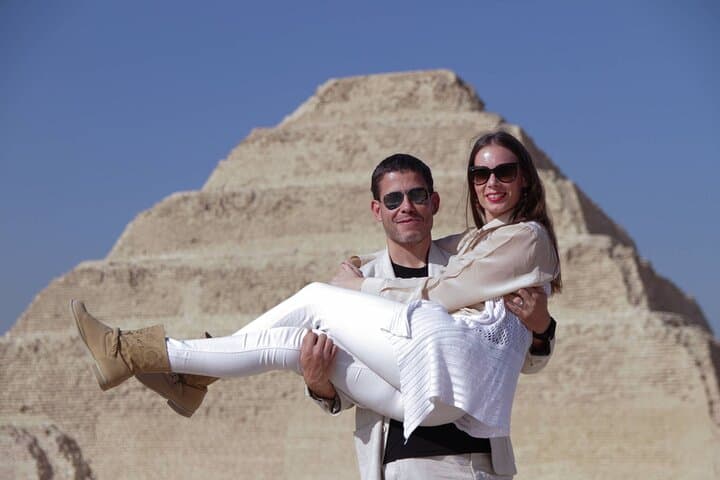
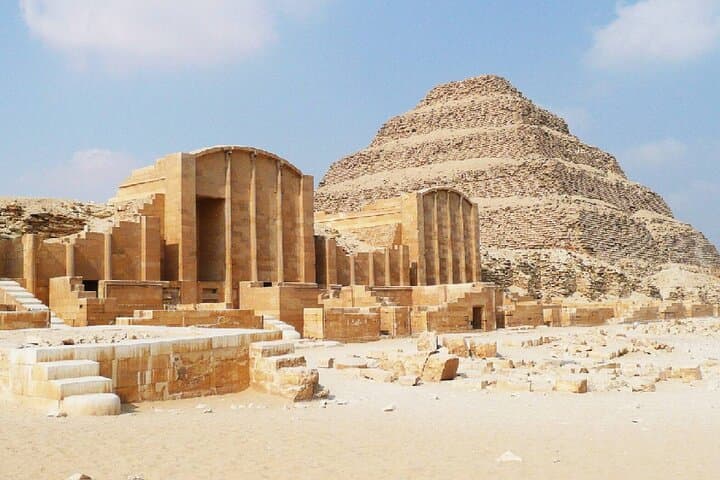
You step out of the air‑conditioned van into a low, dry wind that seems to push the past forward — sand stirring around carved stone and sun‑bleached reliefs. The Step Pyramid of Saqqara rises not as a distant icon but as an intimate architectural experiment; the Bent and Red Pyramids at Dahshur sit down the road like older cousins testing different angles of the same problem.
Verified experiences and guided adventures in the surrounding area.
Operated by Book My Egypt Tours · Cairo, Cairo Governorate
You step out of the air‑conditioned van into a low, dry wind that seems to push the past forward — sand stirring around carved stone and sun‑bleached reliefs. The Step Pyramid of Saqqara rises not as a distant icon but as an intimate architectural experiment; the Bent and Red Pyramids at Dahshur sit down the road like older cousins testing different angles of the same problem.
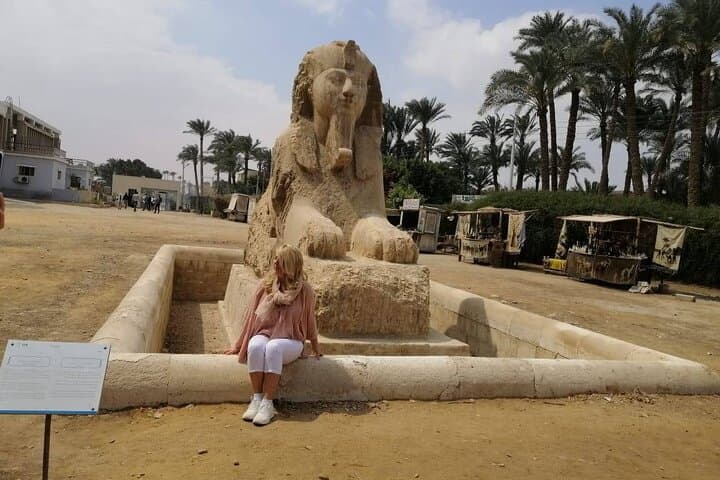
This loop — Memphis, Saqqara and Dahshur — traces the arc of early Pharaonic power. Memphis, founded around 3100 BCE, was Egypt’s administrative heart; Sakkara records the shift from flat mastabas to stacked stone at Djoser’s complex, and Dahshur preserves experiments in slope and construction from the Fourth Dynasty. The geology is simple yet revealing: limestone and fine desert sands that both preserve and erode, exposing working marks and ancient mortar. Along the roadside, small villages and occasional palm groves mark where the Nile’s influence fades.
Expect expansive, exposed sites with uneven paths and low shade. Guides often point out the Pyramid Texts in Unas’s tomb and the carved scenes of the Mastaba of Ti. Photography is unrestricted in many areas but check local signage for interior chambers.
Practical edge: start early to avoid heat; carry water, sun protection and comfortable, grippy shoes for sandy and rocky surfaces; factor in about 5–6 hours including transfers. Bring cash for on‑site tickets and tipping. The tour balances history and comfort — you’ll leave with a clear sense of how the pyramid form evolved and what the desert required from those who built it.
easy.
5–6 hours.
Suitable for most travelers; involves multiple short walks on uneven, sandy terrain and brief stair descents into tombs.
Entrance fees are often not included—confirm at booking and carry cash or a card as noted by the operator.
Access to interior chambers varies by pyramid and current conservation rules; ask the guide on the day for permitted areas.
The tour is physically easy but involves uneven ground and some stairs; not recommended for those with serious spinal or heart conditions.
Expect several short walks (10–30 minutes) at each site with occasional steps into tombs; total active walking is moderate over the 5–6 hour day.
Memphis served as Egypt’s administrative capital from around 3100 BCE; Saqqara’s Step Pyramid marks the earliest large‑scale use of dressed stone in monumental tomb architecture.
Sites face erosion and visitor wear; follow pathway rules, avoid touching reliefs and carry out trash to reduce impact.
Book My Egypt Tours operates guided outdoor trips and adventures with an emphasis on safety, stewardship, and memorable experiences.
You step out of the air‑conditioned van into a low, dry wind that seems to push the past forward — sand stirring around carved stone and sun‑bleached reliefs. The Step Pyramid of Saqqara rises not as a distant icon but as an intimate architectural experiment; the Bent and Red Pyramids at Dahshur sit down the road like older cousins testing different angles of the same problem.
You step out of the air‑conditioned van into a low, dry wind that seems to push the past forward — sand stirring around carved stone and sun‑bleached reliefs. The Step Pyramid of Saqqara rises not as a distant icon but as an intimate architectural experiment; the Bent and Red Pyramids at Dahshur sit down the road like older cousins testing different angles of the same problem.
This loop — Memphis, Saqqara and Dahshur — traces the arc of early Pharaonic power. Memphis, founded around 3100 BCE, was Egypt’s administrative heart; Sakkara records the shift from flat mastabas to stacked stone at Djoser’s complex, and Dahshur preserves experiments in slope and construction from the Fourth Dynasty. The geology is simple yet revealing: limestone and fine desert sands that both preserve and erode, exposing working marks and ancient mortar. Along the roadside, small villages and occasional palm groves mark where the Nile’s influence fades.
Expect expansive, exposed sites with uneven paths and low shade. Guides often point out the Pyramid Texts in Unas’s tomb and the carved scenes of the Mastaba of Ti. Photography is unrestricted in many areas but check local signage for interior chambers.
Practical edge: start early to avoid heat; carry water, sun protection and comfortable, grippy shoes for sandy and rocky surfaces; factor in about 5–6 hours including transfers. Bring cash for on‑site tickets and tipping. The tour balances history and comfort — you’ll leave with a clear sense of how the pyramid form evolved and what the desert required from those who built it.