THE ADVENTURE COLLECTIVE® · Independent discovery and booking for outdoor travel

Explore Britain’s democratic history on a private, guided tour of Manchester’s People’s History Museum. See suffragette banners, labour artefacts and curated archives with expert commentary tailored to your interests.
Explore Britain’s democratic history on a private, guided tour of Manchester’s People’s History Museum. See suffragette banners, labour artefacts and curated archives with expert commentary tailored to your interests.
You step off Bridge Street into the sharp air of Manchester and the brick-faced Left Bank building seems to lean in to hear your questions. The guide greets you and, within minutes, banners and protest posters pull you through time — from factory floors to picket lines — each artifact tugging at a different corner of Britain’s democratic story.
Verified experiences and guided adventures in the surrounding area.
Operated by UK Tours & Activites · Manchester, England
You step off Bridge Street into the sharp air of Manchester and the brick-faced Left Bank building seems to lean in to hear your questions. The guide greets you and, within minutes, banners and protest posters pull you through time — from factory floors to picket lines — each artifact tugging at a different corner of Britain’s democratic story.
This museum is the UK's national museum of democracy: its galleries catalogue suffrage banners, trade-union paraphernalia and political ephemera that trace social movements from the Industrial Revolution to present-day campaigns. The building reopened in its current Left Bank home after a major redevelopment, bringing storeroom archives into public view and allowing deeper interpretation of textile conservation and banner restoration.
Expect close-up encounters with fragile suffragette banners, large-scale political posters and oral-history stations that give voice to workers and organisers. The guide tailors the route to your interests — whether labour history, women’s rights or contemporary protest art — adding context about Manchester’s role as an industrial and political hub.
Practicalities are straightforward: this private, two-hour tour meets on Bridge Street; museum entry is included and the site is wheelchair accessible. One licensed guide covers up to five people, so larger groups will need additional guides. Wear comfortable shoes, allow time for the archive displays, and check your email the day before for final instructions. Photography without flash is usually acceptable but confirm with your guide for fragile items. This is an intimate, tactile introduction to Britain’s civic past — rigorous, human, and immediately relevant.
easy.
2 hours.
Suitable for most fitness levels; involves standing and slow walking over two hours
Meet your guide in front of Crazy Pedro's on Bridge Street (55–57 Bridge St); do not enter the restaurant — it is only a meeting point.
One licensed guide leads groups of 1–5; the operator will arrange extra guides for larger groups at an additional cost.
Yes — the People’s History Museum and its surfaces are wheelchair accessible; inform the operator of specific access needs in advance.
No — food and drinks are not included. There are cafés nearby if you want refreshments before or after the tour.
The People's History Museum is the UK's national museum of democracy, housing trade-union banners, suffrage materials and political ephemera; it relocated to its redeveloped Left Bank site in 2010 to expand public access to its collections.
The museum prioritises textile conservation and climate-controlled storage for fragile banners; visitors are encouraged to use public transport and respect handling rules to protect exhibits.
UK Tours & Activites operates guided outdoor trips and adventures with an emphasis on safety, stewardship, and memorable experiences.
You step off Bridge Street into the sharp air of Manchester and the brick-faced Left Bank building seems to lean in to hear your questions. The guide greets you and, within minutes, banners and protest posters pull you through time — from factory floors to picket lines — each artifact tugging at a different corner of Britain’s democratic story.
You step off Bridge Street into the sharp air of Manchester and the brick-faced Left Bank building seems to lean in to hear your questions. The guide greets you and, within minutes, banners and protest posters pull you through time — from factory floors to picket lines — each artifact tugging at a different corner of Britain’s democratic story.
This museum is the UK's national museum of democracy: its galleries catalogue suffrage banners, trade-union paraphernalia and political ephemera that trace social movements from the Industrial Revolution to present-day campaigns. The building reopened in its current Left Bank home after a major redevelopment, bringing storeroom archives into public view and allowing deeper interpretation of textile conservation and banner restoration.
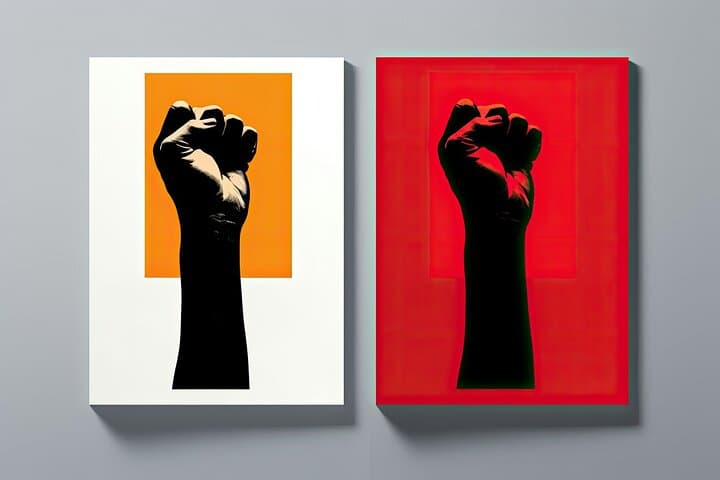
Expect close-up encounters with fragile suffragette banners, large-scale political posters and oral-history stations that give voice to workers and organisers. The guide tailors the route to your interests — whether labour history, women’s rights or contemporary protest art — adding context about Manchester’s role as an industrial and political hub.
Practicalities are straightforward: this private, two-hour tour meets on Bridge Street; museum entry is included and the site is wheelchair accessible. One licensed guide covers up to five people, so larger groups will need additional guides. Wear comfortable shoes, allow time for the archive displays, and check your email the day before for final instructions. Photography without flash is usually acceptable but confirm with your guide for fragile items. This is an intimate, tactile introduction to Britain’s civic past — rigorous, human, and immediately relevant.