THE ADVENTURE COLLECTIVE® · Independent discovery and booking for outdoor travel

Explore Madeira’s maritime past and marine present on a private three-hour tour to the Madeira Whale Museum. See whaling-era artifacts, modern cetacean exhibits, and coastal viewpoints with a local guide and private transport.
Explore Madeira’s maritime past and marine present on a private three-hour tour to the Madeira Whale Museum. See whaling-era artifacts, modern cetacean exhibits, and coastal viewpoints with a local guide and private transport.
A spray-salted wind pushes across the eastern headland as your private vehicle eases into Caniçal’s compact harbor. Brightly painted boats bob while the low, brick profile of the Madeira Whale Museum rises against the Atlantic horizon — an interior that trades the clang of industry for quiet displays of bones, models and archival film. Visitors move from the lookouts of the 1940s into modern galleries that map whales’ routes and the island’s changing relationship with the sea.
Verified experiences and guided adventures in the surrounding area.
Operated by Pearl of the Atlantic · Caniçal, Madeira
A spray-salted wind pushes across the eastern headland as your private vehicle eases into Caniçal’s compact harbor. Brightly painted boats bob while the low, brick profile of the Madeira Whale Museum rises against the Atlantic horizon — an interior that trades the clang of industry for quiet displays of bones, models and archival film. Visitors move from the lookouts of the 1940s into modern galleries that map whales’ routes and the island’s changing relationship with the sea.
The museum’s permanent exhibitions cover over 1,000 m² across two rooms. One gallery reconstructs Madeira’s whaling era: lookout networks, the whaling fleet, and processing techniques documented by photos and artifacts. The other shifts to biology and conservation, introducing local species and how oceanography around Madeira — steep seabed drops and nutrient upwellings — concentrates marine life and attracts cetaceans.
Culturally, the site frames whaling as both livelihood and local memory; the guided visit offers context on how islanders adapted to global shifts from hunting to protection and research. Geologically, Madeira’s volcanic slopes fall sharply to deep water: it’s that abrupt bathymetry that helps bring sperm whales and dolphins close enough to study.
Practical guidance: tours run about three hours including private transport from Funchal, museum entry, and local narration. Wear sturdy walking shoes for uneven cobbles, bring a windproof layer, and allow time for photos at the pier. If you’re planning to pair this visit with on-water whale watching, book separate outings — the museum provides historical and scientific grounding to make an ocean trip richer.
easy.
3 hours.
Minimal walking and short ramps; suitable for most fitness levels
The private tour runs approximately three hours, including transport from Funchal, museum entry and a guided walkthrough.
Yes — the tour price includes Madeira Whale Museum admission as part of the package.
Yes — private pickup and drop-off from hotels, apartments, or the port in Funchal are offered; provide details at booking.
Yes — the museum is stroller-accessible and family-friendly, though children must be supervised.
Madeira’s whaling industry peaked in the mid-20th century; the museum traces the island’s shift from hunting to scientific study and conservation.
The museum emphasizes contemporary conservation and research; visitors are encouraged to support responsible wildlife tours and respect protected marine areas.
Pearl of the Atlantic operates guided outdoor trips and adventures with an emphasis on safety, stewardship, and memorable experiences.
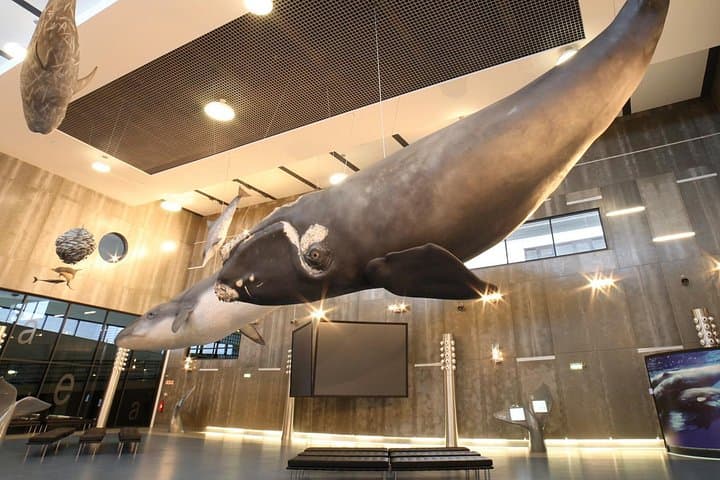
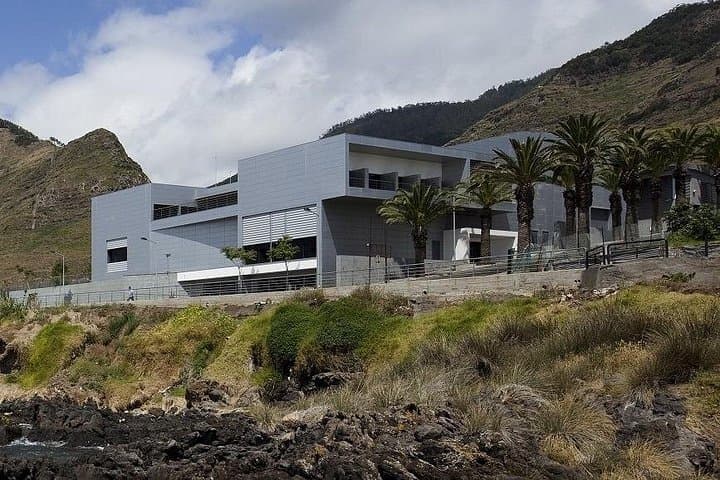
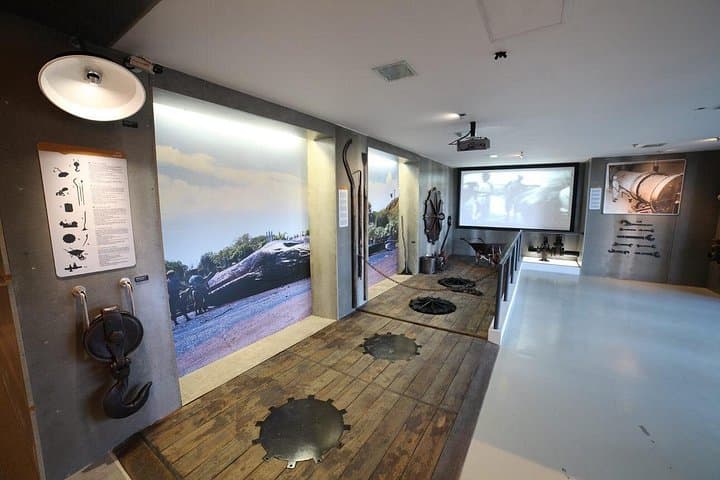
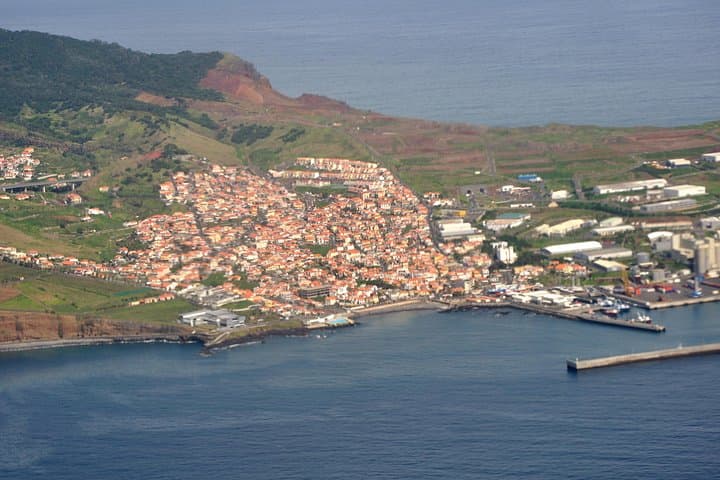
A spray-salted wind pushes across the eastern headland as your private vehicle eases into Caniçal’s compact harbor. Brightly painted boats bob while the low, brick profile of the Madeira Whale Museum rises against the Atlantic horizon — an interior that trades the clang of industry for quiet displays of bones, models and archival film. Visitors move from the lookouts of the 1940s into modern galleries that map whales’ routes and the island’s changing relationship with the sea.
A spray-salted wind pushes across the eastern headland as your private vehicle eases into Caniçal’s compact harbor. Brightly painted boats bob while the low, brick profile of the Madeira Whale Museum rises against the Atlantic horizon — an interior that trades the clang of industry for quiet displays of bones, models and archival film. Visitors move from the lookouts of the 1940s into modern galleries that map whales’ routes and the island’s changing relationship with the sea.
The museum’s permanent exhibitions cover over 1,000 m² across two rooms. One gallery reconstructs Madeira’s whaling era: lookout networks, the whaling fleet, and processing techniques documented by photos and artifacts. The other shifts to biology and conservation, introducing local species and how oceanography around Madeira — steep seabed drops and nutrient upwellings — concentrates marine life and attracts cetaceans.
Culturally, the site frames whaling as both livelihood and local memory; the guided visit offers context on how islanders adapted to global shifts from hunting to protection and research. Geologically, Madeira’s volcanic slopes fall sharply to deep water: it’s that abrupt bathymetry that helps bring sperm whales and dolphins close enough to study.
Practical guidance: tours run about three hours including private transport from Funchal, museum entry, and local narration. Wear sturdy walking shoes for uneven cobbles, bring a windproof layer, and allow time for photos at the pier. If you’re planning to pair this visit with on-water whale watching, book separate outings — the museum provides historical and scientific grounding to make an ocean trip richer.