THE ADVENTURE COLLECTIVE® · Independent discovery and booking for outdoor travel

Stand where the first shots of the American Revolution rang out and follow the route that changed a nation. This private, seven-hour tour links Lexington and Concord’s battle sites with Boston’s Freedom Trail for a focused, on-the-ground history lesson.
Stand where the first shots of the American Revolution rang out and follow the route that changed a nation. This private, seven-hour tour links Lexington and Concord’s battle sites with Boston’s Freedom Trail for a focused, on-the-ground history lesson.
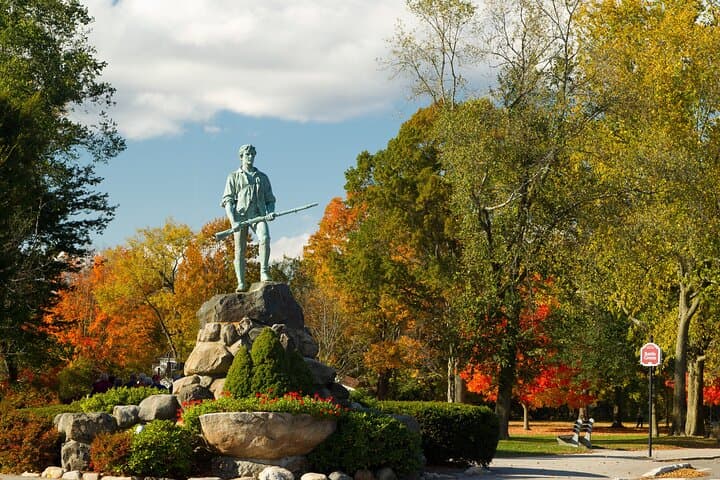
The morning begins where cobblestones meet the harbor: a small group gathers outside the Pilgrim Parking entrance in Boston’s North End, breath visible in cool air or warmed by a late-spring sun. The guide checks names, lifts a discreet placard, and the van eases away from the waterfront into suburban roads lined with clapboard houses and maples that have watched these lanes since colonial days. By the time the vehicle pulls up to Lexington Battle Green, the field has a low, taut quiet—the kind of silence that holds the memory of a single, world-changing crack.
Verified experiences and guided adventures in the surrounding area.
Operated by Boston Hidden Gems · Boston, Massachusetts
The morning begins where cobblestones meet the harbor: a small group gathers outside the Pilgrim Parking entrance in Boston’s North End, breath visible in cool air or warmed by a late-spring sun. The guide checks names, lifts a discreet placard, and the van eases away from the waterfront into suburban roads lined with clapboard houses and maples that have watched these lanes since colonial days. By the time the vehicle pulls up to Lexington Battle Green, the field has a low, taut quiet—the kind of silence that holds the memory of a single, world-changing crack.
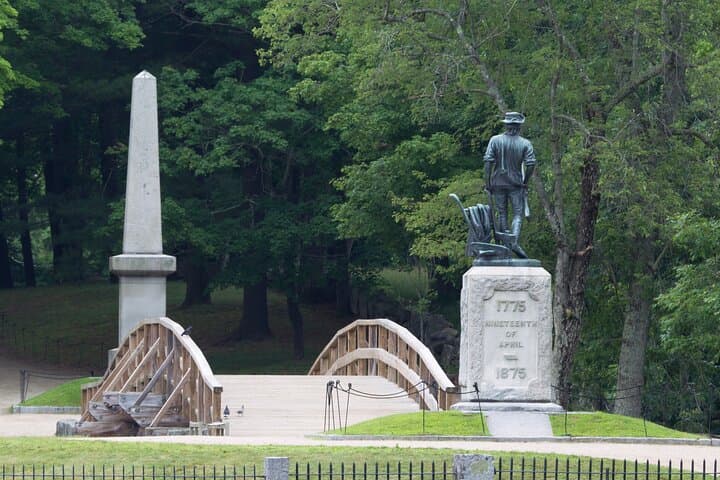
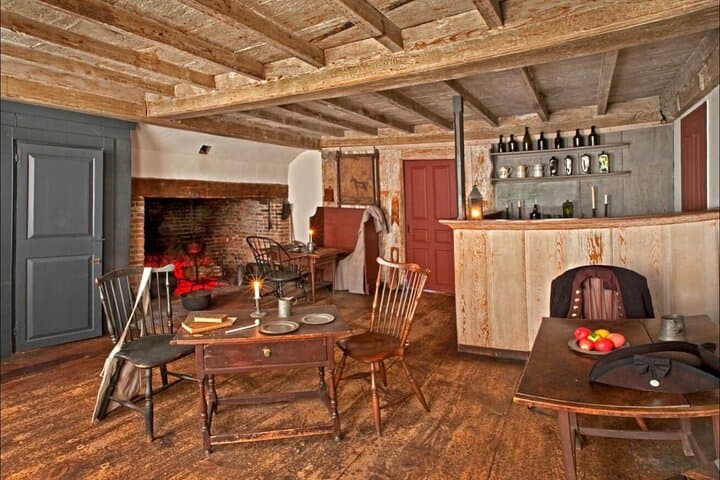
This private, full-day tour threads the first chapters of the American Revolution together across three compact but distinct landscapes: Lexington’s meetinghouse and Buckman Tavern, the Battle Road Trail where skirmishes threaded through stone walls and farms, Concord’s Old North Bridge where Minutemen met the Redcoats, and back to Boston for curated stops along the Freedom Trail including Old North Church and the USS Constitution.
Geology here is subtle but tangible: glacial deposits carved gentle drumlins and left outcrops of Roxbury puddingstone that early colonists used to mark property lines. Those low rolling hills shaped how troops moved and where skirmishes erupted; narrow lanes and stone walls funneled men and muskets into short, fierce engagements. Culturally, the route reads like a living ledger of New England—taverns that doubled as militia mustering points, homesteads that became landmarks, and a literary layer in Concord where Emerson, Thoreau, Alcott, and Hawthorne walked the same ground the tour passes.
The guide balances narrative with detail: why Paul Revere’s ride is part legend, part logistical relay; how Old Ironsides earned its name; and why Bunker Hill meant more about morale than territory. The day also leaves space—time for a farm-to-table lunch or a quick photo at Orchard House—so the experience never feels rushed.
Practicalities matter. The tour runs roughly seven hours and operates in a comfortable air-conditioned minivan; it’s private, so itineraries flex to group needs. Wear supportive walking shoes—the stops are short but on uneven historic surfaces—and bring layers: coastal mornings and inland afternoons can differ by several degrees. Carry a refillable bottle and a charged phone for photos and navigation. For families, note Massachusetts car-seat law applies and the operator requires appropriate child restraints.
For travelers who want a concentrated primer on the Revolution without museum pacing, this day trip turns textbook moments into place: the green that arrested a nation’s future, the bridge that turned retreat into rout, and a harbor city that still holds the echoes of lanterns and cannon. The region’s history is direct and tactile; the stones, trees, and old boards seem to anticipate your questions and answer them with quiet authority.
easy.
7 hours.
Suitable for most fitness levels; participants should be able to walk short distances on uneven surfaces and climb a few steps.
The tour is approximately seven hours, typically starting in the North End of Boston, visiting Lexington and Concord in the morning, returning to Boston in the afternoon for Freedom Trail stops and USS Constitution.
General tour admissions listed as included are minimal; some sites like the Old North Church visit are included but lunch and certain museum admissions are not and are paid on-site.
Yes, but Massachusetts law requires appropriate child restraints for children under 8 or under 57 inches—bring car seats as the operator does not supply them.
The tour is private and runs in a Toyota Sienna minivan; seating and luggage capacity vary—up to four guests with luggage is recommended; confirm with the operator for larger groups.
The vehicle is accessible for boarding, but many historic sites have uneven ground and steps; contact the operator ahead of time to discuss specific accessibility needs.
Yes—this private tour is flexible; guides can adjust stops or timing based on interests, traffic, and group needs when arranged in advance.
These sites mark the opening engagements of the American Revolution (April 19, 1775) and later became a center for American literature as Concord hosted Emerson, Thoreau, Alcott, and Hawthorne.
Many sites are protected by historical trusts and park services; stay on paths and respect fragile stone walls and period buildings to minimize wear on these preserved landscapes.
Boston Hidden Gems operates guided outdoor trips and adventures with an emphasis on safety, stewardship, and memorable experiences.
The morning begins where cobblestones meet the harbor: a small group gathers outside the Pilgrim Parking entrance in Boston’s North End, breath visible in cool air or warmed by a late-spring sun. The guide checks names, lifts a discreet placard, and the van eases away from the waterfront into suburban roads lined with clapboard houses and maples that have watched these lanes since colonial days. By the time the vehicle pulls up to Lexington Battle Green, the field has a low, taut quiet—the kind of silence that holds the memory of a single, world-changing crack.
The morning begins where cobblestones meet the harbor: a small group gathers outside the Pilgrim Parking entrance in Boston’s North End, breath visible in cool air or warmed by a late-spring sun. The guide checks names, lifts a discreet placard, and the van eases away from the waterfront into suburban roads lined with clapboard houses and maples that have watched these lanes since colonial days. By the time the vehicle pulls up to Lexington Battle Green, the field has a low, taut quiet—the kind of silence that holds the memory of a single, world-changing crack.
This private, full-day tour threads the first chapters of the American Revolution together across three compact but distinct landscapes: Lexington’s meetinghouse and Buckman Tavern, the Battle Road Trail where skirmishes threaded through stone walls and farms, Concord’s Old North Bridge where Minutemen met the Redcoats, and back to Boston for curated stops along the Freedom Trail including Old North Church and the USS Constitution.
Geology here is subtle but tangible: glacial deposits carved gentle drumlins and left outcrops of Roxbury puddingstone that early colonists used to mark property lines. Those low rolling hills shaped how troops moved and where skirmishes erupted; narrow lanes and stone walls funneled men and muskets into short, fierce engagements. Culturally, the route reads like a living ledger of New England—taverns that doubled as militia mustering points, homesteads that became landmarks, and a literary layer in Concord where Emerson, Thoreau, Alcott, and Hawthorne walked the same ground the tour passes.
The guide balances narrative with detail: why Paul Revere’s ride is part legend, part logistical relay; how Old Ironsides earned its name; and why Bunker Hill meant more about morale than territory. The day also leaves space—time for a farm-to-table lunch or a quick photo at Orchard House—so the experience never feels rushed.
Practicalities matter. The tour runs roughly seven hours and operates in a comfortable air-conditioned minivan; it’s private, so itineraries flex to group needs. Wear supportive walking shoes—the stops are short but on uneven historic surfaces—and bring layers: coastal mornings and inland afternoons can differ by several degrees. Carry a refillable bottle and a charged phone for photos and navigation. For families, note Massachusetts car-seat law applies and the operator requires appropriate child restraints.
For travelers who want a concentrated primer on the Revolution without museum pacing, this day trip turns textbook moments into place: the green that arrested a nation’s future, the bridge that turned retreat into rout, and a harbor city that still holds the echoes of lanterns and cannon. The region’s history is direct and tactile; the stones, trees, and old boards seem to anticipate your questions and answer them with quiet authority.