THE ADVENTURE COLLECTIVE® · Independent discovery and booking for outdoor travel

A private, full‑day guided tour linking the sculpted silence of the Giza Pyramids and Sphinx with the sweeping new galleries of the Grand Egyptian Museum. Learn construction theories, see monumental statuary, and plan for camel rides or optional pyramid entry.
A private, full‑day guided tour linking the sculpted silence of the Giza Pyramids and Sphinx with the sweeping new galleries of the Grand Egyptian Museum. Learn construction theories, see monumental statuary, and plan for camel rides or optional pyramid entry.
You step out of an air‑conditioned vehicle into a sharp, sunlit sweep of sand and stone—where silhouettes of the pyramids stare back like deliberate monuments to time. The Giza Plateau opens with broad sightlines: the Great Pyramid looms, the Sphinx watches from its valley, and the new glass-faced Grand Egyptian Museum anchors the modern edge of an ancient landscape.
Verified experiences and guided adventures in the surrounding area.
Operated by Cairo Private Guided Tours · Giza, Giza Governorate
You step out of an air‑conditioned vehicle into a sharp, sunlit sweep of sand and stone—where silhouettes of the pyramids stare back like deliberate monuments to time. The Giza Plateau opens with broad sightlines: the Great Pyramid looms, the Sphinx watches from its valley, and the new glass-faced Grand Egyptian Museum anchors the modern edge of an ancient landscape.
This route traces millennia: pharaonic tomb builders hewed limestone bedrock into colossal blocks; the plateau’s geology still reads as layered sediment and mapped quarry faces. Culturally, the site is both funerary complex and living marketplace—local vendors, guiding traditions, and modern museum curation collide in practical ways that shape any day visit.
Expect 2–4 km of walking across uneven stone, sandy tracks and paved museum galleries with brief stair sections inside older structures. A guided tour links context to sites: theories of pyramid construction, the Sphinx’s restoration history, and the GEM’s layout that groups objects by period and social function.
Practical guidance: start early or late afternoon to avoid peak sun, carry sunscreen and 1–2 liters of water, and wear sturdy, closed-toe shoes for uneven surfaces and pyramid steps. Passport or ID is required for ticketing and optional internal pyramid access; museum security enforces bag checks and limited tripod use. Optional extras—camel rides, ATV circuits, or entering a pyramid—add time and small additional fees. Use a licensed guide for efficient lines and local insights; they’ll also advise respectful dress near religious and cultural sites.
Arrive ready for contrasts: desert wind that dares your focus, cool museum galleries that steady it, and a day that stitches modern Egypt to its ancient bones.
easy.
6–7 hours.
Able to walk 2–4 km over uneven terrain and climb short stairways; suitable for most fitness levels.
The tour includes visits but standard admission fees are separate; confirm if museum or internal pyramid entry is covered or must be paid on site.
Entering a pyramid typically requires an optional ticket and is allowed only at select pyramids—ask in advance to reserve that option and expect narrow, steep passages.
Camel rides and ATVs are optional extras and, if selected, are added to your booking or paid locally depending on the tour option chosen.
The tour is rated easy but the plateau and some museum areas have uneven ground and stairs; contact the operator to arrange reduced-walking options and vehicle access where feasible.
Giza’s plateau was chosen for its solid limestone bedrock and proximity to ancient Memphis; pyramid building peaked in the Fourth Dynasty with large-scale stone quarrying and precise geometries.
The Grand Egyptian Museum emphasizes conservation and controlled display to protect artifacts; visitors should avoid touching monuments and follow established paths to limit erosion and wear.
Cairo Private Guided Tours operates guided outdoor trips and adventures with an emphasis on safety, stewardship, and memorable experiences.
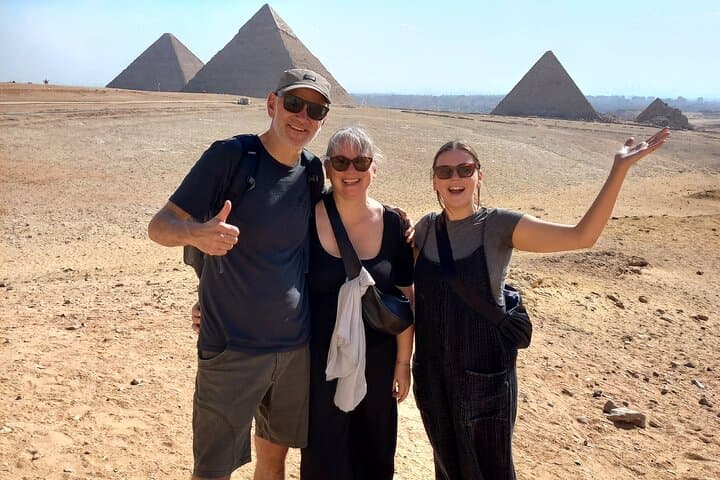
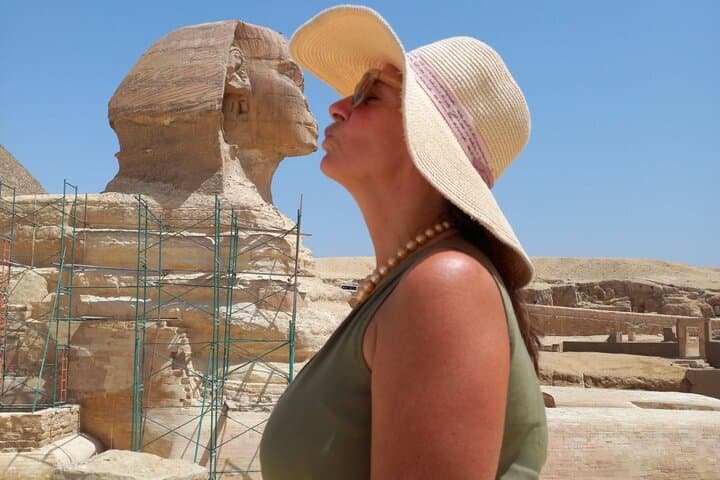


You step out of an air‑conditioned vehicle into a sharp, sunlit sweep of sand and stone—where silhouettes of the pyramids stare back like deliberate monuments to time. The Giza Plateau opens with broad sightlines: the Great Pyramid looms, the Sphinx watches from its valley, and the new glass-faced Grand Egyptian Museum anchors the modern edge of an ancient landscape.
You step out of an air‑conditioned vehicle into a sharp, sunlit sweep of sand and stone—where silhouettes of the pyramids stare back like deliberate monuments to time. The Giza Plateau opens with broad sightlines: the Great Pyramid looms, the Sphinx watches from its valley, and the new glass-faced Grand Egyptian Museum anchors the modern edge of an ancient landscape.
This route traces millennia: pharaonic tomb builders hewed limestone bedrock into colossal blocks; the plateau’s geology still reads as layered sediment and mapped quarry faces. Culturally, the site is both funerary complex and living marketplace—local vendors, guiding traditions, and modern museum curation collide in practical ways that shape any day visit.
Expect 2–4 km of walking across uneven stone, sandy tracks and paved museum galleries with brief stair sections inside older structures. A guided tour links context to sites: theories of pyramid construction, the Sphinx’s restoration history, and the GEM’s layout that groups objects by period and social function.
Practical guidance: start early or late afternoon to avoid peak sun, carry sunscreen and 1–2 liters of water, and wear sturdy, closed-toe shoes for uneven surfaces and pyramid steps. Passport or ID is required for ticketing and optional internal pyramid access; museum security enforces bag checks and limited tripod use. Optional extras—camel rides, ATV circuits, or entering a pyramid—add time and small additional fees. Use a licensed guide for efficient lines and local insights; they’ll also advise respectful dress near religious and cultural sites.
Arrive ready for contrasts: desert wind that dares your focus, cool museum galleries that steady it, and a day that stitches modern Egypt to its ancient bones.