THE ADVENTURE COLLECTIVE® · Independent discovery and booking for outdoor travel

Experience the Giza Plateau with a private Egyptologist and air‑conditioned transfers. This concise guide covers what you’ll see, why the stones matter, and how to plan for comfort and conservation.
Experience the Giza Plateau with a private Egyptologist and air‑conditioned transfers. This concise guide covers what you’ll see, why the stones matter, and how to plan for comfort and conservation.
You step out of an air-conditioned vehicle and the plateau opens: baked limestone underfoot, Cairo’s skyline rimmed by heat haze, and the three main pyramids rising like engineered horizons. A local Egyptologist leads the way, voice steady against the lap of wind that moves the sand across the stones.
Verified experiences and guided adventures in the surrounding area.
Operated by Egypt VIP Tours · Giza, Giza Governorate
You step out of an air-conditioned vehicle and the plateau opens: baked limestone underfoot, Cairo’s skyline rimmed by heat haze, and the three main pyramids rising like engineered horizons. A local Egyptologist leads the way, voice steady against the lap of wind that moves the sand across the stones.
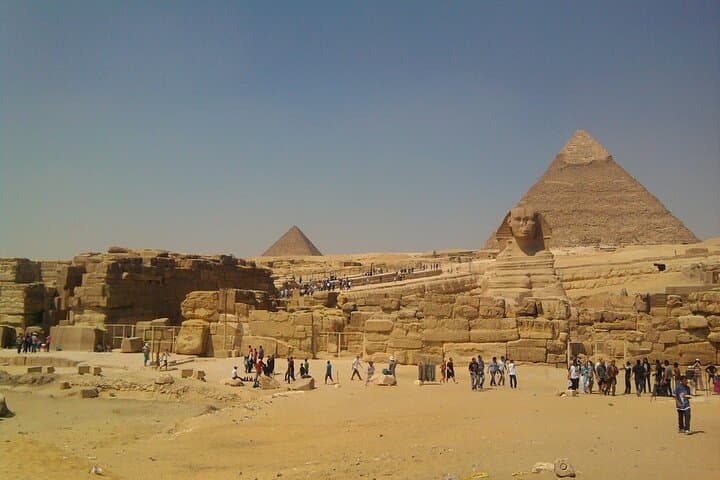
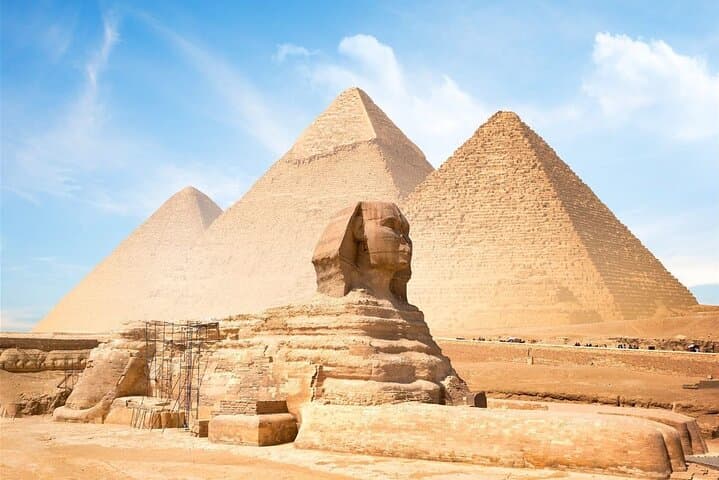
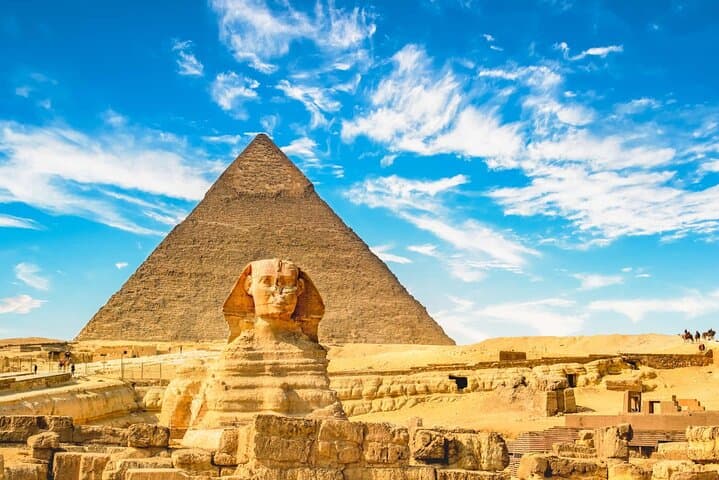
These monuments date to Egypt’s Old Kingdom—4th Dynasty pharaohs Khufu, Khafre and Menkaure—built from local limestone and faraway Aswan granite. The Great Pyramid of Khufu, the only remaining ancient wonder, anchors the plateau; nearby the Sphinx keeps its ear to passing caravans and modern traffic. The geology is plain and instructive: compacted Nile silt beneath a cap of limestone quarried on-site, with visible tool marks and reused blocks telling a layered story of construction and later reuse.
Local culture arrives in small details: a guide’s precise hieroglyph translation, a camel handler’s practiced knot, the call of a vendor selling bottled water. For quieter discoveries, the nearby Solar Boat Museum and the Valley Temple reveal ritual and engineering beyond the stone faces you’ll photograph.
Practical notes: aim for early morning light to avoid heat and crowds; bring cash for small purchases, tips and optional pyramid-entry tickets; wear grippy closed-toe shoes for uneven flagstones and loose sand; and carry sun protection and plenty of water. Respect ropes and signage—these sites face erosion and heavy visitor wear. A private transfer strips away logistics so you can focus on scale, history and the odd gust that seems to push you closer to the past.
easy.
4–5 hours.
Suitable for most fitness levels; expect moderate walking on uneven ground and short climbs for viewpoints.
No—interior access requires a separate ticket purchased on-site or arranged by your guide; availability is limited and may sell out.
Camel rides are optional extras, paid locally in cash; negotiate price upfront and agree on duration and location before mounting.
No—drones are restricted near the pyramids and around Cairo for safety and security reasons; ask your guide about permitted photography equipment.
Typical stops: 30–60 minutes at major pyramids, 30 minutes at the Sphinx and additional time for viewpoints and optional activities, totaling about five hours including transfers.
The Giza complex dates to the 4th Dynasty (c. 2580–2490 BCE); the Great Pyramid of Khufu is the oldest and largest, originally covered in polished casing stones.
Visitor pressure, sand abrasion and urban pollution threaten the monuments; follow designated paths, avoid touching carved surfaces, and support licensed guides and conservation fees.
Egypt VIP Tours operates guided outdoor trips and adventures with an emphasis on safety, stewardship, and memorable experiences.
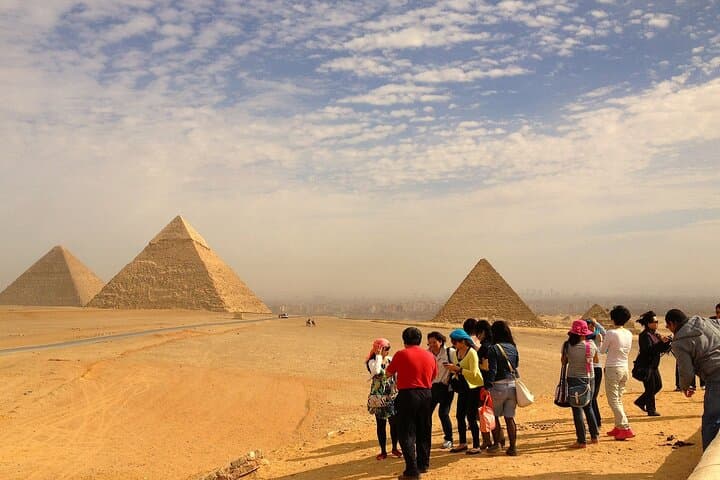
You step out of an air-conditioned vehicle and the plateau opens: baked limestone underfoot, Cairo’s skyline rimmed by heat haze, and the three main pyramids rising like engineered horizons. A local Egyptologist leads the way, voice steady against the lap of wind that moves the sand across the stones.
You step out of an air-conditioned vehicle and the plateau opens: baked limestone underfoot, Cairo’s skyline rimmed by heat haze, and the three main pyramids rising like engineered horizons. A local Egyptologist leads the way, voice steady against the lap of wind that moves the sand across the stones.
These monuments date to Egypt’s Old Kingdom—4th Dynasty pharaohs Khufu, Khafre and Menkaure—built from local limestone and faraway Aswan granite. The Great Pyramid of Khufu, the only remaining ancient wonder, anchors the plateau; nearby the Sphinx keeps its ear to passing caravans and modern traffic. The geology is plain and instructive: compacted Nile silt beneath a cap of limestone quarried on-site, with visible tool marks and reused blocks telling a layered story of construction and later reuse.
Local culture arrives in small details: a guide’s precise hieroglyph translation, a camel handler’s practiced knot, the call of a vendor selling bottled water. For quieter discoveries, the nearby Solar Boat Museum and the Valley Temple reveal ritual and engineering beyond the stone faces you’ll photograph.
Practical notes: aim for early morning light to avoid heat and crowds; bring cash for small purchases, tips and optional pyramid-entry tickets; wear grippy closed-toe shoes for uneven flagstones and loose sand; and carry sun protection and plenty of water. Respect ropes and signage—these sites face erosion and heavy visitor wear. A private transfer strips away logistics so you can focus on scale, history and the odd gust that seems to push you closer to the past.