THE ADVENTURE COLLECTIVE® · Independent discovery and booking for outdoor travel

Spend a day from Bari exploring two UNESCO World Heritage sites: the cave-dwellings of Matera and the dry-stone trulli of Alberobello. This private tour combines guided history, unique geology, and practical logistics for a seamless cultural day trip.
Spend a day from Bari exploring two UNESCO World Heritage sites: the cave-dwellings of Matera and the dry-stone trulli of Alberobello. This private tour combines guided history, unique geology, and practical logistics for a seamless cultural day trip.
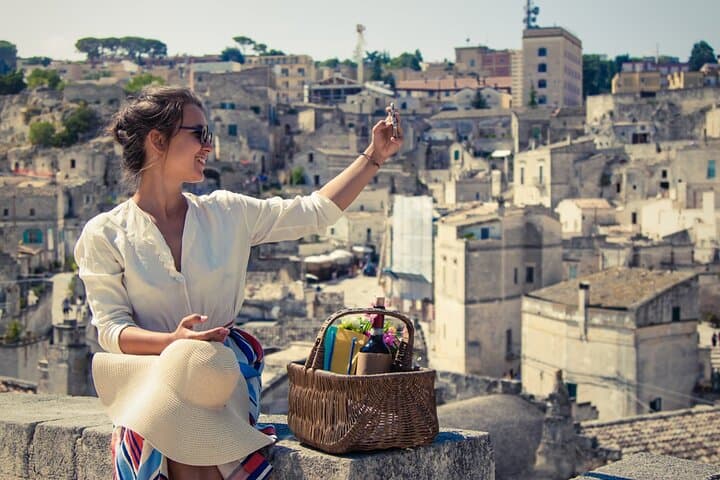
A morning drive from Bari eases through silver-green olive groves before the road drops toward Matera’s Sassi — a ragged cliff-face of carved homes whose stone seems to keep the memory of generations. Visitors step from the coach into cool, shadowed alleys where rock churches hold 13th-century frescoes that still catch a slant of light and the air carries a faint scent of wood smoke.
Verified experiences and guided adventures in the surrounding area.
Operated by Opatrip.com Italy · Matera, Basilicata
A morning drive from Bari eases through silver-green olive groves before the road drops toward Matera’s Sassi — a ragged cliff-face of carved homes whose stone seems to keep the memory of generations. Visitors step from the coach into cool, shadowed alleys where rock churches hold 13th-century frescoes that still catch a slant of light and the air carries a faint scent of wood smoke.
Geology here is plain to see: soft calcarenite sculpted by time, rain and human hands into caves, terraces and cisterns. Matera’s inhabited ravines tell a layered history — Palaeolithic occupation, medieval monastic life, then 20th-century depopulation and dramatic restoration that turned neglected dwellings into living museums.
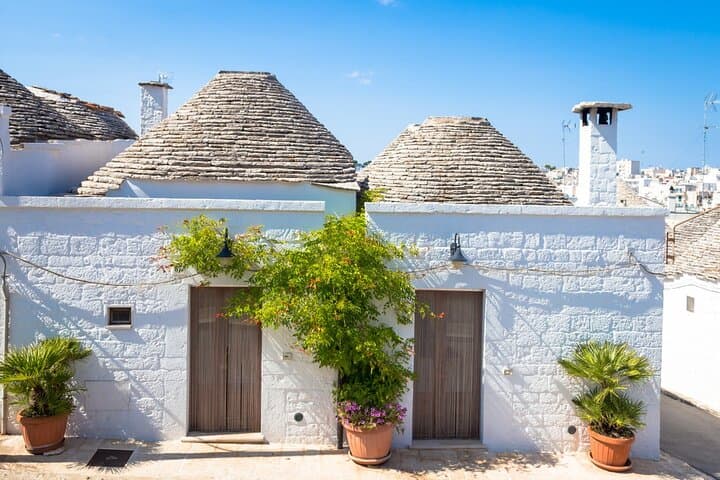
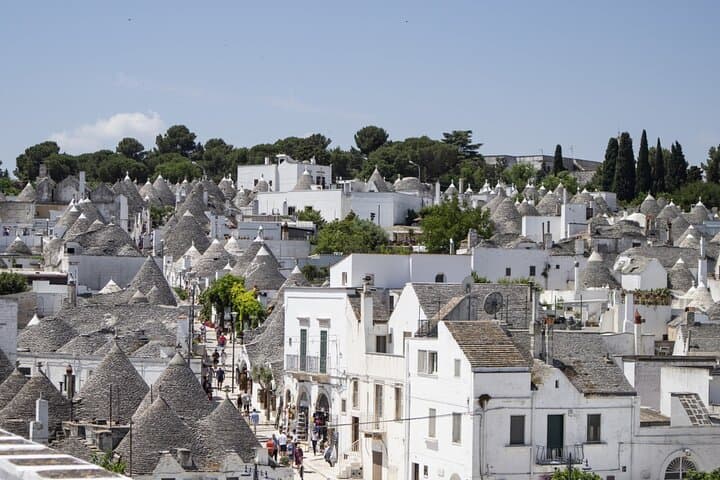
Later the guide leads to Alberobello, where rows of trulli pile like a stone chessboard. Those conical roofs are dry-stone architecture — no mortar — evolved as clever tax-era workarounds and practical thermal shelters. Local culture remains hands-on: family-run craft shops, small osterias serving focaccia and fresh burrata, and markets where regional olive oil and wines dominate the conversation.
Practicalities: the private day trip runs about six hours with transportation and entrance fees included; expect 90–150 minutes in each town and walking on uneven cobbles and steps. Footwear with good grip, a light waterproof layer, and sun protection will make the day comfortable. Visit early to avoid peak coach crowds and allow time for narrow lanes and panoramic viewpoints. Guides often point out quieter lanes — the best spots for photographs and quieter moments to listen as the old stones settle around you.
easy.
6 hours.
Suitable for most fitness levels; participants should be able to walk on uneven surfaces and navigate steps.
The tour is approximately six hours and includes private transportation, a professional local guide, and entrance fees for listed sites.
The tour is family-friendly but involves uneven cobbles and steps; guests with limited mobility should contact the operator in advance to discuss accessibility and potential alternatives.
Entrance fees for key sites are included in this private tour, so no separate ticket purchase is required for the listed attractions.
Guides typically operate in the language confirmed at booking — ask at reservation for specific language options and any private translation needs.
Matera is one of the world’s oldest continuously inhabited settlements; Alberobello’s trulli reflect a dry-stone building tradition tied to regional tax and agricultural history.
Restoration efforts balance tourism with preservation—respect visitor routes and support local businesses to sustain the fragile rock architecture and community livelihoods.
Opatrip.com Italy operates guided outdoor trips and adventures with an emphasis on safety, stewardship, and memorable experiences.

A morning drive from Bari eases through silver-green olive groves before the road drops toward Matera’s Sassi — a ragged cliff-face of carved homes whose stone seems to keep the memory of generations. Visitors step from the coach into cool, shadowed alleys where rock churches hold 13th-century frescoes that still catch a slant of light and the air carries a faint scent of wood smoke.
A morning drive from Bari eases through silver-green olive groves before the road drops toward Matera’s Sassi — a ragged cliff-face of carved homes whose stone seems to keep the memory of generations. Visitors step from the coach into cool, shadowed alleys where rock churches hold 13th-century frescoes that still catch a slant of light and the air carries a faint scent of wood smoke.
Geology here is plain to see: soft calcarenite sculpted by time, rain and human hands into caves, terraces and cisterns. Matera’s inhabited ravines tell a layered history — Palaeolithic occupation, medieval monastic life, then 20th-century depopulation and dramatic restoration that turned neglected dwellings into living museums.
Later the guide leads to Alberobello, where rows of trulli pile like a stone chessboard. Those conical roofs are dry-stone architecture — no mortar — evolved as clever tax-era workarounds and practical thermal shelters. Local culture remains hands-on: family-run craft shops, small osterias serving focaccia and fresh burrata, and markets where regional olive oil and wines dominate the conversation.
Practicalities: the private day trip runs about six hours with transportation and entrance fees included; expect 90–150 minutes in each town and walking on uneven cobbles and steps. Footwear with good grip, a light waterproof layer, and sun protection will make the day comfortable. Visit early to avoid peak coach crowds and allow time for narrow lanes and panoramic viewpoints. Guides often point out quieter lanes — the best spots for photographs and quieter moments to listen as the old stones settle around you.