THE ADVENTURE COLLECTIVE® · Independent discovery and booking for outdoor travel

A private, six‑hour door‑to‑door tour that pairs the serene walkways of Meiji Jingu with Harajuku’s youth culture, the polished avenue of Omotesando, and the kinetic rush of Shibuya Crossing. Ideal for first‑time visitors who want efficient transfers and flexible pacing.
A private, six‑hour door‑to‑door tour that pairs the serene walkways of Meiji Jingu with Harajuku’s youth culture, the polished avenue of Omotesando, and the kinetic rush of Shibuya Crossing. Ideal for first‑time visitors who want efficient transfers and flexible pacing.
You step from a quiet hotel lobby into a clean, air-conditioned vehicle and fifteen minutes later find yourself beneath an imagined cathedral of trees — the approach to Meiji Jingu. The forest hush pushes back the city; torii gates and gravel paths demand a slower pace and offer a rare pocket of Tokyo calm.
Verified experiences and guided adventures in the surrounding area.
Operated by Caiyi Travel · Tokyo, Tokyo
You step from a quiet hotel lobby into a clean, air-conditioned vehicle and fifteen minutes later find yourself beneath an imagined cathedral of trees — the approach to Meiji Jingu. The forest hush pushes back the city; torii gates and gravel paths demand a slower pace and offer a rare pocket of Tokyo calm.
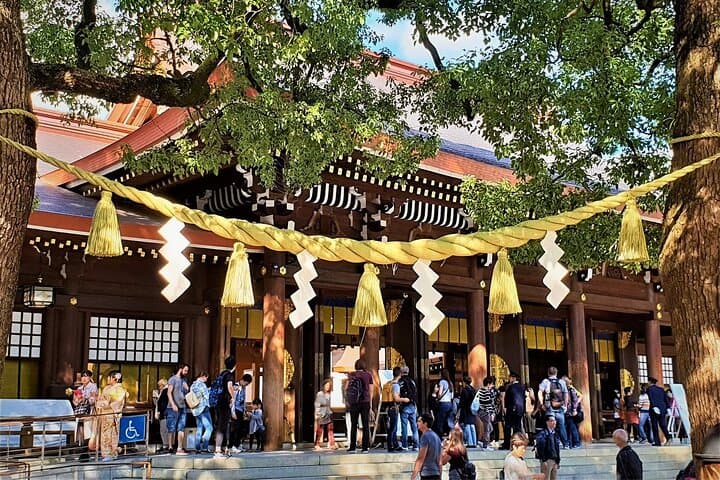
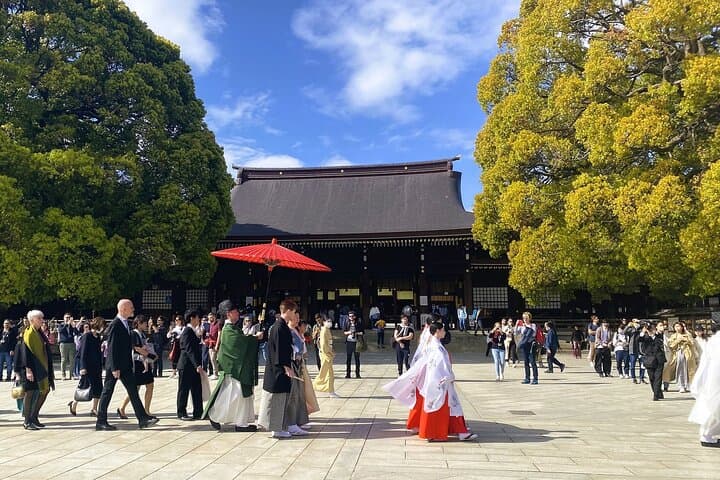
The day unfolds with contrasts: the shrine's Taisho-era timber and ritual practices give way to Takeshita Street's neon youth culture, then the architectural clarity of Omotesando's broad, zelkova-lined avenue, and finally the organized chaos of Shibuya Crossing, where waves of pedestrians become a living grid.
Meiji Jingu, completed in the early 20th century, honors Emperor Meiji and reflects Japan's transition into modernity; Omotesando evolved with Tokyo's postwar luxury shopping and contemporary architecture; Shibuya grew into a transport and cultural hub that amplifies the city's pace. Expect short walks—mostly flat, packed gravel and paved sidewalks—with intermittent standing time for photos and crossings.
Practically: the private format saves transit time and is ideal for families or first-time visitors. Plan morning for Meiji to avoid crowds, reserve 20–60 minutes at each stop depending on interests, and keep small cash or an IC card for shrine offerings, cafes, and boutiques. Comfortable walking shoes, a light rain layer during June–September, and a charged phone for maps and translations make the day smooth. Drivers speak basic English and will handle logistics; you'll handle the curiosity.
This tour is a concentrated, customizable introduction to Tokyo's cultural layers—ritual, youth, design, and street-level intensity—delivered with local efficiency.
easy.
6 hours.
Suitable for most fitness levels; involves several short walks and standing periods, minimal elevation change.
Yes — hotel pickup and drop‑off within Tokyo's 23 wards is included, making logistics straightforward.
No — most stops like Meiji Jingu and street areas are free; any paid museum entries or special exhibits are not included unless specifically selected.
Yes — the private format allows you to prioritize sites, adjust time at each stop, or add nearby points of interest subject to the 6‑hour limit.
Expect mostly short walks at each site (a few hundred meters to a kilometer total on foot), with vehicle transfers between neighborhoods to minimize overall walking.
Meiji Jingu commemorates Emperor Meiji (reigned 1867–1912) and sits on forested land planted to create a peaceful sanctuary amid Tokyo's urban growth.
The shrine grounds are actively managed; visitors are asked to stay on paths, avoid picking plants, and respect ritual spaces to protect the forested environment.
Caiyi Travel operates guided outdoor trips and adventures with an emphasis on safety, stewardship, and memorable experiences.
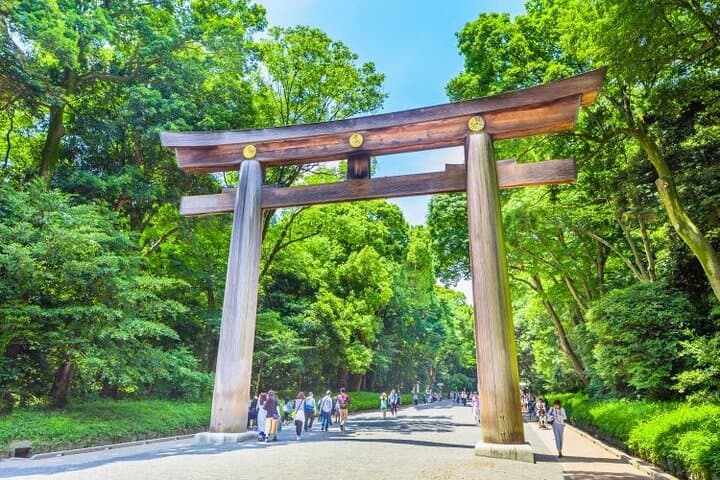

You step from a quiet hotel lobby into a clean, air-conditioned vehicle and fifteen minutes later find yourself beneath an imagined cathedral of trees — the approach to Meiji Jingu. The forest hush pushes back the city; torii gates and gravel paths demand a slower pace and offer a rare pocket of Tokyo calm.
You step from a quiet hotel lobby into a clean, air-conditioned vehicle and fifteen minutes later find yourself beneath an imagined cathedral of trees — the approach to Meiji Jingu. The forest hush pushes back the city; torii gates and gravel paths demand a slower pace and offer a rare pocket of Tokyo calm.
The day unfolds with contrasts: the shrine's Taisho-era timber and ritual practices give way to Takeshita Street's neon youth culture, then the architectural clarity of Omotesando's broad, zelkova-lined avenue, and finally the organized chaos of Shibuya Crossing, where waves of pedestrians become a living grid.
Meiji Jingu, completed in the early 20th century, honors Emperor Meiji and reflects Japan's transition into modernity; Omotesando evolved with Tokyo's postwar luxury shopping and contemporary architecture; Shibuya grew into a transport and cultural hub that amplifies the city's pace. Expect short walks—mostly flat, packed gravel and paved sidewalks—with intermittent standing time for photos and crossings.
Practically: the private format saves transit time and is ideal for families or first-time visitors. Plan morning for Meiji to avoid crowds, reserve 20–60 minutes at each stop depending on interests, and keep small cash or an IC card for shrine offerings, cafes, and boutiques. Comfortable walking shoes, a light rain layer during June–September, and a charged phone for maps and translations make the day smooth. Drivers speak basic English and will handle logistics; you'll handle the curiosity.
This tour is a concentrated, customizable introduction to Tokyo's cultural layers—ritual, youth, design, and street-level intensity—delivered with local efficiency.