THE ADVENTURE COLLECTIVE® · Independent discovery and booking for outdoor travel

Stand where Iceland became a nation and where continents pull apart. This private half-day tour from Reykjavík delivers UNESCO-listed history, clear glacial water, and the dramatic fault lines of Þingvellir with time to explore at your own pace.
Stand where Iceland became a nation and where continents pull apart. This private half-day tour from Reykjavík delivers UNESCO-listed history, clear glacial water, and the dramatic fault lines of Þingvellir with time to explore at your own pace.
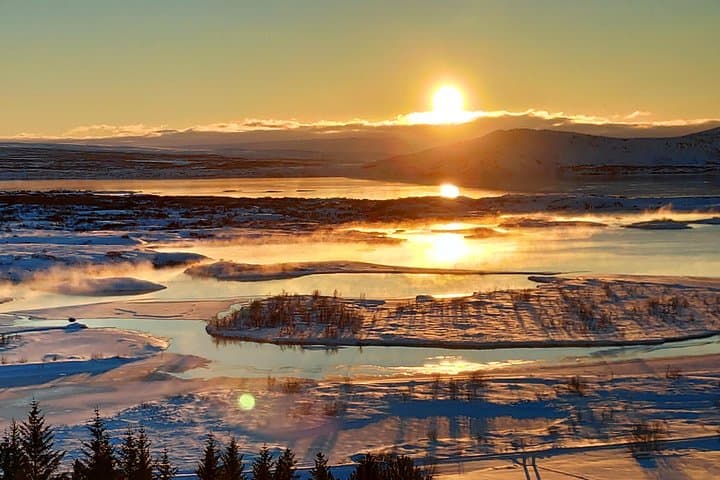
The air on the plateau tastes like iron and cold salt; a thin wind pulls at your jacket as your guide swings the vehicle onto a gravel turnout and opens the door to Þingvellir. The first thing that strikes you is space—the wide bowl of the rift valley, the pale blue of Þingvallavatn, and the hard lines where the North American and Eurasian plates meet. You step out and the landscape feels intentional: not landscaped, but arranged by geology and centuries of human assembly.
Verified experiences and guided adventures in the surrounding area.
Operated by Diamond Tours Iceland · Thingvellir, Southern Region
The air on the plateau tastes like iron and cold salt; a thin wind pulls at your jacket as your guide swings the vehicle onto a gravel turnout and opens the door to Þingvellir. The first thing that strikes you is space—the wide bowl of the rift valley, the pale blue of Þingvallavatn, and the hard lines where the North American and Eurasian plates meet. You step out and the landscape feels intentional: not landscaped, but arranged by geology and centuries of human assembly.
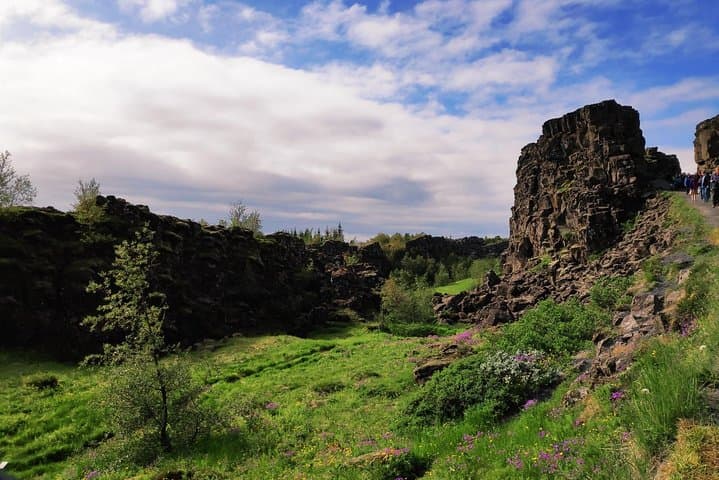
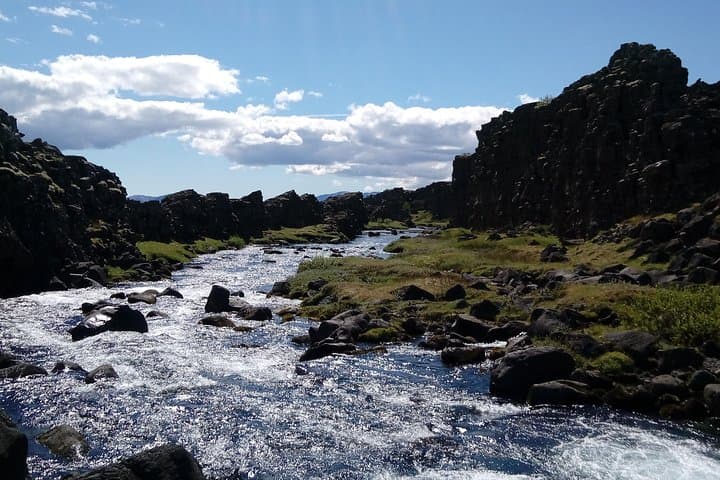
Þingvellir is where Iceland’s story turns from scattered settlements into a nation. In 930 AD chieftains and free farmers gathered here to form the Alþingi, one of the world’s oldest parliaments, and the Lögberg (Law Rock) still marks that meeting place. Geologically the park is a visible seam; cliffs and fissures trace the Mid-Atlantic Ridge as it pulls the island slowly apart. Öxará river cuts clear and blue toward Öxarárfoss, which drops over ancient lava into a pool that dares you to come closer. The lake, Þingvallavatn, is broad and low-angled, its surface reflecting sky in colors that can be startlingly electric.
On a private tour from Reykjavík you get two hours to move through the main sights without the rush of a bus timetable. Walk the boardwalks that map the visitor routes, tread soft gravel through mossy lava fields, and peer into the Silfra fissure from shore—scuba permits aside, the fissure’s clarity is a lesson in glacial melt and rock filtration. Expect flat paths punctuated by short stairs and rocky outlooks; total walking distance during the stop typically ranges from 2–4 km with minimal elevation gain (roughly 30–100 m depending on which outlooks you take).
Practicalities: the tour lasts about 4–5 hours door-to-door from central Reykjavík with private pickup and drop-off and a cap of five people. There’s no entrance fee for the national park, but parking and popular viewpoints can be busy midday. Dress in layers and waterproofs—weather flips fast and the wind brings the cold off the lake. Good footwear with grip is useful for the gravel and occasional wet stones near waterfalls.
Timing is everything: arrive early to beat the cruise-ship crowds, late afternoon for softer light on the rift walls. Guides will point out the main historical markers and the tectonic forces underfoot, but the best discoveries often happen when you follow a side path to a quiet fissure or sit and listen to the water run through rock. For travelers who want depth without the crowds, a private tour is a compact, practical way to stand where Iceland’s law and its geology were both made.
easy.
4–5 hours.
Casual walkers in reasonable health can do this; expect 2–4 km of walking on uneven terrain.
The park stop is typically around two hours, enough to see the main viewpoints, Öxarárfoss and parts of the rift.
There is no entrance fee for the national park; the tour covers transport and guiding but check for any optional activity fees like diving.
Yes—private pickup and drop-off from most Reykjavík hotels is included; confirm your pickup point when booking.
Yes—paths are stroller-accessible in many areas and the tour is rated easy, though some viewpoints have stairs.
Basic facilities exist near the main visitor centre; bring snacks and water as options are limited at remote viewpoints.
Warm layers, waterproof outerwear, and footwear with good traction are essential; daylight hours are shorter, so plan accordingly.
Þingvellir was the site of the Icelandic Alþingi from 930 AD, where laws were recited and disputes settled on the Lögberg (Law Rock).
The park balances heavy visitation with protection: stay on marked paths to preserve moss and fragile lichen, and follow local guidance to minimize impact.
Diamond Tours Iceland operates guided outdoor trips and adventures with an emphasis on safety, stewardship, and memorable experiences.
The air on the plateau tastes like iron and cold salt; a thin wind pulls at your jacket as your guide swings the vehicle onto a gravel turnout and opens the door to Þingvellir. The first thing that strikes you is space—the wide bowl of the rift valley, the pale blue of Þingvallavatn, and the hard lines where the North American and Eurasian plates meet. You step out and the landscape feels intentional: not landscaped, but arranged by geology and centuries of human assembly.
The air on the plateau tastes like iron and cold salt; a thin wind pulls at your jacket as your guide swings the vehicle onto a gravel turnout and opens the door to Þingvellir. The first thing that strikes you is space—the wide bowl of the rift valley, the pale blue of Þingvallavatn, and the hard lines where the North American and Eurasian plates meet. You step out and the landscape feels intentional: not landscaped, but arranged by geology and centuries of human assembly.
Þingvellir is where Iceland’s story turns from scattered settlements into a nation. In 930 AD chieftains and free farmers gathered here to form the Alþingi, one of the world’s oldest parliaments, and the Lögberg (Law Rock) still marks that meeting place. Geologically the park is a visible seam; cliffs and fissures trace the Mid-Atlantic Ridge as it pulls the island slowly apart. Öxará river cuts clear and blue toward Öxarárfoss, which drops over ancient lava into a pool that dares you to come closer. The lake, Þingvallavatn, is broad and low-angled, its surface reflecting sky in colors that can be startlingly electric.
On a private tour from Reykjavík you get two hours to move through the main sights without the rush of a bus timetable. Walk the boardwalks that map the visitor routes, tread soft gravel through mossy lava fields, and peer into the Silfra fissure from shore—scuba permits aside, the fissure’s clarity is a lesson in glacial melt and rock filtration. Expect flat paths punctuated by short stairs and rocky outlooks; total walking distance during the stop typically ranges from 2–4 km with minimal elevation gain (roughly 30–100 m depending on which outlooks you take).
Practicalities: the tour lasts about 4–5 hours door-to-door from central Reykjavík with private pickup and drop-off and a cap of five people. There’s no entrance fee for the national park, but parking and popular viewpoints can be busy midday. Dress in layers and waterproofs—weather flips fast and the wind brings the cold off the lake. Good footwear with grip is useful for the gravel and occasional wet stones near waterfalls.
Timing is everything: arrive early to beat the cruise-ship crowds, late afternoon for softer light on the rift walls. Guides will point out the main historical markers and the tectonic forces underfoot, but the best discoveries often happen when you follow a side path to a quiet fissure or sit and listen to the water run through rock. For travelers who want depth without the crowds, a private tour is a compact, practical way to stand where Iceland’s law and its geology were both made.