THE ADVENTURE COLLECTIVE® · Independent discovery and booking for outdoor travel

Walk the Avenue of the Dead, climb the Sun and Moon Pyramids, then visit the 16th‑century Acolman Monastery where the piñata tradition took shape. This private day tour from Mexico City packs archaeology, colonial architecture, and local lunch options into an eight‑hour cultural loop.
Walk the Avenue of the Dead, climb the Sun and Moon Pyramids, then visit the 16th‑century Acolman Monastery where the piñata tradition took shape. This private day tour from Mexico City packs archaeology, colonial architecture, and local lunch options into an eight‑hour cultural loop.
You step out of the vehicle into a wide, sun-creased plaza and the Avenue of the Dead stretches ahead like an old road demanding attention. The wind carries the dry dust of the Basin of Mexico, lifting loose grit from the stepped sides of the Sun Pyramid as guides point out alignments and stone reliefs that still hold meaning.
Verified experiences and guided adventures in the surrounding area.
Operated by Under Mexico · San Juan Teotihuacán, Estado de México
You step out of the vehicle into a wide, sun-creased plaza and the Avenue of the Dead stretches ahead like an old road demanding attention. The wind carries the dry dust of the Basin of Mexico, lifting loose grit from the stepped sides of the Sun Pyramid as guides point out alignments and stone reliefs that still hold meaning.
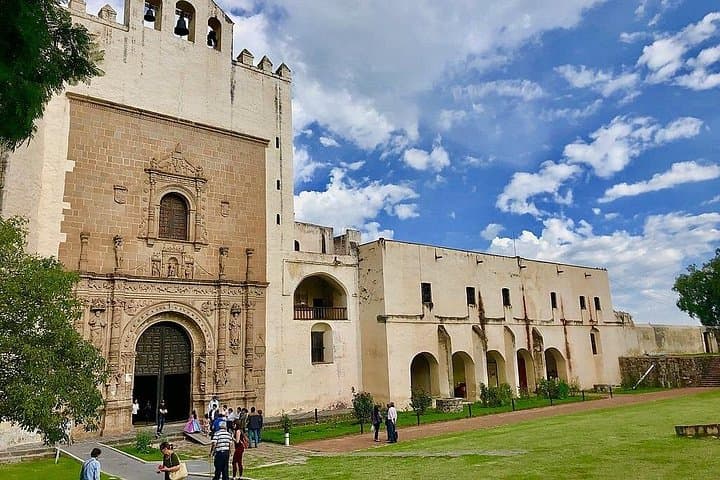
Teotihuacan rose around AD 100–650 as one of Mesoamerica’s largest cities; its broad axis and monumental pyramids reflect urban planning and ritual astronomy. Geologically, the site sits on an ancient lacustrine plain with volcanic rock used for construction, and you can feel the weight of centuries in the massive talud-tablero walls. Acolman’s 16th‑century monastery, by contrast, reflects the early colonial church’s architectural language — a courtyard cloister where the piñata tradition was adapted from European and indigenous practices.
The private format means paced walking: climb the Sun or Moon Pyramid if you choose, listen for the guide’s archaeology-informed context, then move on for a quieter hour at Acolman after a local-market lunch. Expect uneven stone underfoot, wide open sun at midday, and cool shade in cloisters.
Practical tips: arrive early to beat heat and crowds, carry sun protection and water, wear sturdy closed shoes for climbing and uneven paths, and keep small bills for local vendors. The tour runs about eight hours with hotel pickup and drop-off from Mexico City, suitable for most fitness levels but not for those with serious spinal or heart conditions. Respect restricted areas, follow your guide’s directions on where to climb, and leave offerings and artifacts undisturbed.
easy.
8 hours.
Light to moderate: able to walk and stand for several hours, climb stepped pyramids with short steep sections.
Yes—visitors can climb the Sun and Moon Pyramids where permitted, but access can change for preservation; follow your guide and posted restrictions.
The tour offers wheelchair-accessible transportation, but the archaeological site has uneven terrain and steep steps that limit full access to pyramid tops.
You can choose a local market or restaurant at midday—cost is typically not included in the base price so plan small cash for food choices.
Yes, entrance fees for Teotihuacan and Acolman Monastery are included in this private tour’s price.
Teotihuacan was a major pre-Hispanic urban center influencing Mesoamerica; Acolman’s monastery was built in the 1500s and became a cultural hub where New World and European traditions met.
Visitor management balances access with preservation—stay on marked paths, avoid touching fragile masonry, and minimize single-use plastics to reduce onsite impact.
Under Mexico operates guided outdoor trips and adventures with an emphasis on safety, stewardship, and memorable experiences.
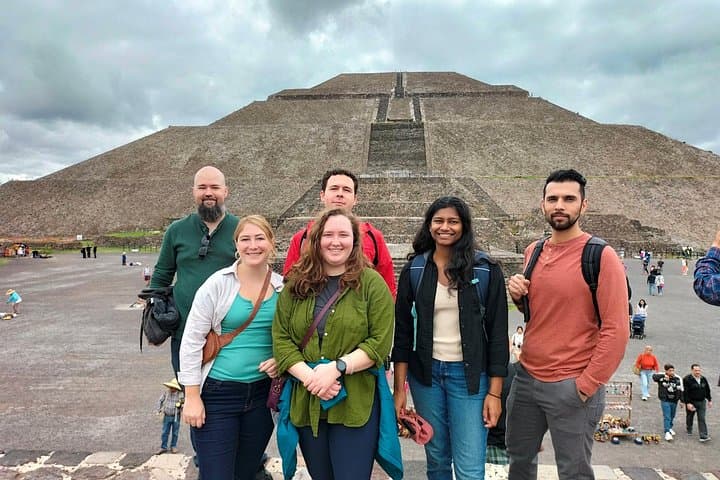
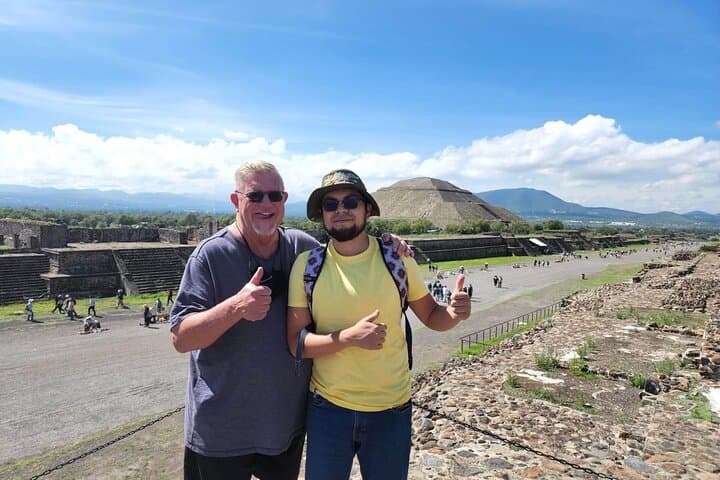
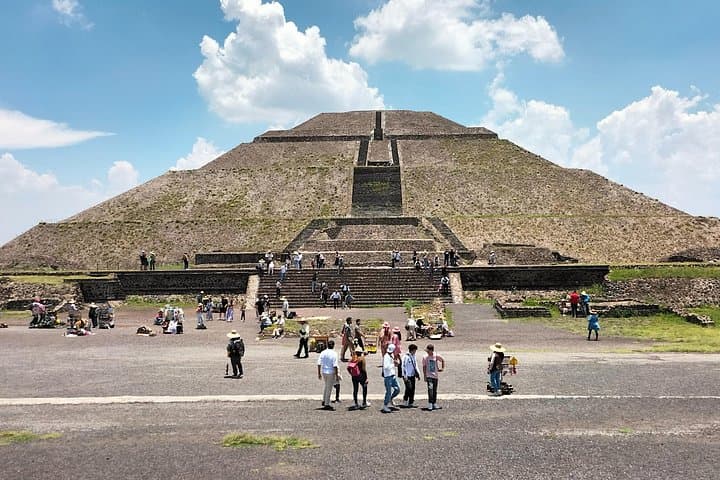
You step out of the vehicle into a wide, sun-creased plaza and the Avenue of the Dead stretches ahead like an old road demanding attention. The wind carries the dry dust of the Basin of Mexico, lifting loose grit from the stepped sides of the Sun Pyramid as guides point out alignments and stone reliefs that still hold meaning.
You step out of the vehicle into a wide, sun-creased plaza and the Avenue of the Dead stretches ahead like an old road demanding attention. The wind carries the dry dust of the Basin of Mexico, lifting loose grit from the stepped sides of the Sun Pyramid as guides point out alignments and stone reliefs that still hold meaning.
Teotihuacan rose around AD 100–650 as one of Mesoamerica’s largest cities; its broad axis and monumental pyramids reflect urban planning and ritual astronomy. Geologically, the site sits on an ancient lacustrine plain with volcanic rock used for construction, and you can feel the weight of centuries in the massive talud-tablero walls. Acolman’s 16th‑century monastery, by contrast, reflects the early colonial church’s architectural language — a courtyard cloister where the piñata tradition was adapted from European and indigenous practices.
The private format means paced walking: climb the Sun or Moon Pyramid if you choose, listen for the guide’s archaeology-informed context, then move on for a quieter hour at Acolman after a local-market lunch. Expect uneven stone underfoot, wide open sun at midday, and cool shade in cloisters.
Practical tips: arrive early to beat heat and crowds, carry sun protection and water, wear sturdy closed shoes for climbing and uneven paths, and keep small bills for local vendors. The tour runs about eight hours with hotel pickup and drop-off from Mexico City, suitable for most fitness levels but not for those with serious spinal or heart conditions. Respect restricted areas, follow your guide’s directions on where to climb, and leave offerings and artifacts undisturbed.