THE ADVENTURE COLLECTIVE® · Independent discovery and booking for outdoor travel

Drive from Djerba into the Berber south on a private full-day tour to Tataouine, Chenini and cinematic ksours. Expect salt flats, hilltop troglodyte villages, local markets and traditional lunch on an immersive cultural route.
Drive from Djerba into the Berber south on a private full-day tour to Tataouine, Chenini and cinematic ksours. Expect salt flats, hilltop troglodyte villages, local markets and traditional lunch on an immersive cultural route.
You step into the day before sunrise, the minibus rolling off Djerba’s causeway as the island’s low dunes give way to wide, open plains. Light catches on the Sebkhet el Melah salt lake and the landscape seems to shift color with each kilometer; the road itself feels like a slow reveal of an ancient, lived-in desert.
Verified experiences and guided adventures in the surrounding area.
Operated by Israa Travel Agency · Tataouine, Tataouine Governorate
You step into the day before sunrise, the minibus rolling off Djerba’s causeway as the island’s low dunes give way to wide, open plains. Light catches on the Sebkhet el Melah salt lake and the landscape seems to shift color with each kilometer; the road itself feels like a slow reveal of an ancient, lived-in desert.
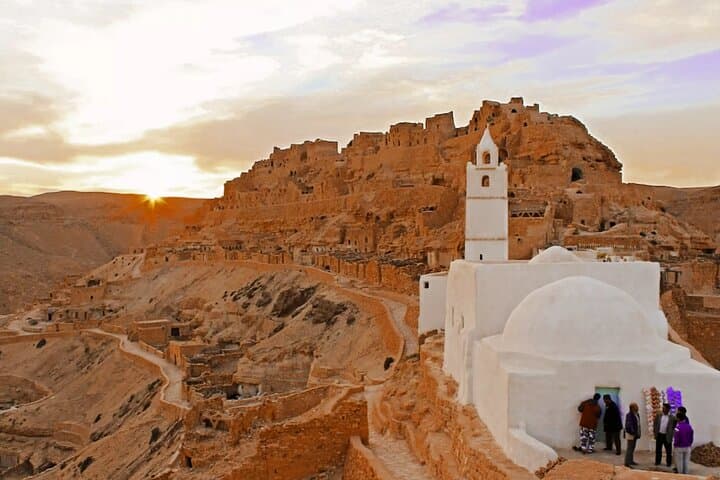
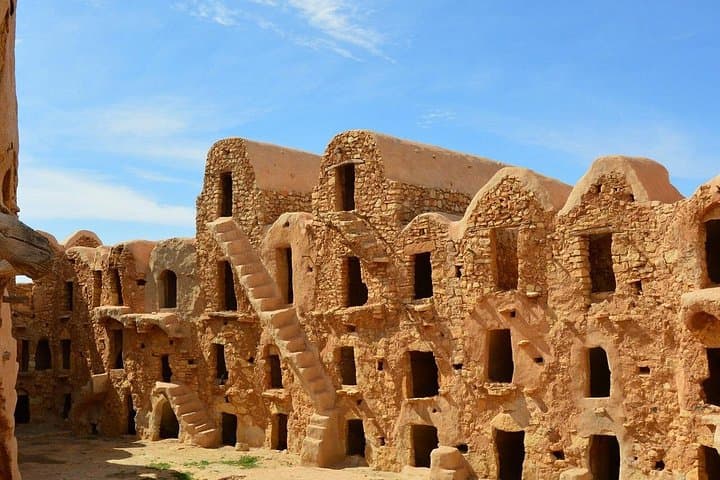
This route threads human history and geology: salt pans and Roman causeways, ksours (fortified grain villages) built from local stone, and hilltop troglodyte habitations carved into soft rock at Chenini. The area’s architecture reflects Berber lifeways shaped by scarce water, seasonal winds, and centuries of trade routes across southern Tunisia. Cinema lovers will recognize Ksar Hadada and Ksar Ouled Soltane from Star Wars, where narrow passages and layered granaries double as set pieces.
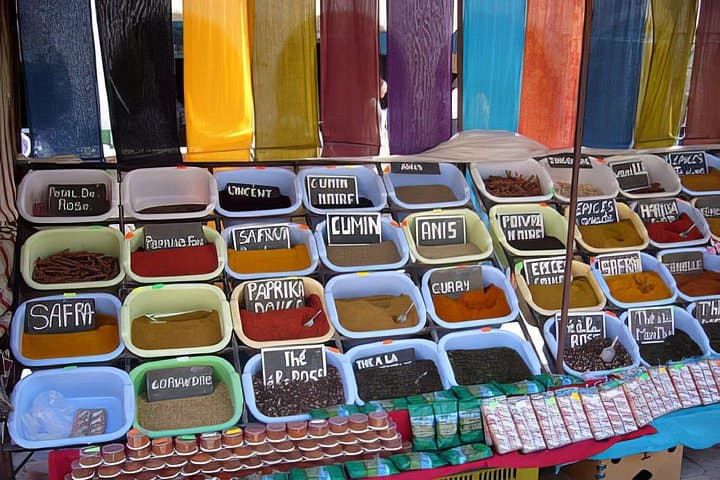
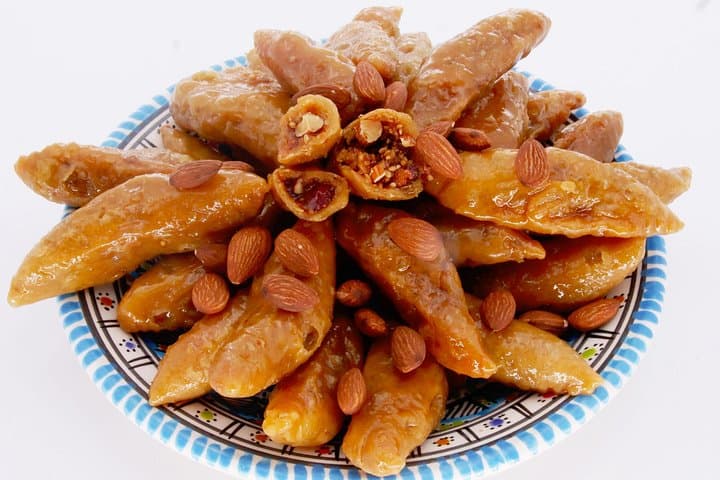
Expect a full 8–9 hour day of driving and short guided walks—photo stops at the salt lake, an hour in Tataouine’s market, and guided visits to the ksar sites. Paths can be uneven and dusty; shade is limited near hilltop villages. Practical notes: wear sturdy closed shoes for rock-cut lanes, bring sun protection and at least 1.5 liters of water, and carry local cash for crafts and tips. The included lunch introduces regional flavors—olive oil, local bread, and hearty stews—so flag dietary needs beforehand.
Pick-up from Djerba is early; plan for a long but richly varied day where landscape and living culture meet the practical rhythms of southern Tunisia.
easy.
8–9 hours.
Suitable for most fitness levels; expect short, uneven walks and several hours seated in a vehicle.
Some guided admissions (e.g., selected ksour sites) may be included, but small local fees or donations at certain sites and parking tips are sometimes extra—confirm with the operator.
Yes—operators note stroller accessibility for infants and small children, but expect uneven surfaces in village lanes where carrying children may be easier.
The full itinerary involves roughly 2–3 hours one-way driving broken into segments with stops; total tour time is about 8–9 hours including visits and lunch.
Lunch is a traditional, hearty meal; notify the operator in advance to accommodate vegetarian or allergy needs—the guide is approved by the national tourist office and can arrange alternatives.
This region has long been a crossroads for Berber communities and trade routes; ksours served as communal grain stores and defensible villages adapted to arid conditions.
The salt lake and surrounding steppe are fragile—stick to paths, avoid collecting salt or artifacts, and support local guides who practice low-impact tourism.
Israa Travel Agency operates guided outdoor trips and adventures with an emphasis on safety, stewardship, and memorable experiences.
You step into the day before sunrise, the minibus rolling off Djerba’s causeway as the island’s low dunes give way to wide, open plains. Light catches on the Sebkhet el Melah salt lake and the landscape seems to shift color with each kilometer; the road itself feels like a slow reveal of an ancient, lived-in desert.
You step into the day before sunrise, the minibus rolling off Djerba’s causeway as the island’s low dunes give way to wide, open plains. Light catches on the Sebkhet el Melah salt lake and the landscape seems to shift color with each kilometer; the road itself feels like a slow reveal of an ancient, lived-in desert.
This route threads human history and geology: salt pans and Roman causeways, ksours (fortified grain villages) built from local stone, and hilltop troglodyte habitations carved into soft rock at Chenini. The area’s architecture reflects Berber lifeways shaped by scarce water, seasonal winds, and centuries of trade routes across southern Tunisia. Cinema lovers will recognize Ksar Hadada and Ksar Ouled Soltane from Star Wars, where narrow passages and layered granaries double as set pieces.
Expect a full 8–9 hour day of driving and short guided walks—photo stops at the salt lake, an hour in Tataouine’s market, and guided visits to the ksar sites. Paths can be uneven and dusty; shade is limited near hilltop villages. Practical notes: wear sturdy closed shoes for rock-cut lanes, bring sun protection and at least 1.5 liters of water, and carry local cash for crafts and tips. The included lunch introduces regional flavors—olive oil, local bread, and hearty stews—so flag dietary needs beforehand.
Pick-up from Djerba is early; plan for a long but richly varied day where landscape and living culture meet the practical rhythms of southern Tunisia.