THE ADVENTURE COLLECTIVE® · Independent discovery and booking for outdoor travel

Spend an hour learning tango’s embrace, walk and basic figures with international-level instructors in Buenos Aires. This private, beginner-friendly lesson places you in authentic salon spaces and prepares you to try a milonga with confidence.
Spend an hour learning tango’s embrace, walk and basic figures with international-level instructors in Buenos Aires. This private, beginner-friendly lesson places you in authentic salon spaces and prepares you to try a milonga with confidence.
The room hums with wood-floor creaks and the distant clack of heels; sunlight slants through tall windows as a pair of instructors demonstrate a slow, measured embrace. In a private hour-long class, the floor becomes a compact arena where posture, connection and timing are practiced down to the smallest weight shift.
Verified experiences and guided adventures in the surrounding area.
Operated by Milonga City · Buenos Aires, Ciudad Autónoma de Buenos Aires
The room hums with wood-floor creaks and the distant clack of heels; sunlight slants through tall windows as a pair of instructors demonstrate a slow, measured embrace. In a private hour-long class, the floor becomes a compact arena where posture, connection and timing are practiced down to the smallest weight shift.
Tango grew from the working-class ports of the Río de la Plata in the late 19th and early 20th centuries, shaped by European immigrants and Afro-Argentine musicians. UNESCO recognizes tango as Intangible Cultural Heritage, and Buenos Aires still preserves the salon and milonga culture where steps and etiquette evolved. The city’s flat Pampas geology gives way to a broad estuary—Río de la Plata—that shaped neighborhoods like San Telmo and La Boca, the early tango hubs. Today small academies across barrios like Almagro and San Telmo keep the social and musical roots alive.
Practical guidance frames the experience: classes last about 60 minutes and are suitable for beginners through intermediate dancers. Expect one-on-one attention from instructors who will teach the embrace (abrazo), basic walk, simple figures and musical phrasing known as "cabeceo" and timing. Arrive warmed up, wear comfortable shoes with a smooth sole for pivoting, and communicate any back or cardiovascular issues ahead of time. Bring water and a light layer—the halls can be warm once you’re moving.
Optional hotel transfers are often available; bookings usually confirm instantly and can be canceled up to 24 hours prior. Whether you want to step onto a milonga floor that evening or simply learn a graceful walk, a private lesson is an efficient, engaging way to connect with Buenos Aires’ living culture.
easy.
1 hour.
Basic mobility and balance; no prior dance fitness required but comfortable standing and walking for an hour helps
No—private lessons are tailored to your level; instructors can teach fundamentals to complete beginners or refine technique for experienced dancers.
Most instructors speak Spanish; many offer instruction in English—confirm your language preference when booking.
Yes—many providers offer optional private transfers for entry and exit from hotels; request this during booking if needed.
Full refunds are typically available if you cancel at least 24 hours before the scheduled start; check your confirmation for exact terms.
Tango emerged in the late 1800s in the port neighborhoods of Buenos Aires and Montevideo, blending immigrant, African and criollo influences; its salon forms and musical structure developed in local dance halls and orchestras.
Respect studio floors and local spaces by avoiding outdoor footwear inside; support small academies and choose public transit to reduce the carbon footprint of short transfers.
Milonga City operates guided outdoor trips and adventures with an emphasis on safety, stewardship, and memorable experiences.
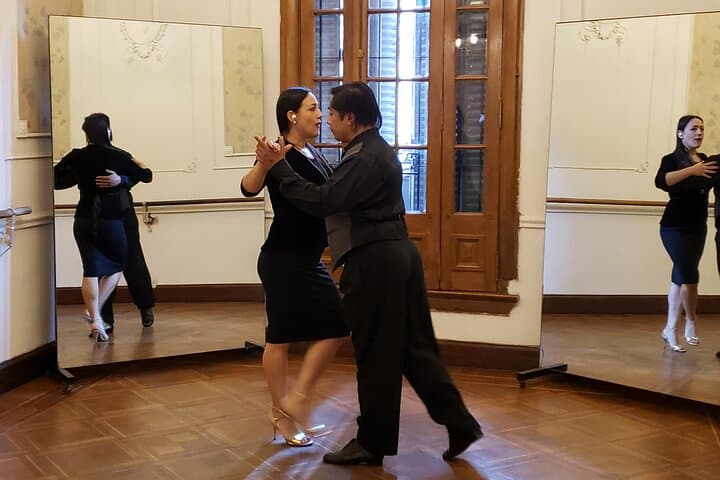
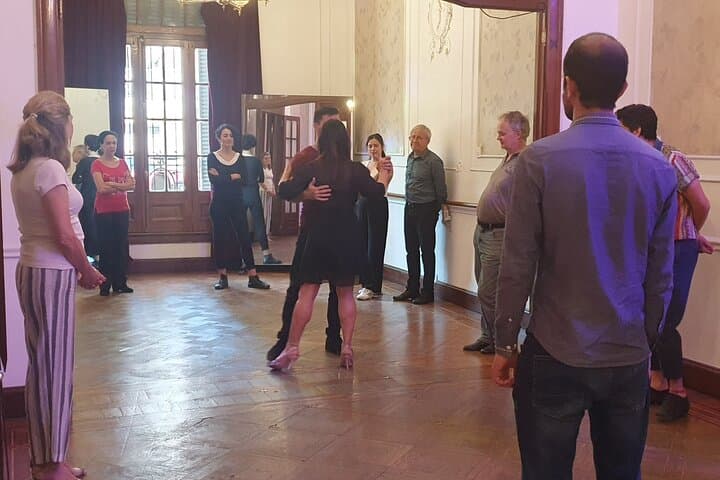
The room hums with wood-floor creaks and the distant clack of heels; sunlight slants through tall windows as a pair of instructors demonstrate a slow, measured embrace. In a private hour-long class, the floor becomes a compact arena where posture, connection and timing are practiced down to the smallest weight shift.
The room hums with wood-floor creaks and the distant clack of heels; sunlight slants through tall windows as a pair of instructors demonstrate a slow, measured embrace. In a private hour-long class, the floor becomes a compact arena where posture, connection and timing are practiced down to the smallest weight shift.
Tango grew from the working-class ports of the Río de la Plata in the late 19th and early 20th centuries, shaped by European immigrants and Afro-Argentine musicians. UNESCO recognizes tango as Intangible Cultural Heritage, and Buenos Aires still preserves the salon and milonga culture where steps and etiquette evolved. The city’s flat Pampas geology gives way to a broad estuary—Río de la Plata—that shaped neighborhoods like San Telmo and La Boca, the early tango hubs. Today small academies across barrios like Almagro and San Telmo keep the social and musical roots alive.
Practical guidance frames the experience: classes last about 60 minutes and are suitable for beginners through intermediate dancers. Expect one-on-one attention from instructors who will teach the embrace (abrazo), basic walk, simple figures and musical phrasing known as "cabeceo" and timing. Arrive warmed up, wear comfortable shoes with a smooth sole for pivoting, and communicate any back or cardiovascular issues ahead of time. Bring water and a light layer—the halls can be warm once you’re moving.
Optional hotel transfers are often available; bookings usually confirm instantly and can be canceled up to 24 hours prior. Whether you want to step onto a milonga floor that evening or simply learn a graceful walk, a private lesson is an efficient, engaging way to connect with Buenos Aires’ living culture.