THE ADVENTURE COLLECTIVE® · Independent discovery and booking for outdoor travel

Experience the Taj Mahal with a private English-speaking guide who brings Mughal history and architectural detail to life. This 2–4 hour tour covers the main terraces, interior views (admission not included) and nearby perspectives for memorable photos.
Experience the Taj Mahal with a private English-speaking guide who brings Mughal history and architectural detail to life. This 2–4 hour tour covers the main terraces, interior views (admission not included) and nearby perspectives for memorable photos.
You pass under a carved red sandstone gateway and the mausoleum reveals itself across a pool, white marble catching the first light. The Taj Mahal’s dome and minarets sit like a single, breathing form on the banks of the Yamuna, the river pushing a cool draft through the gardens and nudging the soundscape of vendors, bells and distant traffic.
Verified experiences and guided adventures in the surrounding area.
Operated by Taj India journey · Agra, Uttar Pradesh
You pass under a carved red sandstone gateway and the mausoleum reveals itself across a pool, white marble catching the first light. The Taj Mahal’s dome and minarets sit like a single, breathing form on the banks of the Yamuna, the river pushing a cool draft through the gardens and nudging the soundscape of vendors, bells and distant traffic.
Built by Emperor Shah Jahan in the mid-17th century for Mumtaz Mahal, the complex is engineered from Makrana marble and detailed with pietra dura inlay that still holds up under centuries of visitors. Geologically, the plain is alluvial; the Taj’s foundations rise from a raised plinth to resist seasonal shifts in the river. Culturally the site remains a living icon for India—expect guide commentary to weave Mughal history with stories of artisans and conservation efforts.
On a private guided tour, the itinerary typically runs 2–4 hours: approach, entry, terrace views, interior visit (tickets not included), and a stroll through surrounding markets if time allows. Guides fluent in English translate architectural details into concise narratives and handle logistics—useful where crowds and timed entries matter.
Practical tips: arrive at first light to avoid heat and the largest crowds, carry water and sun protection, and wear smart-casual clothing respectful of local norms. The complex has accessible routes but includes steps and gravel paths. If you want photographs from across the river, Mehtab Bagh offers a quieter framing at sunset. Book tickets ahead and confirm whether your guide will assist with admissions to streamline the visit.
easy.
2–4 hours.
Suitable for most fitness levels; involves walking on paved and gravel surfaces and some steps.
No; admission tickets are not included. Book timed-entry tickets online in advance or ask your guide to assist with purchases.
Expect about 2–4 hours depending on pacing, crowd conditions and whether you include nearby viewpoints or markets.
Parts of the complex are wheelchair accessible, but there are steps and uneven surfaces; contact your operator in advance for assistance options.
A full refund is available if cancelled at least 24 hours before the scheduled departure time; changes within 24 hours are non-refundable.
The Taj Mahal was commissioned by Mughal Emperor Shah Jahan in the 1630s as a mausoleum for his wife Mumtaz Mahal and completed by a workforce of artisans and laborers using Makrana marble.
Ongoing conservation focuses on marble cleaning and air-pollution controls; visitors are encouraged to follow rules, avoid touching inlay work and not feed wildlife.
Taj India journey operates guided outdoor trips and adventures with an emphasis on safety, stewardship, and memorable experiences.
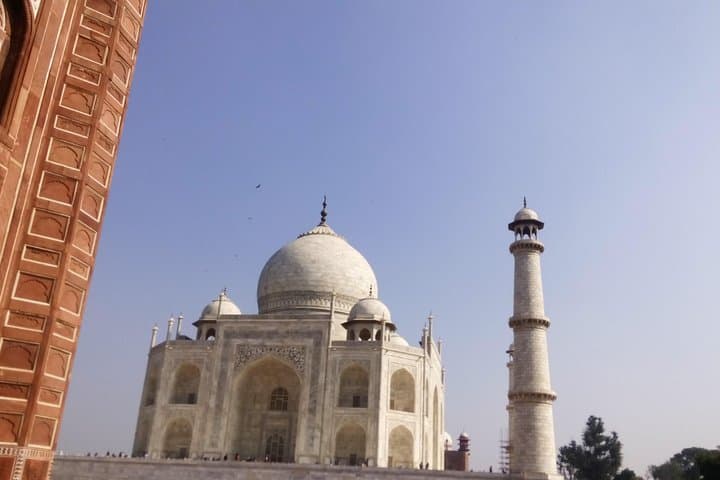
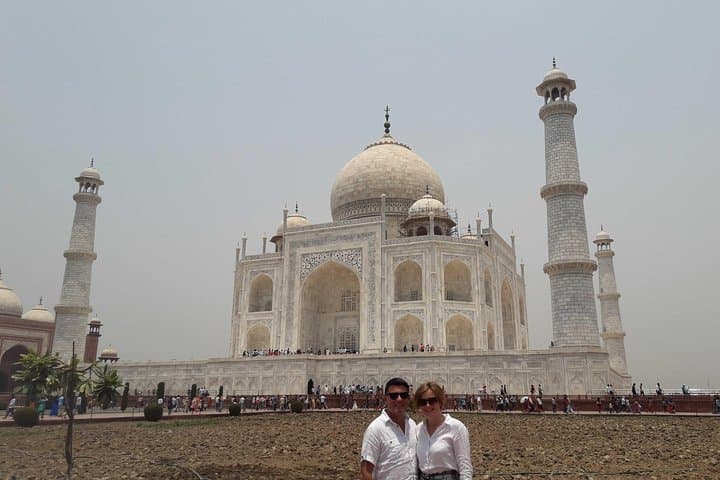
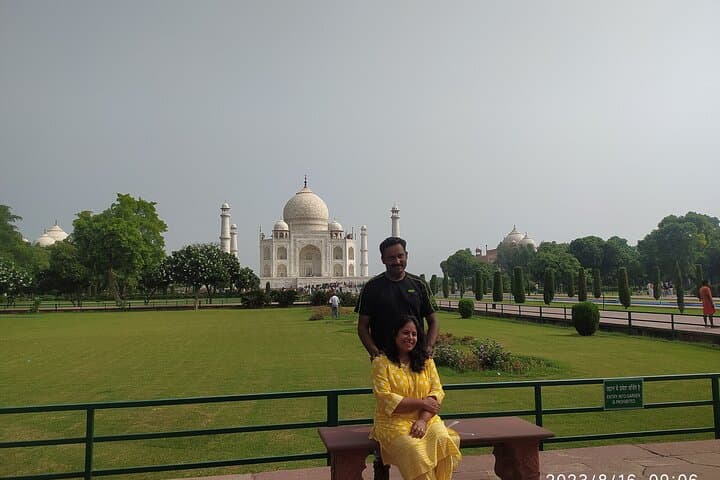

You pass under a carved red sandstone gateway and the mausoleum reveals itself across a pool, white marble catching the first light. The Taj Mahal’s dome and minarets sit like a single, breathing form on the banks of the Yamuna, the river pushing a cool draft through the gardens and nudging the soundscape of vendors, bells and distant traffic.
You pass under a carved red sandstone gateway and the mausoleum reveals itself across a pool, white marble catching the first light. The Taj Mahal’s dome and minarets sit like a single, breathing form on the banks of the Yamuna, the river pushing a cool draft through the gardens and nudging the soundscape of vendors, bells and distant traffic.
Built by Emperor Shah Jahan in the mid-17th century for Mumtaz Mahal, the complex is engineered from Makrana marble and detailed with pietra dura inlay that still holds up under centuries of visitors. Geologically, the plain is alluvial; the Taj’s foundations rise from a raised plinth to resist seasonal shifts in the river. Culturally the site remains a living icon for India—expect guide commentary to weave Mughal history with stories of artisans and conservation efforts.
On a private guided tour, the itinerary typically runs 2–4 hours: approach, entry, terrace views, interior visit (tickets not included), and a stroll through surrounding markets if time allows. Guides fluent in English translate architectural details into concise narratives and handle logistics—useful where crowds and timed entries matter.
Practical tips: arrive at first light to avoid heat and the largest crowds, carry water and sun protection, and wear smart-casual clothing respectful of local norms. The complex has accessible routes but includes steps and gravel paths. If you want photographs from across the river, Mehtab Bagh offers a quieter framing at sunset. Book tickets ahead and confirm whether your guide will assist with admissions to streamline the visit.