THE ADVENTURE COLLECTIVE® · Independent discovery and booking for outdoor travel

A private, skip-the-line tour that pairs dawn at the Taj Mahal with a guided walk through Agra Fort’s red sandstone palaces. Expect focused history, close-up craftsmanship, and practical tips for timing and comfort.
A private, skip-the-line tour that pairs dawn at the Taj Mahal with a guided walk through Agra Fort’s red sandstone palaces. Expect focused history, close-up craftsmanship, and practical tips for timing and comfort.
You arrive before the heat, the Yamuna murmuring at the Taj Mahal’s base as morning light eases across the white marble. Guides lead quietly; the monument seems to breathe—stone warmed by stories, gardens opening like a stage. The day unfolds on foot and by short transfers: one moment under the Taj’s carved arches, the next crossing into the ochre-walled world of Agra Fort.
Verified experiences and guided adventures in the surrounding area.
Operated by Markable Joy · Agra, Uttar Pradesh
You arrive before the heat, the Yamuna murmuring at the Taj Mahal’s base as morning light eases across the white marble. Guides lead quietly; the monument seems to breathe—stone warmed by stories, gardens opening like a stage. The day unfolds on foot and by short transfers: one moment under the Taj’s carved arches, the next crossing into the ochre-walled world of Agra Fort.
The Taj Mahal was commissioned in 1632 by Emperor Shah Jahan as a mausoleum for Mumtaz Mahal; its 17-hectare complex includes formal gardens, a mosque, and the symmetrical geometry that defines Mughal planning. Agra Fort predates it as a 16th-century red sandstone stronghold started under Akbar, later adapted into royal residence and administrative center.
Geology and craft are on display—marble inlay, sandstone ramparts and carved jali screens tell a story of regional stonework and imperial resources. Local culture pulses in nearby bazaars where marble artisans and inlay workshops refine centuries-old techniques.
Practical guidance: this private, six-hour tour typically includes skip-the-line entry, bottled water and shoe covers; expect several short walks on paved and uneven surfaces, and roughly 2–3 hours of walking time spread across sites. Aim for early morning to avoid crowds and heat, wear good walking shoes and modest clothing, and bring a refillable water bottle. Photography is welcome but follow guide directions around the main tomb and inside certain structures. Accessibility is generally good—ask about wheelchair assistance when booking. With a knowledgeable guide, the visit balances close-up architectural reading with a clear sense of place—history underfoot and the river watching quietly nearby.
easy.
6 hours.
Suitable for travelers in average physical condition who can walk short distances and manage stairs; minimal stamina required.
Yes—this private tour lists entry tickets for both Taj Mahal and Agra Fort as included, and typically provides skip-the-line access.
Early morning at sunrise offers cooler temperatures, softer light, and smaller crowds; late afternoon can be busy and hotter between March and September.
Many areas have wheelchair access and the tour notes wheelchair-accessible transportation and surfaces; confirm specific needs when booking to arrange assistance.
Shoe covers are provided on this tour for areas where they’re mandatory; bring shoes that are easy to slip covers over.
Agra was a Mughal political and cultural center; Akbar expanded Agra Fort in the 16th century while Shah Jahan later transformed parts of it and built the Taj as a monumental mausoleum.
High visitor volumes and air pollution are ongoing concerns; follow site rules, avoid touching marble, and use provided shoe covers to minimize wear.
Markable Joy operates guided outdoor trips and adventures with an emphasis on safety, stewardship, and memorable experiences.


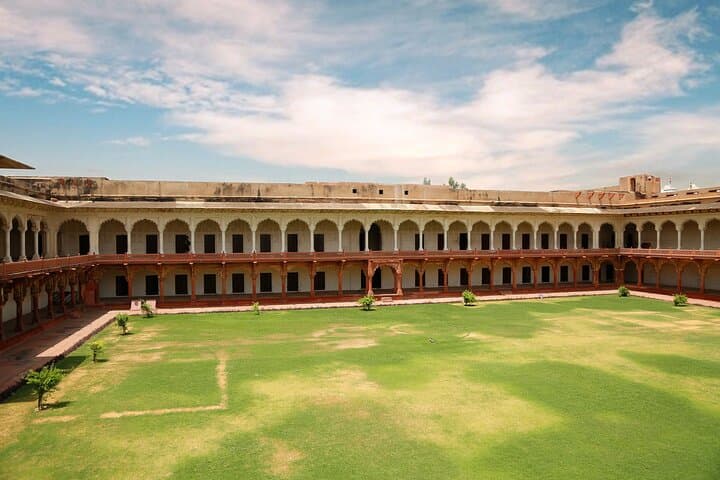
You arrive before the heat, the Yamuna murmuring at the Taj Mahal’s base as morning light eases across the white marble. Guides lead quietly; the monument seems to breathe—stone warmed by stories, gardens opening like a stage. The day unfolds on foot and by short transfers: one moment under the Taj’s carved arches, the next crossing into the ochre-walled world of Agra Fort.
You arrive before the heat, the Yamuna murmuring at the Taj Mahal’s base as morning light eases across the white marble. Guides lead quietly; the monument seems to breathe—stone warmed by stories, gardens opening like a stage. The day unfolds on foot and by short transfers: one moment under the Taj’s carved arches, the next crossing into the ochre-walled world of Agra Fort.
The Taj Mahal was commissioned in 1632 by Emperor Shah Jahan as a mausoleum for Mumtaz Mahal; its 17-hectare complex includes formal gardens, a mosque, and the symmetrical geometry that defines Mughal planning. Agra Fort predates it as a 16th-century red sandstone stronghold started under Akbar, later adapted into royal residence and administrative center.
Geology and craft are on display—marble inlay, sandstone ramparts and carved jali screens tell a story of regional stonework and imperial resources. Local culture pulses in nearby bazaars where marble artisans and inlay workshops refine centuries-old techniques.
Practical guidance: this private, six-hour tour typically includes skip-the-line entry, bottled water and shoe covers; expect several short walks on paved and uneven surfaces, and roughly 2–3 hours of walking time spread across sites. Aim for early morning to avoid crowds and heat, wear good walking shoes and modest clothing, and bring a refillable water bottle. Photography is welcome but follow guide directions around the main tomb and inside certain structures. Accessibility is generally good—ask about wheelchair assistance when booking. With a knowledgeable guide, the visit balances close-up architectural reading with a clear sense of place—history underfoot and the river watching quietly nearby.