THE ADVENTURE COLLECTIVE® · Independent discovery and booking for outdoor travel

A focused same-day private tour from New Delhi that pairs the Taj Mahal’s marble spectacle with the red sandstone grandeur of Agra Fort. Ideal for travelers who want expert guides, monument tickets, and a single-day cultural immersion.
A focused same-day private tour from New Delhi that pairs the Taj Mahal’s marble spectacle with the red sandstone grandeur of Agra Fort. Ideal for travelers who want expert guides, monument tickets, and a single-day cultural immersion.
You arrive before sunrise along the Yamuna Expressway, the city heat still gathering as the car hums toward Agra. When the marble first appears — luminous against a pale sky — it feels like a slow reveal: the Taj Mahal holds its presence quietly, the river nearby daring the light to change it.
Verified experiences and guided adventures in the surrounding area.
Operated by visit golden triangle trip · Agra, Uttar Pradesh
You arrive before sunrise along the Yamuna Expressway, the city heat still gathering as the car hums toward Agra. When the marble first appears — luminous against a pale sky — it feels like a slow reveal: the Taj Mahal holds its presence quietly, the river nearby daring the light to change it.
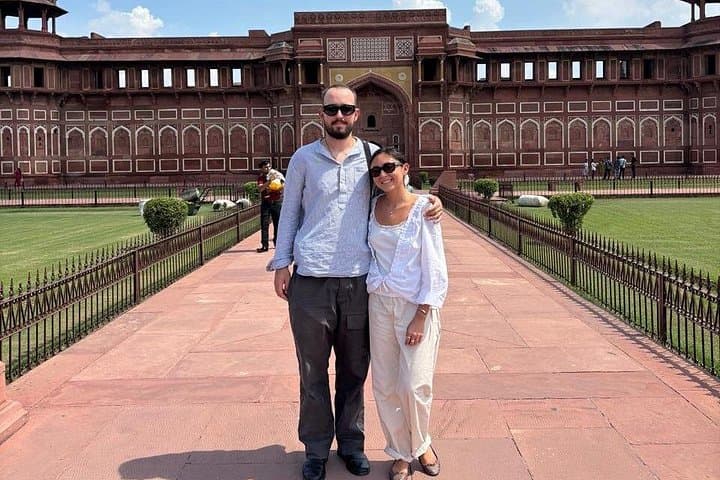
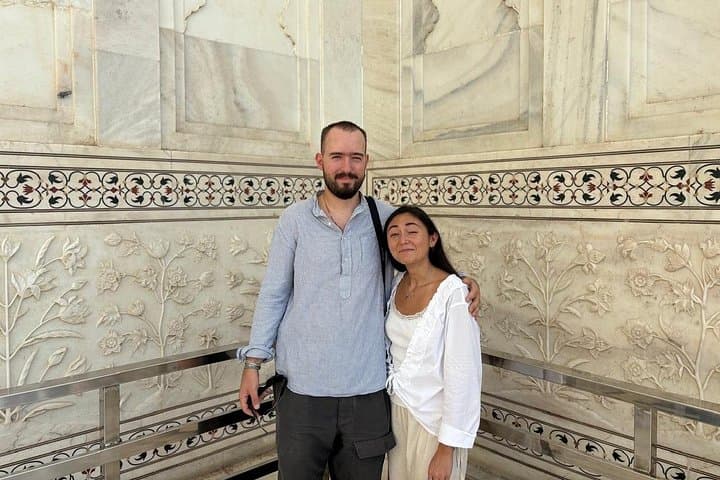
The day pairs two Mughal monuments with the rhythm of modern India: the Taj Mahal, built by Shah Jahan in the 17th century as a mausoleum of white marble, and Agra Fort, Akbar’s sprawling red sandstone citadel with layered chambers and artillery terraces. Geology plays a role too — the white Makrana marble and the red sandstone quarried nearby shape the city’s palette. Local craft culture is visible in marble inlay workshops and carpet stalls around the monuments, where artisans continue centuries-old techniques.
Practicalities shape the experience: anticipate a 10–12 hour round trip from Delhi, two hours at the Taj if you want measured time for photos and quiet, and an hour through Agra Fort’s ramparts. Guided entry accelerates queues and helps interpret architectural details and inscriptions. Dress modestly for religious and cultural sensitivity; expect security screening and sections where shoes must be removed.
Timing matters: early morning light and late afternoon glow offer the best photos and thinner crowds. Bring water, sun protection, and comfortable shoes for paved but sometimes uneven paths. If time allows, a short stop at a marble workshop or a local eatery deepens the visit, offering context beyond the monuments themselves.
easy.
10–12 hours.
Suitable for travelers in average fitness; involves walking on paved surfaces and some stairs inside monuments.
The tour offers monument tickets if you select that option at booking; confirm inclusion when you reserve to avoid onsite purchases.
Pickup and drop-off are provided anywhere in Delhi—confirm your precise pickup point and time when you book.
Yes—infant seats are available, but the long travel day may be tiring for very young children; plan breaks accordingly.
Yes—there’s an optional stop for marble inlay or carpet-making demonstrations; request this when you book to include time.
Agra was a Mughal capital; Shah Jahan’s Taj Mahal and Akbar’s earlier Agra Fort reflect imperial patronage and evolving aesthetic and defensive needs in 16th–17th century northern India.
The Taj complex is monitored for air and visitor impact; visitors are encouraged to use bottled or filtered water and follow site rules to minimize wear on historic surfaces.
visit golden triangle trip operates guided outdoor trips and adventures with an emphasis on safety, stewardship, and memorable experiences.
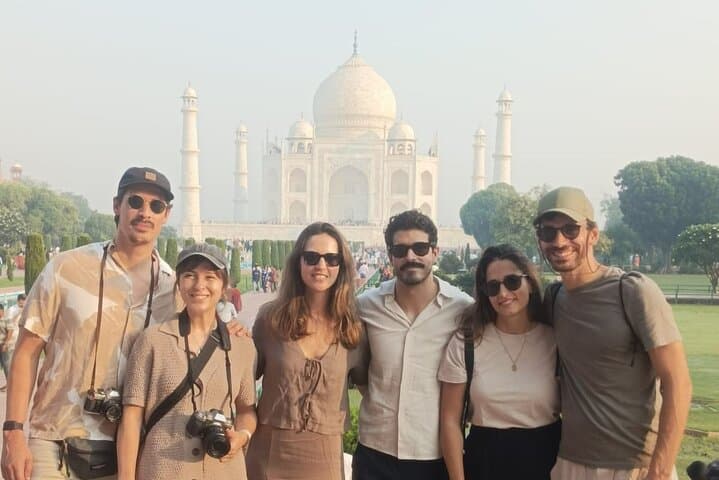
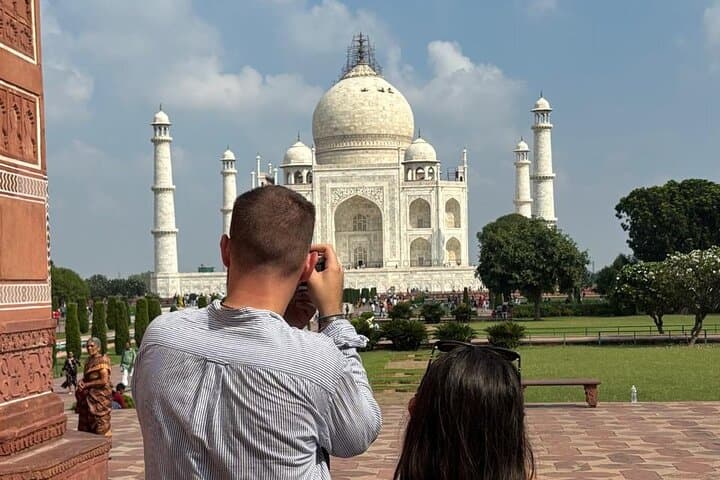
You arrive before sunrise along the Yamuna Expressway, the city heat still gathering as the car hums toward Agra. When the marble first appears — luminous against a pale sky — it feels like a slow reveal: the Taj Mahal holds its presence quietly, the river nearby daring the light to change it.
You arrive before sunrise along the Yamuna Expressway, the city heat still gathering as the car hums toward Agra. When the marble first appears — luminous against a pale sky — it feels like a slow reveal: the Taj Mahal holds its presence quietly, the river nearby daring the light to change it.
The day pairs two Mughal monuments with the rhythm of modern India: the Taj Mahal, built by Shah Jahan in the 17th century as a mausoleum of white marble, and Agra Fort, Akbar’s sprawling red sandstone citadel with layered chambers and artillery terraces. Geology plays a role too — the white Makrana marble and the red sandstone quarried nearby shape the city’s palette. Local craft culture is visible in marble inlay workshops and carpet stalls around the monuments, where artisans continue centuries-old techniques.
Practicalities shape the experience: anticipate a 10–12 hour round trip from Delhi, two hours at the Taj if you want measured time for photos and quiet, and an hour through Agra Fort’s ramparts. Guided entry accelerates queues and helps interpret architectural details and inscriptions. Dress modestly for religious and cultural sensitivity; expect security screening and sections where shoes must be removed.
Timing matters: early morning light and late afternoon glow offer the best photos and thinner crowds. Bring water, sun protection, and comfortable shoes for paved but sometimes uneven paths. If time allows, a short stop at a marble workshop or a local eatery deepens the visit, offering context beyond the monuments themselves.