THE ADVENTURE COLLECTIVE® · Independent discovery and booking for outdoor travel

Make the most of a single day: a private car from Delhi takes you to the Taj Mahal at an ideal hour, then on to Agra Fort and the Baby Taj with an expert guide. Expect long drives, historic detail, and options for sunrise visits.
Make the most of a single day: a private car from Delhi takes you to the Taj Mahal at an ideal hour, then on to Agra Fort and the Baby Taj with an expert guide. Expect long drives, historic detail, and options for sunrise visits.
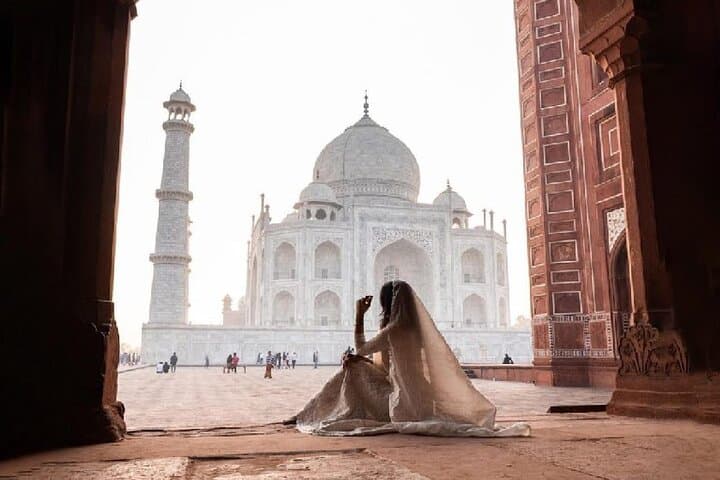
You leave Delhi before dawn, the expressway unspooling under the car’s tires while the Yamuna, patient and wide, seems to dare the city to keep up. By sunrise the Taj Mahal appears white and impossible against the cooling sky; the marble drinks light and pushes it back in planes of carved symmetry. The day unfolds as a study in Mughal ambition—Shah Jahan’s mausoleum, the red sandstone bulwarks of Agra Fort, and the delicate pietra dura of Itmad-ud-Daulah (the Baby Taj).
Verified experiences and guided adventures in the surrounding area.
Operated by Travel With Us · Agra, Uttar Pradesh
You leave Delhi before dawn, the expressway unspooling under the car’s tires while the Yamuna, patient and wide, seems to dare the city to keep up. By sunrise the Taj Mahal appears white and impossible against the cooling sky; the marble drinks light and pushes it back in planes of carved symmetry. The day unfolds as a study in Mughal ambition—Shah Jahan’s mausoleum, the red sandstone bulwarks of Agra Fort, and the delicate pietra dura of Itmad-ud-Daulah (the Baby Taj).
Geologically the region sits on the flat Indo-Gangetic plain; the Taj’s luminous surface is Makrana marble quarried from Rajasthan, set against the earthy red of Agra Fort’s sandstone. Culturally, these monuments map a 17th-century court that married Persian design with local craft—look for fine inlay work and calligraphic panels. Nearby workshops still restore and cut marble, continuing techniques that have endured for centuries.
Practically, expect a long day: roughly 3.5–4 hours each way on the Yamuna Expressway, with 2–3 hours of guided time at the Taj and additional stops at the Fort and Baby Taj. The route is mostly flat; walking includes paved courtyards, steps and short grassy stretches. The Taj is closed Fridays and sunrise visits are available if you select an early pickup. Bring cash for incidental purchases and modest clothing for respectful sites. Comfortable walking shoes, sun protection, hydration and patience for traffic will make the day both smooth and memorable.
easy.
10–12 hours.
Suitable for most people with basic mobility; requires standing and walking for several hours with some short flights of steps.
Entry is included only if you select the option that adds monument tickets—confirm at booking; guides can assist with ticket purchases on the day.
Yes—there’s a 3:00 AM pickup option for sunrise visits; weather (fog in winter) may require switching to a later start.
Pickups and drop-offs are available across Delhi, Gurugram, Noida, Greater Noida, Ghaziabad, and Faridabad; specify your hotel or airport when booking.
Monument grounds have wheelchair-friendly surfaces in many areas, though some sections include steps—contact the operator to confirm accessibility details for your needs.
The Taj Mahal was commissioned by Mughal emperor Shah Jahan in 1632 as a mausoleum for Mumtaz Mahal; Agra Fort served as the Mughal capital’s fortified palace until the court moved to Delhi.
High visitor numbers impact marble surfaces and drainage systems; stay on designated paths, avoid touching inlay work, and support licensed guides and official ticketing to reduce pressure on heritage management.
Travel With Us operates guided outdoor trips and adventures with an emphasis on safety, stewardship, and memorable experiences.

You leave Delhi before dawn, the expressway unspooling under the car’s tires while the Yamuna, patient and wide, seems to dare the city to keep up. By sunrise the Taj Mahal appears white and impossible against the cooling sky; the marble drinks light and pushes it back in planes of carved symmetry. The day unfolds as a study in Mughal ambition—Shah Jahan’s mausoleum, the red sandstone bulwarks of Agra Fort, and the delicate pietra dura of Itmad-ud-Daulah (the Baby Taj).
You leave Delhi before dawn, the expressway unspooling under the car’s tires while the Yamuna, patient and wide, seems to dare the city to keep up. By sunrise the Taj Mahal appears white and impossible against the cooling sky; the marble drinks light and pushes it back in planes of carved symmetry. The day unfolds as a study in Mughal ambition—Shah Jahan’s mausoleum, the red sandstone bulwarks of Agra Fort, and the delicate pietra dura of Itmad-ud-Daulah (the Baby Taj).
Geologically the region sits on the flat Indo-Gangetic plain; the Taj’s luminous surface is Makrana marble quarried from Rajasthan, set against the earthy red of Agra Fort’s sandstone. Culturally, these monuments map a 17th-century court that married Persian design with local craft—look for fine inlay work and calligraphic panels. Nearby workshops still restore and cut marble, continuing techniques that have endured for centuries.
Practically, expect a long day: roughly 3.5–4 hours each way on the Yamuna Expressway, with 2–3 hours of guided time at the Taj and additional stops at the Fort and Baby Taj. The route is mostly flat; walking includes paved courtyards, steps and short grassy stretches. The Taj is closed Fridays and sunrise visits are available if you select an early pickup. Bring cash for incidental purchases and modest clothing for respectful sites. Comfortable walking shoes, sun protection, hydration and patience for traffic will make the day both smooth and memorable.