THE ADVENTURE COLLECTIVE® · Independent discovery and booking for outdoor travel

Explore UNESCO-listed Syracuse and the baroque streets of Noto on a private day tour from Catania. This six-hour route combines the Neapolis ruins, a walk through Ortigia, and Noto's golden stone facades—ideal for travelers who want focused local insight and flexible pacing.
Explore UNESCO-listed Syracuse and the baroque streets of Noto on a private day tour from Catania. This six-hour route combines the Neapolis ruins, a walk through Ortigia, and Noto's golden stone facades—ideal for travelers who want focused local insight and flexible pacing.
Morning light hits Catania's coast as a private car eases onto the autostrada, bearing travelers toward Sicily's eastern shore where stone and sea trade stories. In under an hour the landscape changes: coastal scrub gives way to the low limestone cliffs around Syracuse, and the island of Ortigia appears like a weathered map of history.
Verified experiences and guided adventures in the surrounding area.
Operated by Sicilying SRL · Syracuse, Sicily
Morning light hits Catania's coast as a private car eases onto the autostrada, bearing travelers toward Sicily's eastern shore where stone and sea trade stories. In under an hour the landscape changes: coastal scrub gives way to the low limestone cliffs around Syracuse, and the island of Ortigia appears like a weathered map of history.
Syracuse's Neapolis Archaeological Park opens onto a Greek theatre hewn from tufa and a Roman amphitheatre spread across gently rolling terrain — expect roughly 1–2 km of on-foot exploration with minimal elevation change (20–40 m total). Ortigia is compact but textured: cobbled lanes, short flights of steps up to the Duomo's piazza, and the Maniace Castle guarding the sea. Noto, rebuilt after the 1693 earthquake, reveals wide baroque avenues carved from warm local limestone (pietra di Noto) and a compact center where a leisurely 1 km stroll covers the main sights.
Culture here is tactile — stone facades repaired generation to generation, fishermen hauling nets at dawn, cafés serving almond granita. Geology matters: historic quarries shaped the architecture and created the acoustics of the theatres.
Practical guidance: the tour is six hours total with set stop times (Neapolis ~60 min, Ortigia ~120 min, Noto ~60 min); the private driver cannot enter monuments by law, so plan ticket purchases and timing beforehand. Wear sturdy shoes for cobbles, bring sun protection and 1–1.5 liters of water, and schedule morning starts in summer to avoid peak heat. Cash can speed small museum purchases; cameras and comfortable layers will keep you ready for sudden coastal breezes.
easy.
6 hours.
Suitable for most fitness levels; involves several short urban walks and standing during site visits
No — Italian regulations prevent drivers from acting as guides inside monuments; they will provide directions and parking but you explore sites on foot.
Admissions are not included by default; plan to buy tickets onsite or pre-book for specific attractions like the Greek theatre or cathedral museum.
The private vehicle covers up to five passengers, normally limited to four adults plus one child under the specified height limits.
Yes — the itinerary is low-impact with short walks, but cobbled streets and occasional steps may be challenging for strollers or limited-mobility guests.
Syracuse was a major Greek colony and its Neapolis park preserves theatres and quarries; Noto was rebuilt in warm pietra di Noto after the 1693 earthquake, giving it a unified baroque character.
Historic stone facades are sensitive to pollution and visitor wear; stick to marked paths, avoid touching fragile carvings, and support local conservation fees where offered.
Sicilying SRL operates guided outdoor trips and adventures with an emphasis on safety, stewardship, and memorable experiences.
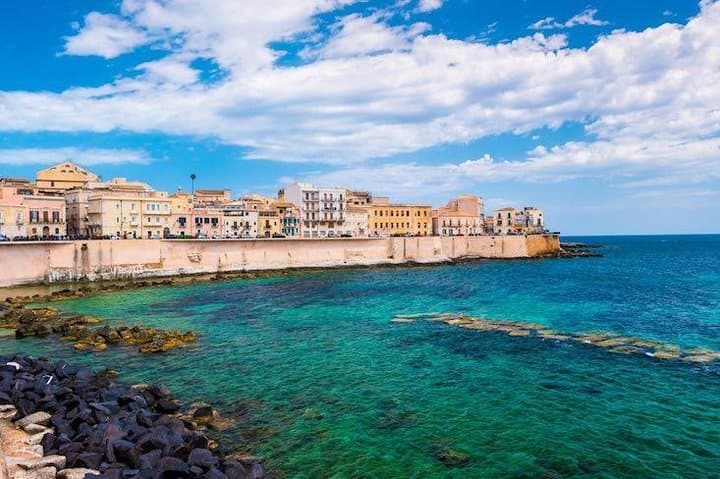
Morning light hits Catania's coast as a private car eases onto the autostrada, bearing travelers toward Sicily's eastern shore where stone and sea trade stories. In under an hour the landscape changes: coastal scrub gives way to the low limestone cliffs around Syracuse, and the island of Ortigia appears like a weathered map of history.
Morning light hits Catania's coast as a private car eases onto the autostrada, bearing travelers toward Sicily's eastern shore where stone and sea trade stories. In under an hour the landscape changes: coastal scrub gives way to the low limestone cliffs around Syracuse, and the island of Ortigia appears like a weathered map of history.
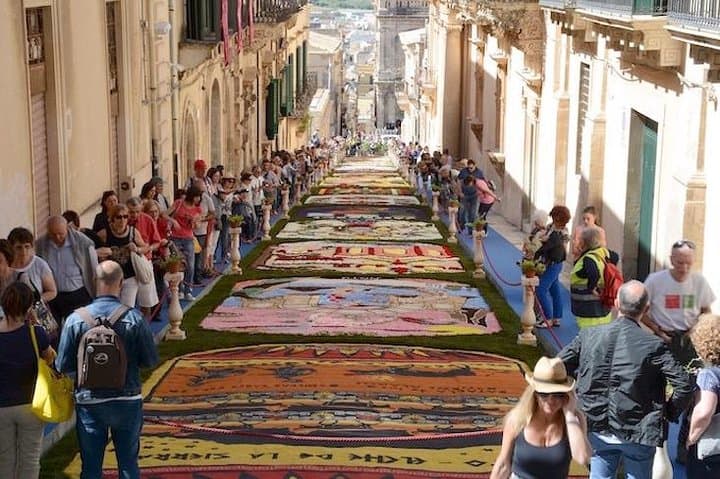
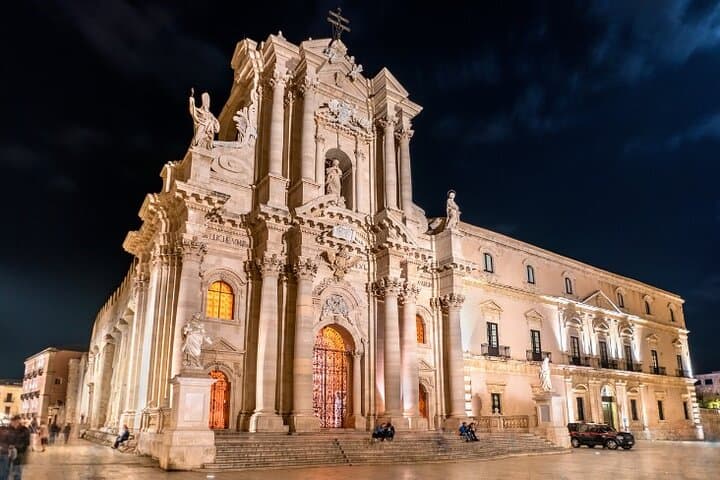
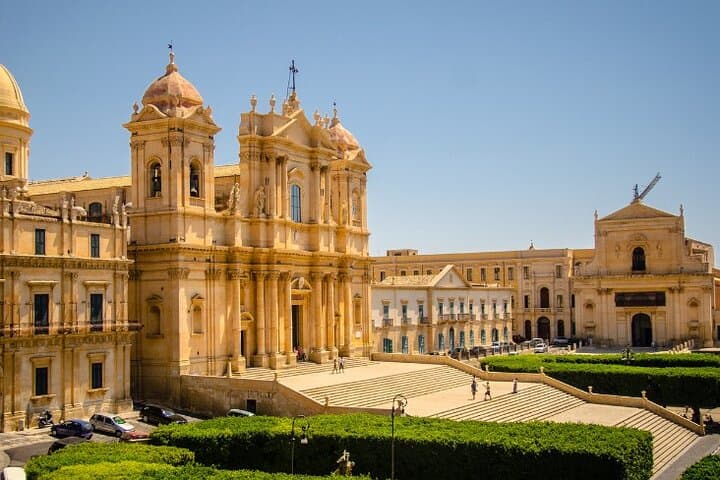
Syracuse's Neapolis Archaeological Park opens onto a Greek theatre hewn from tufa and a Roman amphitheatre spread across gently rolling terrain — expect roughly 1–2 km of on-foot exploration with minimal elevation change (20–40 m total). Ortigia is compact but textured: cobbled lanes, short flights of steps up to the Duomo's piazza, and the Maniace Castle guarding the sea. Noto, rebuilt after the 1693 earthquake, reveals wide baroque avenues carved from warm local limestone (pietra di Noto) and a compact center where a leisurely 1 km stroll covers the main sights.
Culture here is tactile — stone facades repaired generation to generation, fishermen hauling nets at dawn, cafés serving almond granita. Geology matters: historic quarries shaped the architecture and created the acoustics of the theatres.
Practical guidance: the tour is six hours total with set stop times (Neapolis ~60 min, Ortigia ~120 min, Noto ~60 min); the private driver cannot enter monuments by law, so plan ticket purchases and timing beforehand. Wear sturdy shoes for cobbles, bring sun protection and 1–1.5 liters of water, and schedule morning starts in summer to avoid peak heat. Cash can speed small museum purchases; cameras and comfortable layers will keep you ready for sudden coastal breezes.