THE ADVENTURE COLLECTIVE® · Independent discovery and booking for outdoor travel

Experience southern Tunisia on a private 10–11 hour drive: explore Roman causeways, wander KSAR Hadada’s lanes, swim in Ksar Ghilane’s hot spring, and finish with a traditional dinner at Ksar Hallouf as the desert cools at sunset.
Experience southern Tunisia on a private 10–11 hour drive: explore Roman causeways, wander KSAR Hadada’s lanes, swim in Ksar Ghilane’s hot spring, and finish with a traditional dinner at Ksar Hallouf as the desert cools at sunset.
The ride into the Tunisian south opens like a slow breath: a private 4x4 hums along the Roman causeway off Djerba, light thinning as the desert widens and the dunes begin their patient climb.
Verified experiences and guided adventures in the surrounding area.
Operated by Israa Travel Agency · Ksar Hallouf, Tataouine Governorate
The ride into the Tunisian south opens like a slow breath: a private 4x4 hums along the Roman causeway off Djerba, light thinning as the desert widens and the dunes begin their patient climb.
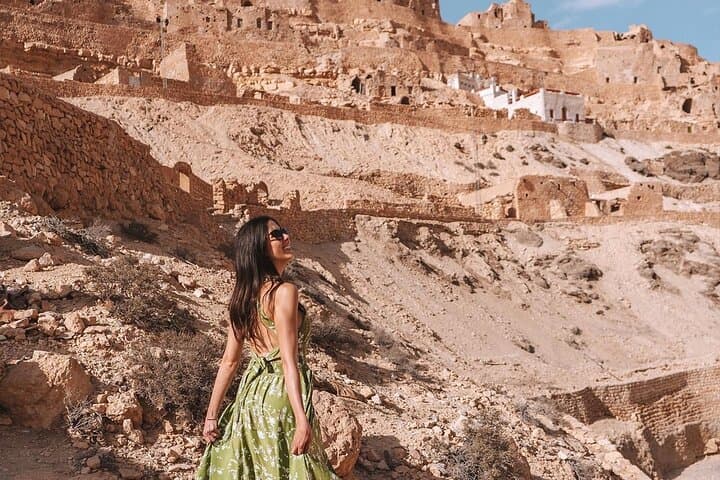
This full-day excursion threads history and landscape — a short stop at the 2nd-century El Kantara causeway, a guided walk through the compact alleys of Ksar Hadada (a preserved fortified village and one of the Star Wars filming sites), a photo pause in the Berber hamlet of Guermassa, and a driven approach into the southernmost oasis of Ksar Ghilane.
Geology here is simple and striking: wind-sculpted sand backed by low limestone escarpments, with scattered sabkhas and the surprising presence of a thermal spring fed into the oasis. Culturally, the ksour (plural of ksar) reflect adobe construction, carved wooden doors and community grain storage that speak to centuries of desert life.
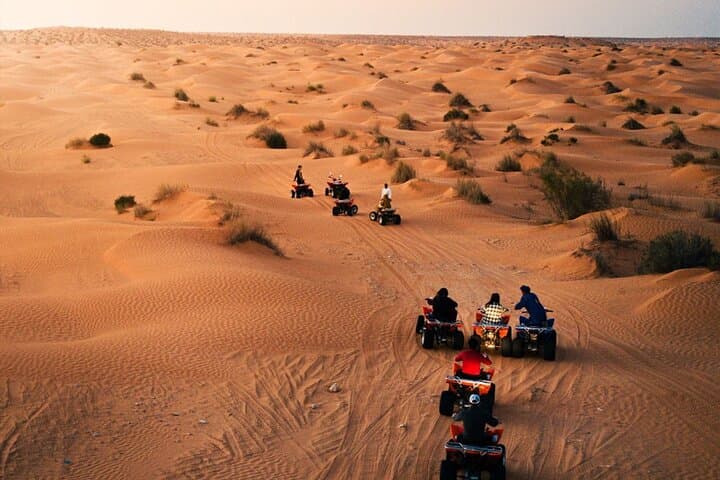
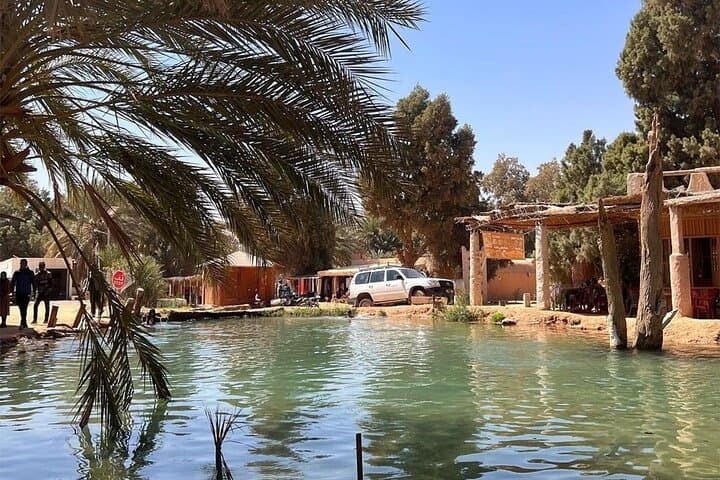
Expect 10–11 hours on the road with guided stops; the oasis offers a dip in warm spring water and sunset light that spills across the dunes. Optional extras — a camel trek, quad ride, or a short visit to the Roman fort of Tisavar — add texture and minutes.
Practical notes: bring sun protection, plenty of water, and closed-toe shoes for walking in older ksour. Timing matters — the light from late afternoon through sunset is the principal event. Respect local customs at meals and in villages, and follow guides’ advice to protect fragile desert vegetation and archaeological sites.
easy.
10–11 hours.
Suitable for most travelers with basic mobility; minimal walking but uneven surfaces in historic sites.
The tour runs about 10–11 hours (600–660 minutes); typical departures are in the morning with the key activities timed so you reach Ksar Ghilane for sunset.
Yes — the oasis has a warm spring where guests can swim; bring swimwear and a quick-dry towel, and follow guide instructions for hygiene and safety.
The tour is marketed as accessible to most fitness levels and families, but ksar alleys are uneven; contact the operator ahead for infant seats or mobility accommodations.
Private transportation and a traditional dinner at Ksar Hallouf are included; options like quad biking or camel rides are usually available at extra cost.
Ksour are communal fortified granaries built of rammed earth and stone; many local sites retain original doors and storage niches used for centuries.
The Sahara’s plants and archaeological remains are fragile — stick to vehicle tracks, avoid taking sand or artifacts, and minimize single-use plastics.
Israa Travel Agency operates guided outdoor trips and adventures with an emphasis on safety, stewardship, and memorable experiences.
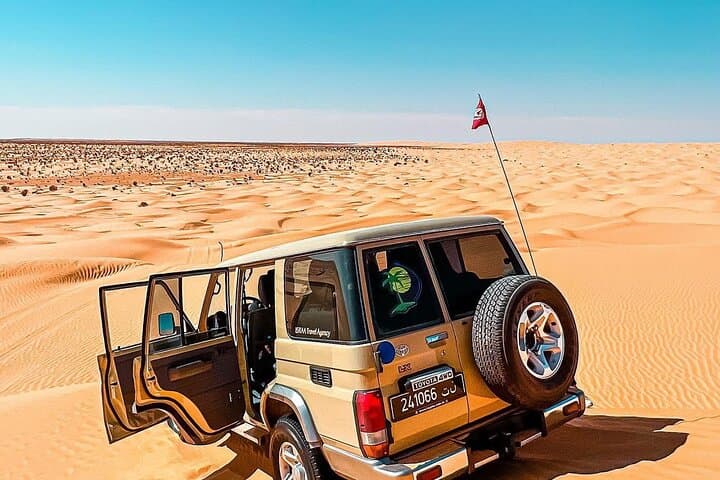
The ride into the Tunisian south opens like a slow breath: a private 4x4 hums along the Roman causeway off Djerba, light thinning as the desert widens and the dunes begin their patient climb.
The ride into the Tunisian south opens like a slow breath: a private 4x4 hums along the Roman causeway off Djerba, light thinning as the desert widens and the dunes begin their patient climb.
This full-day excursion threads history and landscape — a short stop at the 2nd-century El Kantara causeway, a guided walk through the compact alleys of Ksar Hadada (a preserved fortified village and one of the Star Wars filming sites), a photo pause in the Berber hamlet of Guermassa, and a driven approach into the southernmost oasis of Ksar Ghilane.
Geology here is simple and striking: wind-sculpted sand backed by low limestone escarpments, with scattered sabkhas and the surprising presence of a thermal spring fed into the oasis. Culturally, the ksour (plural of ksar) reflect adobe construction, carved wooden doors and community grain storage that speak to centuries of desert life.
Expect 10–11 hours on the road with guided stops; the oasis offers a dip in warm spring water and sunset light that spills across the dunes. Optional extras — a camel trek, quad ride, or a short visit to the Roman fort of Tisavar — add texture and minutes.
Practical notes: bring sun protection, plenty of water, and closed-toe shoes for walking in older ksour. Timing matters — the light from late afternoon through sunset is the principal event. Respect local customs at meals and in villages, and follow guides’ advice to protect fragile desert vegetation and archaeological sites.