THE ADVENTURE COLLECTIVE® · Independent discovery and booking for outdoor travel

Ride into dawn across the Angkor Archaeological Park and arrive at Angkor Wat as towers ignite with first light. This private sunrise bike tour mixes temple visits with off-road tracks, local culture, and practical tips for a 6–7 hour morning in Cambodia’s most storied ruins.
Ride into dawn across the Angkor Archaeological Park and arrive at Angkor Wat as towers ignite with first light. This private sunrise bike tour mixes temple visits with off-road tracks, local culture, and practical tips for a 6–7 hour morning in Cambodia’s most storied ruins.
Pedaling through pre-dawn shadow, you skirt the glassy moat as Angkor Wat’s towers unspool against a pale sky. Bikes crunch on packed sand and rough service roads; temple silhouettes grow sharper as the sun lifts, light splaying across carved stone faces and the slow-moving water that dares you to stop and stare.
Verified experiences and guided adventures in the surrounding area.
Operated by Discover Cambodia · Siem Reap, Siem Reap Province
Pedaling through pre-dawn shadow, you skirt the glassy moat as Angkor Wat’s towers unspool against a pale sky. Bikes crunch on packed sand and rough service roads; temple silhouettes grow sharper as the sun lifts, light splaying across carved stone faces and the slow-moving water that dares you to stop and stare.
This route threads through the Angkor Archaeological Park, heart of the Khmer Empire (9th–15th centuries). You visit Angkor Wat, Bayon—with its carved, smiling faces from Jayavarman VII’s reign—and Ta Prohm, where strangler figs wrap the ruins in living sculpture. The geology is primarily sandstone and laterite, weathered into bas-reliefs and steeped in tropical humidity that speeds moss and root takeover.
Local culture remains close: villages feed the park’s workforce, roadside stalls sell sugarcane and coffee, and monks move in saffron lines at dawn. Guides explain temple symbolism, restoration challenges and the etiquette—cover shoulders and knees, keep voices low.
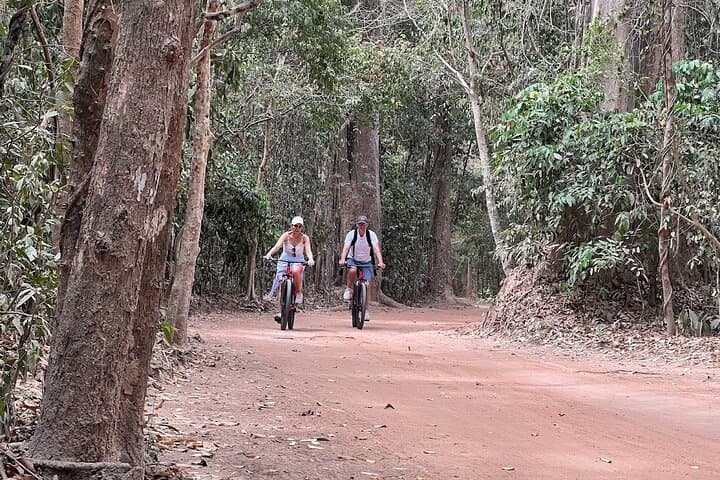
Practically, expect 6–7 hours of riding with several short walks at monuments. Terrain alternates hard-packed earth, rutted maintenance tracks and paved stretches; a moderate fitness level and basic off-road bike handling are required. Helmets and bottled water are provided, but bring sun protection, a light rain shell for sudden storms, and carry cash for an Angkor pass (required) and small local purchases.
Start very early to avoid heat and crowds, and plan for intermittent shade, curious macaques, and unexpected light across centuries-old stone.—this ride feels equal parts archaeology tour and countryside escape.
moderate.
6–7 hours.
Moderate cardiovascular fitness and basic off-road cycling ability; able to ride several hours with short walks.
Yes—every visitor must have an Angkor pass (1-day or multi-day). You can buy it at the official ticket center in Siem Reap before entering the park.
No advanced skills are required, but you should be comfortable on a bike on unpaved, sometimes rutted tracks for several hours.
Yes—mountain bikes and safety helmets are included in the tour price, along with bottled water and cool towels.
No—drone use is restricted in the Angkor Archaeological Park without special permits; check local regulations and your guide’s advice.
Angkor was the political and religious center of the Khmer Empire; Jayavarman VII’s 12th-century projects like Bayon reshaped the park’s iconography.
Visitor numbers strain fragile stone and ecosystems; follow park rules, avoid climbing ruins, and minimize single-use plastics to reduce impact.
Discover Cambodia operates guided outdoor trips and adventures with an emphasis on safety, stewardship, and memorable experiences.
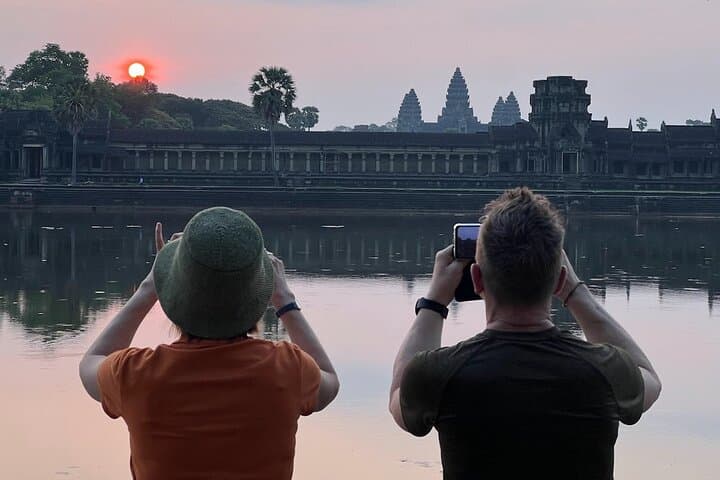
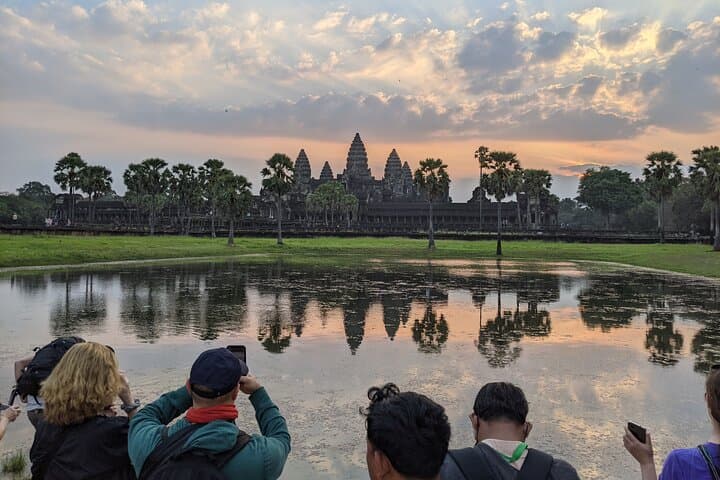
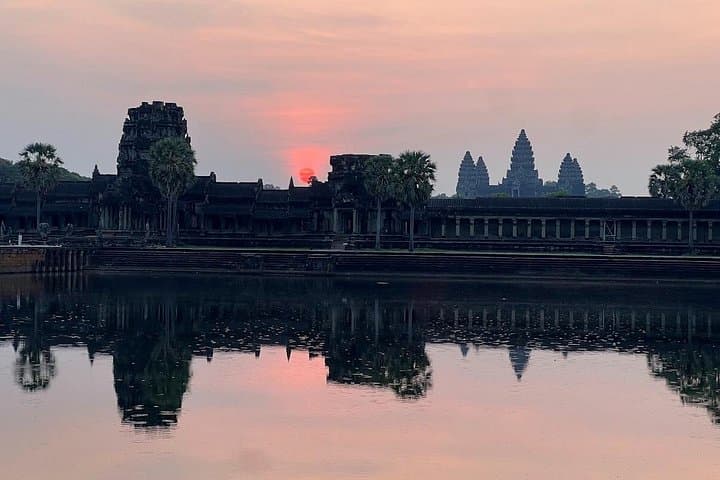
Pedaling through pre-dawn shadow, you skirt the glassy moat as Angkor Wat’s towers unspool against a pale sky. Bikes crunch on packed sand and rough service roads; temple silhouettes grow sharper as the sun lifts, light splaying across carved stone faces and the slow-moving water that dares you to stop and stare.
Pedaling through pre-dawn shadow, you skirt the glassy moat as Angkor Wat’s towers unspool against a pale sky. Bikes crunch on packed sand and rough service roads; temple silhouettes grow sharper as the sun lifts, light splaying across carved stone faces and the slow-moving water that dares you to stop and stare.
This route threads through the Angkor Archaeological Park, heart of the Khmer Empire (9th–15th centuries). You visit Angkor Wat, Bayon—with its carved, smiling faces from Jayavarman VII’s reign—and Ta Prohm, where strangler figs wrap the ruins in living sculpture. The geology is primarily sandstone and laterite, weathered into bas-reliefs and steeped in tropical humidity that speeds moss and root takeover.
Local culture remains close: villages feed the park’s workforce, roadside stalls sell sugarcane and coffee, and monks move in saffron lines at dawn. Guides explain temple symbolism, restoration challenges and the etiquette—cover shoulders and knees, keep voices low.
Practically, expect 6–7 hours of riding with several short walks at monuments. Terrain alternates hard-packed earth, rutted maintenance tracks and paved stretches; a moderate fitness level and basic off-road bike handling are required. Helmets and bottled water are provided, but bring sun protection, a light rain shell for sudden storms, and carry cash for an Angkor pass (required) and small local purchases.
Start very early to avoid heat and crowds, and plan for intermittent shade, curious macaques, and unexpected light across centuries-old stone.—this ride feels equal parts archaeology tour and countryside escape.