THE ADVENTURE COLLECTIVE® · Independent discovery and booking for outdoor travel

Explore Colonia Roma with a local guide on a 2–2.5 hour street art walk that traces murals, artist stories, and neighborhood cafés. This small-group tour connects visitors with community-driven public art and practical local tips.
Explore Colonia Roma with a local guide on a 2–2.5 hour street art walk that traces murals, artist stories, and neighborhood cafés. This small-group tour connects visitors with community-driven public art and practical local tips.
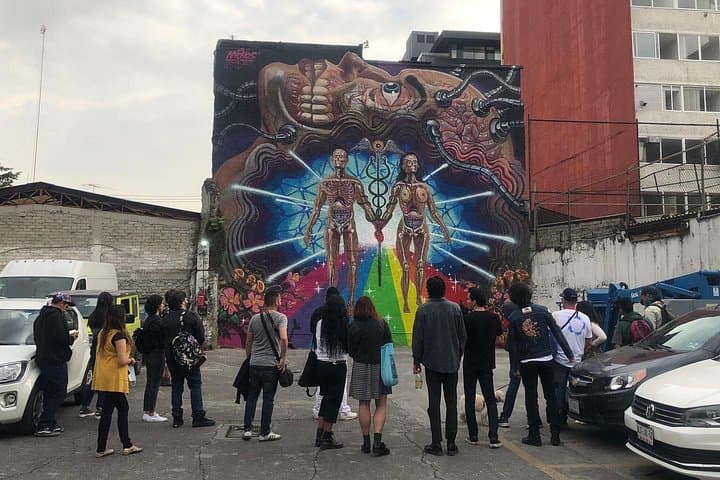
A late-morning walk in Colonia Roma feels like stepping into a gallery that refuses to be quiet: murals dare you to stop, storefronts chat with painted faces, and the avenue seems to breathe with layered histories.
Verified experiences and guided adventures in the surrounding area.
Operated by Street art tour Roma · Mexico City, Ciudad de México
A late-morning walk in Colonia Roma feels like stepping into a gallery that refuses to be quiet: murals dare you to stop, storefronts chat with painted faces, and the avenue seems to breathe with layered histories.
The Roma neighborhood grew from early 20th-century urban planning on the old Valley of Mexico lakebed and bears the marks of Porfirian decadence, the 1985 earthquake, and a bohemian resurgence that turned facades into canvases. Many walls now host political cartoons, portraiture, and large-scale abstractions produced by local and international artists working with community permissions—an evolution of public art and neighborhood stewardship.
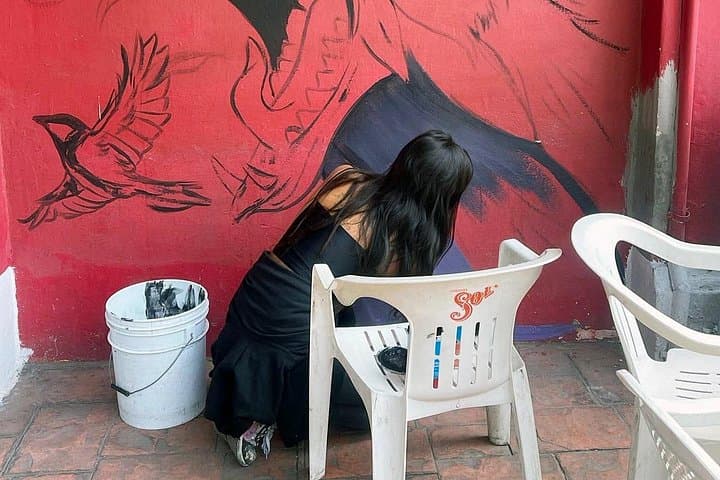
Strolling with a local guide, travelers move between plazas, small galleries, and markets; Casa Lamm and Plaza Río de Janeiro are regular stops, while the Green Roma Garden offers a quiet bench to read the city’s moods. The tour highlights artists’ backstories, the mural techniques used on lime and concrete, and recommendations for nearby cafés where neighbors still argue politics over espresso.
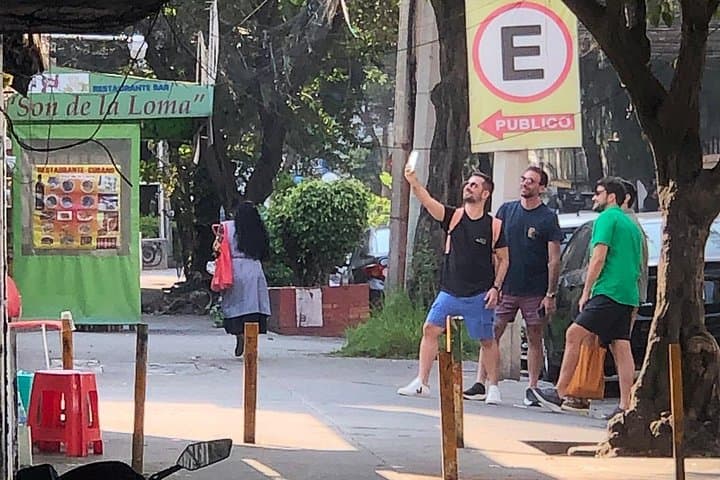
Practically: expect 2–2.5 hours on mostly flat city streets with intermittent cobbles. Wear supportive shoes, carry water, and plan for sun or sudden showers depending on season. Public transport and ride apps reach the neighborhood easily; small-group sizes keep conversations personal. Photography is welcome but be mindful of private property and residents. Booking supports local art initiatives—part of the fee is reinvested into mural projects—so this is both a cultural deep dive and a direct contribution to the living, changing street scene of Roma.
easy.
2–2.5 hours.
Light walking fitness—able to stand and walk at a moderate pace for two hours.
The tour takes place in Colonia Roma (Roma Norte) in Mexico City, a neighborhood named during early 20th-century urban development—not Rome, Italy.
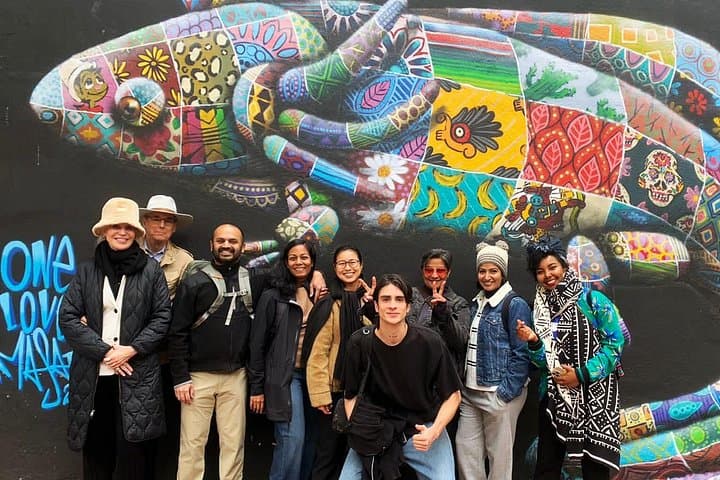
Tours operate as small-group experiences (up to about 10 people); private bookings may be available on request but are not the default option.
Recommended for ages 8–70 and suitable for participants who can walk for two hours; uneven sidewalks and some steps can be challenging for limited mobility.
Guiding and bottled water are included; meals and café purchases are not, and tipping your guide is customary if you enjoyed the tour.
Colonia Roma was planned in the early 1900s on reclaimed lakebed land and later rebuilt after the 1985 earthquake; its modern identity blends historic architecture with an active street-art scene.
The tour supports local mural programs that repair and maintain public artworks; visitors are asked to respect murals, avoid tagging, and minimize litter to protect the neighborhood canvas.
Street art tour Roma operates guided outdoor trips and adventures with an emphasis on safety, stewardship, and memorable experiences.
A late-morning walk in Colonia Roma feels like stepping into a gallery that refuses to be quiet: murals dare you to stop, storefronts chat with painted faces, and the avenue seems to breathe with layered histories.
A late-morning walk in Colonia Roma feels like stepping into a gallery that refuses to be quiet: murals dare you to stop, storefronts chat with painted faces, and the avenue seems to breathe with layered histories.
The Roma neighborhood grew from early 20th-century urban planning on the old Valley of Mexico lakebed and bears the marks of Porfirian decadence, the 1985 earthquake, and a bohemian resurgence that turned facades into canvases. Many walls now host political cartoons, portraiture, and large-scale abstractions produced by local and international artists working with community permissions—an evolution of public art and neighborhood stewardship.
Strolling with a local guide, travelers move between plazas, small galleries, and markets; Casa Lamm and Plaza Río de Janeiro are regular stops, while the Green Roma Garden offers a quiet bench to read the city’s moods. The tour highlights artists’ backstories, the mural techniques used on lime and concrete, and recommendations for nearby cafés where neighbors still argue politics over espresso.
Practically: expect 2–2.5 hours on mostly flat city streets with intermittent cobbles. Wear supportive shoes, carry water, and plan for sun or sudden showers depending on season. Public transport and ride apps reach the neighborhood easily; small-group sizes keep conversations personal. Photography is welcome but be mindful of private property and residents. Booking supports local art initiatives—part of the fee is reinvested into mural projects—so this is both a cultural deep dive and a direct contribution to the living, changing street scene of Roma.