THE ADVENTURE COLLECTIVE® · Independent discovery and booking for outdoor travel

Explore Stanford’s iconic quad, Cantor Arts Center and Hoover Tower on a private, app-guided walking tour. This practical guide covers what you’ll see, when to go and how to get the most from a 2–3 hour visit.
Explore Stanford’s iconic quad, Cantor Arts Center and Hoover Tower on a private, app-guided walking tour. This practical guide covers what you’ll see, when to go and how to get the most from a 2–3 hour visit.
Morning light softens the red-tile roofs as you step through the Stanford Visitor Center and onto broad lawns that seem to dare you to slow down. Palm and oak trees line the approach; Hoover Tower watches from a distance like an academic lighthouse. The pavement hums with students passing between lectures, and the air carries a faint trace of coffee from nearby cafés.
Verified experiences and guided adventures in the surrounding area.
Operated by Pintours · Stanford, California
Morning light softens the red-tile roofs as you step through the Stanford Visitor Center and onto broad lawns that seem to dare you to slow down. Palm and oak trees line the approach; Hoover Tower watches from a distance like an academic lighthouse. The pavement hums with students passing between lectures, and the air carries a faint trace of coffee from nearby cafés.
Stanford’s history begins with Leland and Jane Stanford’s 1885 donation in memory of their son; the campus grew quickly into a flagship of American higher education. Geologically, the grounds sit on the Santa Clara Valley’s alluvial plain, with the Santa Cruz Mountains rising nearby—granite and Franciscan bedrock visible in foothills a short drive away. Culturally, the campus lives at the crossroads of scholarship and Silicon Valley entrepreneurship: public art, cutting-edge labs and informal startup energy all mingle here.
Expect a route that includes the Main Quad and Memorial Church, the Cantor Arts Center with its Rodin collection, and a stroll through the Arizona Garden or Palm Drive. The Pintours app lets you pause, skip stops and dive deeper into exhibits on your schedule.
Practical guidance: allow 2–3 hours, wear comfortable walking shoes and sun protection, and start early to avoid midday crowds. The tour is wheelchair- and stroller-accessible; public transit and nearby paid parking are available. Carry water and a portable charger for your phone—the app is central to the experience. Respect campus signs and quiet zones in libraries and religious spaces; museums may have separate admission rules. With a mindful pace you’ll leave knowing the campus’s architecture, history and living culture—not just its postcard views.
easy.
2–3 hours.
Suitable for people of average mobility; most walking is on paved, level surfaces with some longer blocks.
The tour runs approximately 2–3 hours and is designed to be flexible; you can pause or skip stops via the Pintours app.
Yes—paths, major outdoor sites and many interior spaces are accessible; check individual museum galleries for specific restrictions.
Cantor Arts Center offers free admission for general collections; special exhibitions may charge a fee—check museum hours and policies in advance.
Meet at the Stanford Visitor Center entrance; the app provides the Pintours confirmation code and step-by-step directions.
Founded in 1885 by Leland and Jane Stanford in memory of their son, the university has played a central role in research and the growth of Silicon Valley.
Stanford runs campus sustainability programs focused on water conservation, native-plant landscaping and energy efficiency; visitors are encouraged to follow marked paths and minimize waste.
Pintours operates guided outdoor trips and adventures with an emphasis on safety, stewardship, and memorable experiences.

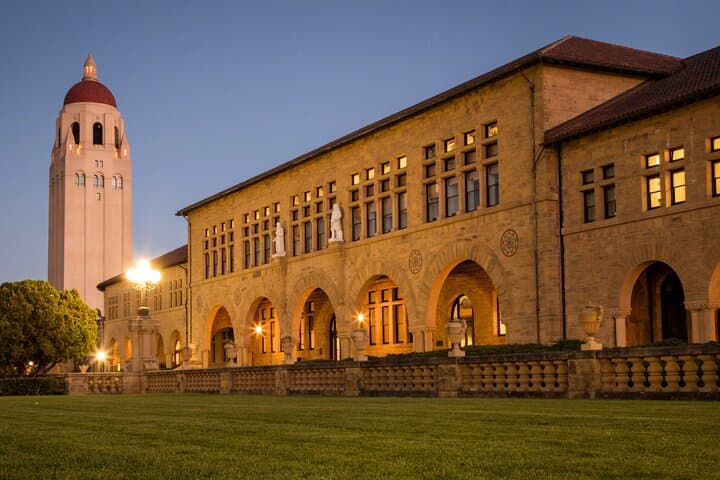
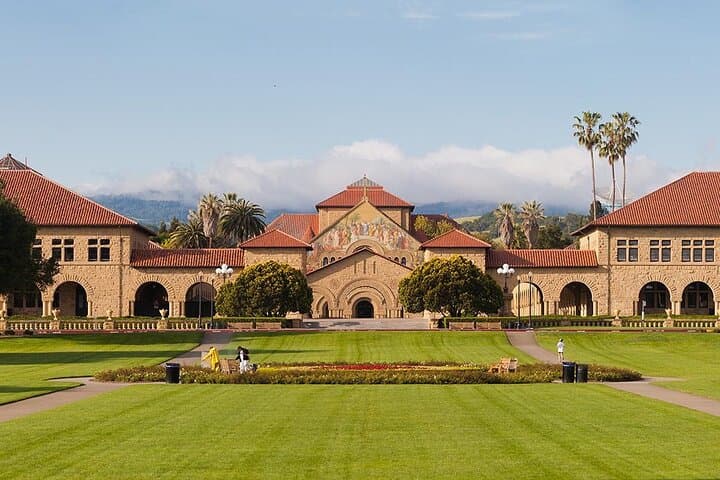
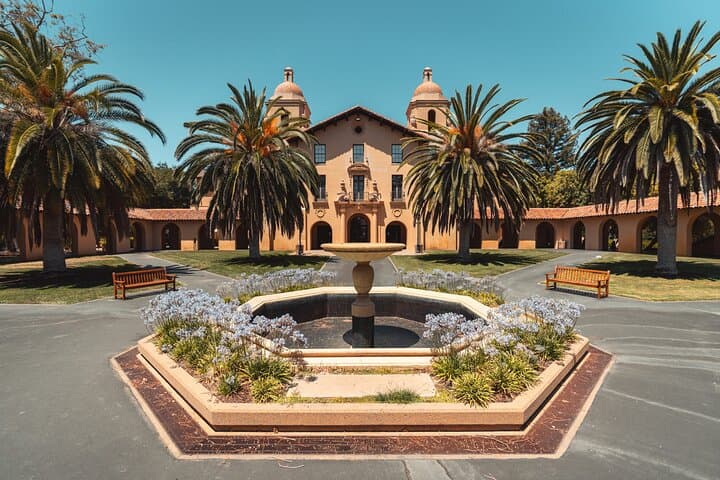
Morning light softens the red-tile roofs as you step through the Stanford Visitor Center and onto broad lawns that seem to dare you to slow down. Palm and oak trees line the approach; Hoover Tower watches from a distance like an academic lighthouse. The pavement hums with students passing between lectures, and the air carries a faint trace of coffee from nearby cafés.
Morning light softens the red-tile roofs as you step through the Stanford Visitor Center and onto broad lawns that seem to dare you to slow down. Palm and oak trees line the approach; Hoover Tower watches from a distance like an academic lighthouse. The pavement hums with students passing between lectures, and the air carries a faint trace of coffee from nearby cafés.
Stanford’s history begins with Leland and Jane Stanford’s 1885 donation in memory of their son; the campus grew quickly into a flagship of American higher education. Geologically, the grounds sit on the Santa Clara Valley’s alluvial plain, with the Santa Cruz Mountains rising nearby—granite and Franciscan bedrock visible in foothills a short drive away. Culturally, the campus lives at the crossroads of scholarship and Silicon Valley entrepreneurship: public art, cutting-edge labs and informal startup energy all mingle here.
Expect a route that includes the Main Quad and Memorial Church, the Cantor Arts Center with its Rodin collection, and a stroll through the Arizona Garden or Palm Drive. The Pintours app lets you pause, skip stops and dive deeper into exhibits on your schedule.
Practical guidance: allow 2–3 hours, wear comfortable walking shoes and sun protection, and start early to avoid midday crowds. The tour is wheelchair- and stroller-accessible; public transit and nearby paid parking are available. Carry water and a portable charger for your phone—the app is central to the experience. Respect campus signs and quiet zones in libraries and religious spaces; museums may have separate admission rules. With a mindful pace you’ll leave knowing the campus’s architecture, history and living culture—not just its postcard views.