THE ADVENTURE COLLECTIVE® · Independent discovery and booking for outdoor travel

Spend a private half‑day moving from Split’s ancient palace courtyards to a hilltop family vineyard above the Adriatic. This guided tour pairs Roman history with small‑batch Dalmatian wines and a sea‑view tasting terrace.
Spend a private half‑day moving from Split’s ancient palace courtyards to a hilltop family vineyard above the Adriatic. This guided tour pairs Roman history with small‑batch Dalmatian wines and a sea‑view tasting terrace.
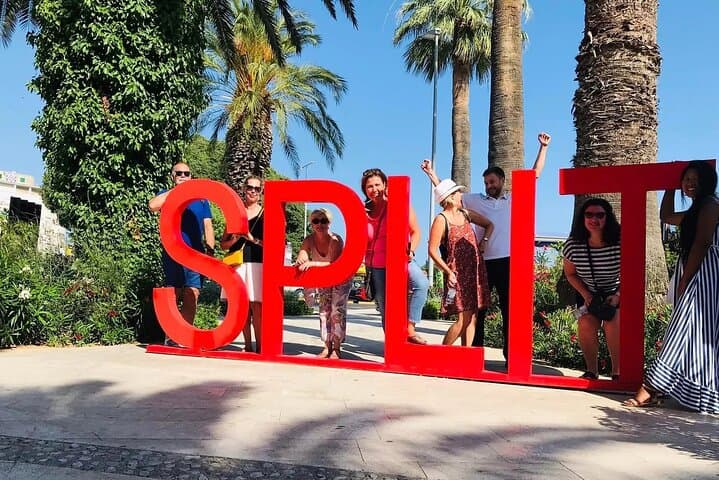
You step from an air‑conditioned minivan into the bright hush of Split’s Peristyle, cool marble underfoot and gulls circling the pale coastline.
Verified experiences and guided adventures in the surrounding area.
Operated by Adriatic Vision · Split, Split-Dalmatia County
You step from an air‑conditioned minivan into the bright hush of Split’s Peristyle, cool marble underfoot and gulls circling the pale coastline.
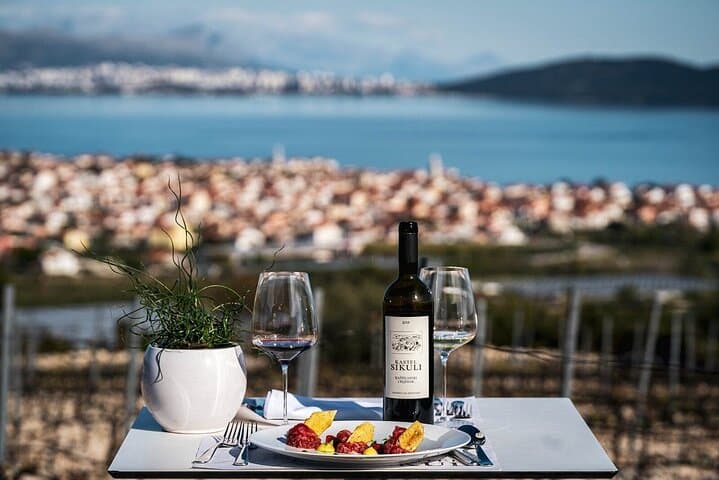
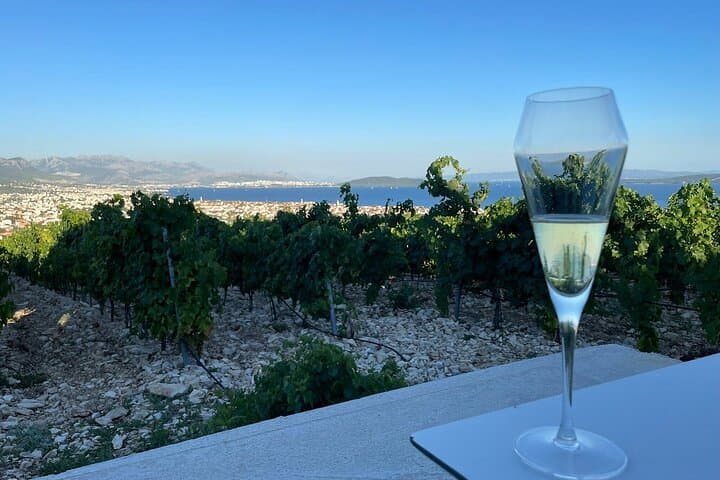
The day threads through stone — Diocletian’s Palace, a Roman emperor’s retirement that became a living city — then rolls west to Trogir’s compact, car‑free streets where Venetian arches and a compact fortress watch the harbor. The land here is karst limestone: thin soils supported by olive groves and terraced vineyards that cling to low hills above the Adriatic, the sea pushing light across the vines.
History is immediate: Roman cellars beneath modern cafés, Romanesque doorways in Trogir, and centuries of maritime trade that shaped local grape varieties. Culture is convivial — tastings are paired with prosciutto and hard cheeses, and family vineyards often run on multi‑generation knowledge rather than large‑scale winemaking.
Practical guide: expect 4–6 hours with roughly 1–2 hours of walking on uneven cobbles and short inclines to the vineyard. The tasting occurs on a hilltop terrace with open exposure to sun and sea breezes; bring sun protection and sturdy shoes. Tours are private, wheelchair‑accessible options are noted but check terrain for steep vineyard approaches. Hydrate between pours and flag dietary needs to your guide in advance.
Timing tip: mid‑afternoon light is best for views; shoulder seasons (spring, fall) offer cooler walking and fuller vineyard contrast, while summer delivers the most sea sparkle but hotter conditions. Respect vineyard rules: no picking, limit flash photography in cellars, and pack out any waste.
moderate.
4–6 hours.
Moderate — able to walk 1–3 miles on uneven surfaces and climb short inclines
Private tours typically include pickup within Split; confirm your pickup point when booking and provide arrival details if on a cruise.
Yes — most hosts offer non‑alcoholic options and can provide more food or juice on request, but notify the operator ahead of time.
Many family vineyards sell bottles on site; ask the host about shipping options if you want to send bottles home.
Children are allowed but the focus is adult‑oriented; infant seats are available in the vehicle and guide recommendations vary by age.
Split grew from Diocletian’s 4th‑century Roman palace; Trogir’s compact medieval island core is UNESCO‑listed for its preserved Romanesque and Renaissance architecture.
Vineyards and coastal areas face pressures from tourism and development; choose tours that support family estates and follow Leave No Trace principles.
Adriatic Vision operates guided outdoor trips and adventures with an emphasis on safety, stewardship, and memorable experiences.

You step from an air‑conditioned minivan into the bright hush of Split’s Peristyle, cool marble underfoot and gulls circling the pale coastline.
You step from an air‑conditioned minivan into the bright hush of Split’s Peristyle, cool marble underfoot and gulls circling the pale coastline.
The day threads through stone — Diocletian’s Palace, a Roman emperor’s retirement that became a living city — then rolls west to Trogir’s compact, car‑free streets where Venetian arches and a compact fortress watch the harbor. The land here is karst limestone: thin soils supported by olive groves and terraced vineyards that cling to low hills above the Adriatic, the sea pushing light across the vines.
History is immediate: Roman cellars beneath modern cafés, Romanesque doorways in Trogir, and centuries of maritime trade that shaped local grape varieties. Culture is convivial — tastings are paired with prosciutto and hard cheeses, and family vineyards often run on multi‑generation knowledge rather than large‑scale winemaking.
Practical guide: expect 4–6 hours with roughly 1–2 hours of walking on uneven cobbles and short inclines to the vineyard. The tasting occurs on a hilltop terrace with open exposure to sun and sea breezes; bring sun protection and sturdy shoes. Tours are private, wheelchair‑accessible options are noted but check terrain for steep vineyard approaches. Hydrate between pours and flag dietary needs to your guide in advance.
Timing tip: mid‑afternoon light is best for views; shoulder seasons (spring, fall) offer cooler walking and fuller vineyard contrast, while summer delivers the most sea sparkle but hotter conditions. Respect vineyard rules: no picking, limit flash photography in cellars, and pack out any waste.