THE ADVENTURE COLLECTIVE® · Independent discovery and booking for outdoor travel

A private, small‑group van tour that puts the South Rim’s best viewpoints, historic sites, and a picnic lunch within easy reach. Perfect for first‑time visitors who want five hours in the park without the driving or guesswork.
A private, small‑group van tour that puts the South Rim’s best viewpoints, historic sites, and a picnic lunch within easy reach. Perfect for first‑time visitors who want five hours in the park without the driving or guesswork.
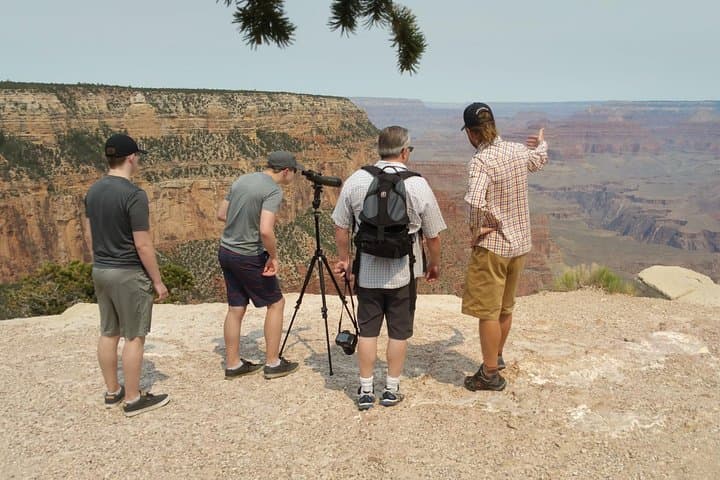
The van pulls off Highway 64 and the canyon does something subtle: it widens its shoulders and arrests the horizon. Guides point, open a door, and the wind moves through the passengers like a reminder—this is not a view you lean away from. On the Private South Rim Grand Canyon tour, travelers step out onto a string of rim overlooks—Yavapai, Mather, Desert View—each one a different argument about scale, rock, and time.
Verified experiences and guided adventures in the surrounding area.
Operated by All-Star Grand Canyon Tours · Grand Canyon Village, Arizona
The van pulls off Highway 64 and the canyon does something subtle: it widens its shoulders and arrests the horizon. Guides point, open a door, and the wind moves through the passengers like a reminder—this is not a view you lean away from. On the Private South Rim Grand Canyon tour, travelers step out onto a string of rim overlooks—Yavapai, Mather, Desert View—each one a different argument about scale, rock, and time.
The route reads like a primer in Grand Canyon history. Mary Colter’s Desert View Watchtower, built in 1932, stands on the rim as an early National Park Service-era interpretation of Indigenous design. Nearer the village, the Tusayan Ruins and Museum offer a compact glimpse of ancestral Puebloan life—stone rooms and storage pits cut into a much older human story than the 1.8 billion‑year rocks below.
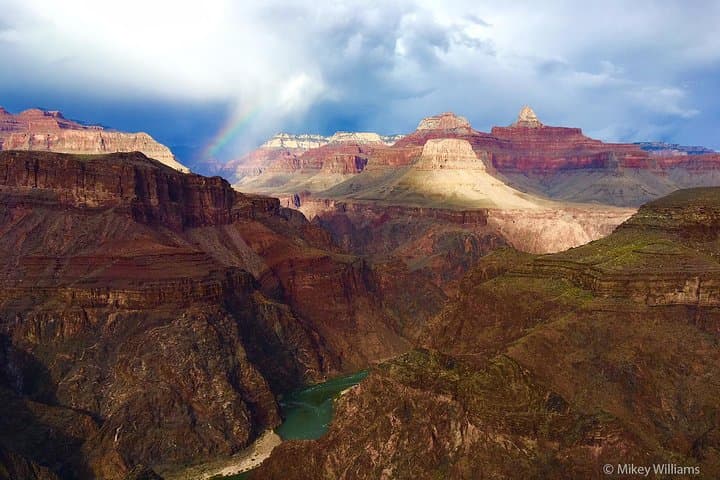
Geologically, the South Rim is an exposed ledger. Horizontal layers of limestone, shale and sandstone stack like chapters, with the bright Vermilion cliffs of the Supai Group and the pale Kaibab Limestone at the rim. The Colorado River, invisible from many rim points, is the great mover—weathering, cutting, daring time to outpace it.
Culturally the area has always been a meeting place. The Hopi and Havasupai, among other tribes, regard parts of the canyon as living landscape with ongoing spiritual and practical connections. Guides typically weave these perspectives into the stops; the Tusayan Ruins evening picnic is a moment to reflect on that continuity.
Practicalities: the experience runs 7–8 hours door‑to‑door with about five hours in the park. Expect light walking on paved rim trails and short boardwalks—elevation at the South Rim sits roughly 6,800–7,000 feet, so move deliberately if you’re coming from low altitudes. Pickup and drop‑off from Williams, Tusayan or Grand Canyon Village make logistics simple; vans are limited to nine guests for a quieter, private feel. From Williams the drive is roughly 60 miles and about 1 hour 15 minutes.
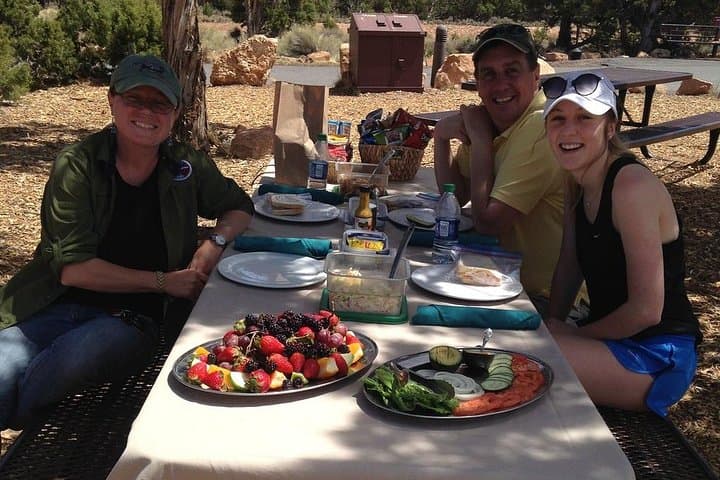
The tour is family‑friendly: picnic lunches (Mar 15–Oct 31) are provided, and special dietary needs can be arranged. Bring layers—a sunny noon can give way to brisk winds on the rim—and water: dehydration is the most common trip spoiler at high desert altitudes. For photographers, plan sunrise or late afternoon shots at Yavapai and Desert View; the light slices across layers and brings out shadowed detail.
This is a sightseeing day that balances interpretive stops, short hikes and plenty of time to stand quietly with the canyon. For travelers who want a comprehensive introduction to the South Rim without traffic, the private van format is both efficient and unhurried—an ideal first encounter with one of North America’s great viewpoints.
easy.
7–8 hours.
Suitable for most fitness levels; expects ability to walk short paved distances and stand for photo stops. High‑altitude stamina helpful.
National Park entrance fees are not included; your tour guide can advise on payment or show an annual/park pass if provided.
Yes—March 15 to October 31 the tour includes a picnic lunch from Artisan’s Kitchen; winter tours typically stop at El Tovar where guests pay separately.
Vans and many viewpoints are accessible and the company can provide assistance, but fully wheelchair‑bound guests should disclose needs in advance so arrangements can be confirmed.
Yes—specialized infant/toddler seats are available on request; you may also bring your own restraint if preferred.
Approximately 60 miles (about 1 hour 15 minutes) to the South Rim; time varies with traffic and park entrance.
Yes—guides include cultural and historical context, and stops like the Tusayan Ruins highlight Indigenous presence in the region.
The South Rim contains both ancient Indigenous sites such as the Tusayan Ruins and early 20th‑century park architecture like Mary Colter’s Desert View Watchtower.
Visitors are asked to stay on established paths to protect fragile soils and native plants; water conservation and pack‑out policies help limit park impact.
All-Star Grand Canyon Tours operates guided outdoor trips and adventures with an emphasis on safety, stewardship, and memorable experiences.
The van pulls off Highway 64 and the canyon does something subtle: it widens its shoulders and arrests the horizon. Guides point, open a door, and the wind moves through the passengers like a reminder—this is not a view you lean away from. On the Private South Rim Grand Canyon tour, travelers step out onto a string of rim overlooks—Yavapai, Mather, Desert View—each one a different argument about scale, rock, and time.
The van pulls off Highway 64 and the canyon does something subtle: it widens its shoulders and arrests the horizon. Guides point, open a door, and the wind moves through the passengers like a reminder—this is not a view you lean away from. On the Private South Rim Grand Canyon tour, travelers step out onto a string of rim overlooks—Yavapai, Mather, Desert View—each one a different argument about scale, rock, and time.
The route reads like a primer in Grand Canyon history. Mary Colter’s Desert View Watchtower, built in 1932, stands on the rim as an early National Park Service-era interpretation of Indigenous design. Nearer the village, the Tusayan Ruins and Museum offer a compact glimpse of ancestral Puebloan life—stone rooms and storage pits cut into a much older human story than the 1.8 billion‑year rocks below.
Geologically, the South Rim is an exposed ledger. Horizontal layers of limestone, shale and sandstone stack like chapters, with the bright Vermilion cliffs of the Supai Group and the pale Kaibab Limestone at the rim. The Colorado River, invisible from many rim points, is the great mover—weathering, cutting, daring time to outpace it.
Culturally the area has always been a meeting place. The Hopi and Havasupai, among other tribes, regard parts of the canyon as living landscape with ongoing spiritual and practical connections. Guides typically weave these perspectives into the stops; the Tusayan Ruins evening picnic is a moment to reflect on that continuity.
Practicalities: the experience runs 7–8 hours door‑to‑door with about five hours in the park. Expect light walking on paved rim trails and short boardwalks—elevation at the South Rim sits roughly 6,800–7,000 feet, so move deliberately if you’re coming from low altitudes. Pickup and drop‑off from Williams, Tusayan or Grand Canyon Village make logistics simple; vans are limited to nine guests for a quieter, private feel. From Williams the drive is roughly 60 miles and about 1 hour 15 minutes.
The tour is family‑friendly: picnic lunches (Mar 15–Oct 31) are provided, and special dietary needs can be arranged. Bring layers—a sunny noon can give way to brisk winds on the rim—and water: dehydration is the most common trip spoiler at high desert altitudes. For photographers, plan sunrise or late afternoon shots at Yavapai and Desert View; the light slices across layers and brings out shadowed detail.
This is a sightseeing day that balances interpretive stops, short hikes and plenty of time to stand quietly with the canyon. For travelers who want a comprehensive introduction to the South Rim without traffic, the private van format is both efficient and unhurried—an ideal first encounter with one of North America’s great viewpoints.