THE ADVENTURE COLLECTIVE® · Independent discovery and booking for outdoor travel

Explore southern Phu Quoc by private car: ride the world’s longest sea-crossing cable car, relax on Bai Khem’s white sand, visit Coconut Prison and a pearl farm with a local guide. This fully customizable 6–8 hour tour pairs cultural history with beach time.
Explore southern Phu Quoc by private car: ride the world’s longest sea-crossing cable car, relax on Bai Khem’s white sand, visit Coconut Prison and a pearl farm with a local guide. This fully customizable 6–8 hour tour pairs cultural history with beach time.
You step from an air-conditioned vehicle onto sand that still holds the warm shape of the tide; the sea stretches a flat, impatient blue and the long cable car line cuts like a deliberate spine toward Hon Thom. South Phu Quoc is immediate—beaches that demand bare feet, a pagoda whose bells count slow afternoons, and a prison site whose concrete walls keep the island’s harder stories.
Verified experiences and guided adventures in the surrounding area.
Operated by Vietnam Explorer · Phu Quoc (Duong Dong), Kien Giang
You step from an air-conditioned vehicle onto sand that still holds the warm shape of the tide; the sea stretches a flat, impatient blue and the long cable car line cuts like a deliberate spine toward Hon Thom. South Phu Quoc is immediate—beaches that demand bare feet, a pagoda whose bells count slow afternoons, and a prison site whose concrete walls keep the island’s harder stories.
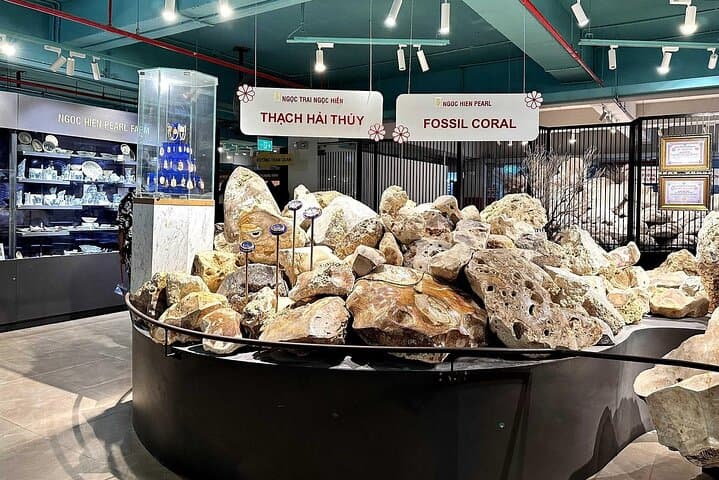
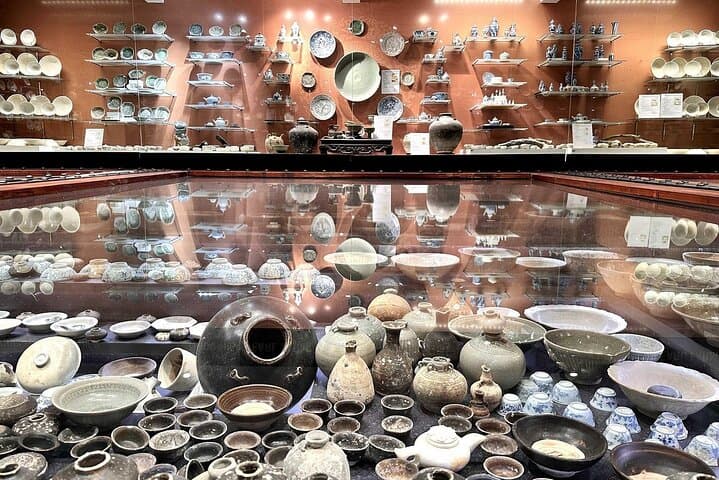
Geology here is simple: low limestone outcrops, wide beaches of white quartz sand, and shallow reefs that frame the shoreline. Culturally the south mixes fishing villages, pearl-farm workshops, and Buddhism alongside wartime history—Coconut Prison’s walls recall Vietnam’s mid-20th-century conflicts while Ngoc Hien Pearl Farm shows a quieter craft of cultivation handed down with Japanese-derived techniques.
Expect short, accessible walks rather than long hikes: beach strolls, boardwalks and a few steps up to pagoda terraces. The cable car ride—the world’s longest sea-crossing system—gives broad perspective, with reefs and boats shrinking into a patchwork below. Nature here has attitude: the sea nudges you toward the sandbar, the breeze lifts the humidity off your shirt.
Practical guidance: plan for a 6–8 hour day, bring sun protection and insect repellent, and allow flexible time for admissions and ferry queues. Wear comfortable shoes you can slip on and off for beaches and pagoda visits; carry a reusable bottle—the provided 500ml may not be enough for a full day in tropical sun. If you’re photographing the cable car or beaches, aim for morning or late afternoon light to avoid harsh midday glare.
easy.
6–8 hours.
Suitable for most fitness levels—mostly short walks and transfers; minimal exertion required
The private tour runs about 6–8 hours (360–480 minutes) and is customizable to your pace.
The tour includes tickets for listed sites like the pearl farm and prison as noted; confirm specific admissions when booking.
Hotel pickup is offered; confirm your exact pickup location on the south island or in Duong Dong when you book.
Many areas and the vehicle are wheelchair accessible, but some sites have steps or uneven surfaces—notify the operator of needs in advance.
Coconut Prison (Phu Quoc Prison) was a central detention site during the Indochina period and holds interpretive exhibits documenting wartime incarceration.
Phu Quoc’s reefs and beaches face pressure from tourism; support operators who limit single-use plastics and respect coral by not anchoring on reef flats.
Vietnam Explorer operates guided outdoor trips and adventures with an emphasis on safety, stewardship, and memorable experiences.
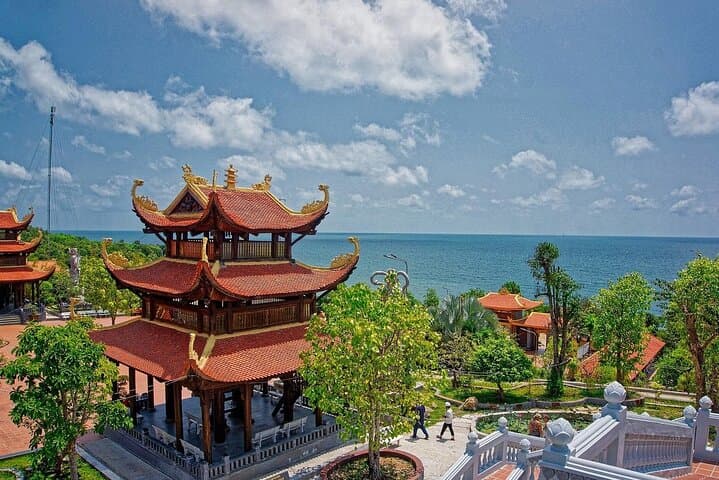
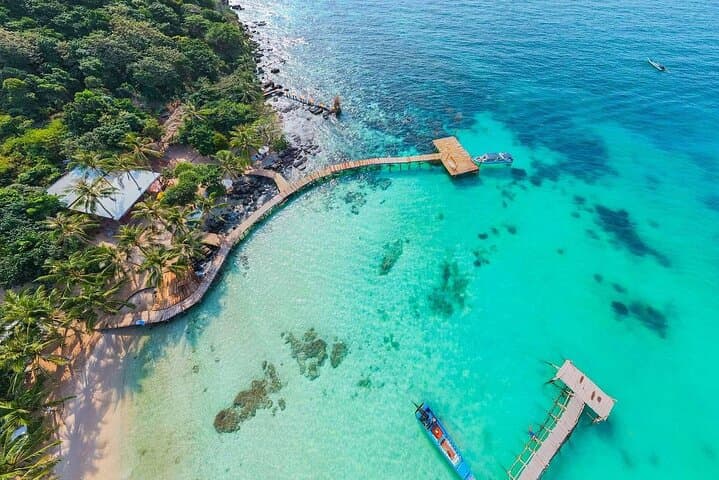
You step from an air-conditioned vehicle onto sand that still holds the warm shape of the tide; the sea stretches a flat, impatient blue and the long cable car line cuts like a deliberate spine toward Hon Thom. South Phu Quoc is immediate—beaches that demand bare feet, a pagoda whose bells count slow afternoons, and a prison site whose concrete walls keep the island’s harder stories.
You step from an air-conditioned vehicle onto sand that still holds the warm shape of the tide; the sea stretches a flat, impatient blue and the long cable car line cuts like a deliberate spine toward Hon Thom. South Phu Quoc is immediate—beaches that demand bare feet, a pagoda whose bells count slow afternoons, and a prison site whose concrete walls keep the island’s harder stories.
Geology here is simple: low limestone outcrops, wide beaches of white quartz sand, and shallow reefs that frame the shoreline. Culturally the south mixes fishing villages, pearl-farm workshops, and Buddhism alongside wartime history—Coconut Prison’s walls recall Vietnam’s mid-20th-century conflicts while Ngoc Hien Pearl Farm shows a quieter craft of cultivation handed down with Japanese-derived techniques.
Expect short, accessible walks rather than long hikes: beach strolls, boardwalks and a few steps up to pagoda terraces. The cable car ride—the world’s longest sea-crossing system—gives broad perspective, with reefs and boats shrinking into a patchwork below. Nature here has attitude: the sea nudges you toward the sandbar, the breeze lifts the humidity off your shirt.
Practical guidance: plan for a 6–8 hour day, bring sun protection and insect repellent, and allow flexible time for admissions and ferry queues. Wear comfortable shoes you can slip on and off for beaches and pagoda visits; carry a reusable bottle—the provided 500ml may not be enough for a full day in tropical sun. If you’re photographing the cable car or beaches, aim for morning or late afternoon light to avoid harsh midday glare.