THE ADVENTURE COLLECTIVE® · Independent discovery and booking for outdoor travel

Spend a moving day tracing the Somme’s key 1916 and 1918 sites on a private tour from Arras. Visit Lochnagar crater, preserved trenches at Beaumont-Hamel, Thiepval Memorial and Villers-Bretonneux with an expert WWI guide.
Spend a moving day tracing the Somme’s key 1916 and 1918 sites on a private tour from Arras. Visit Lochnagar crater, preserved trenches at Beaumont-Hamel, Thiepval Memorial and Villers-Bretonneux with an expert WWI guide.
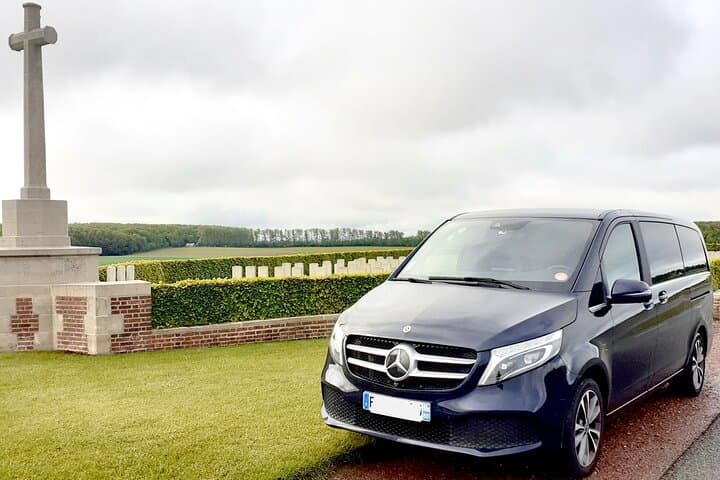
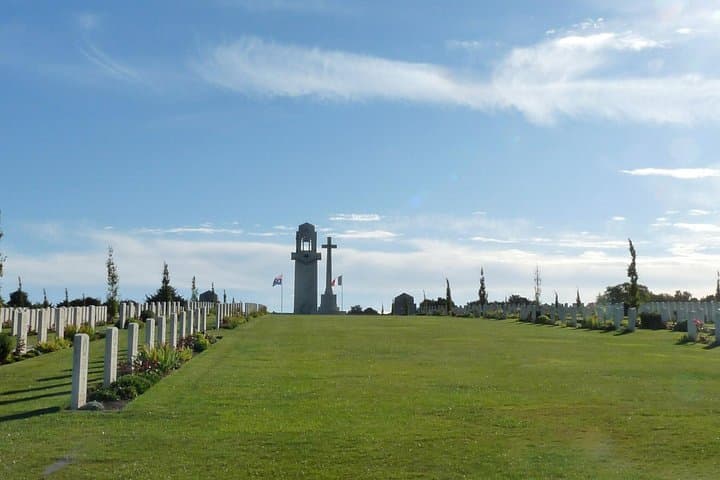
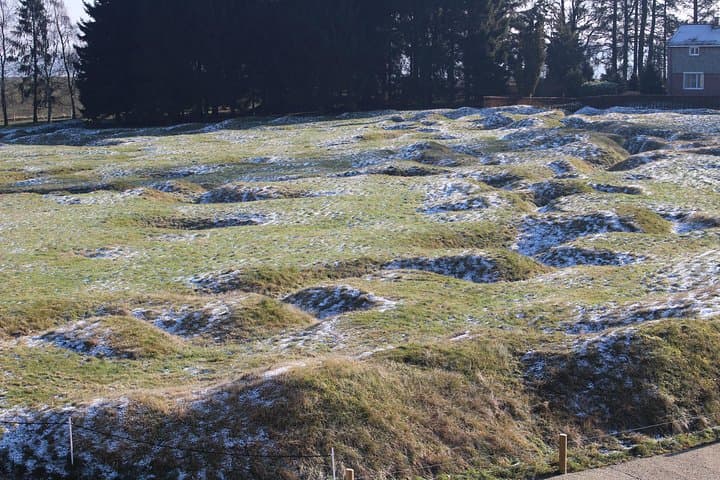
The minibus pulls away from the plaza outside Arras station and the flat fields of northern France begin to unfold — hedgerows, low stone walls and the long, even slopes where trenches once cut the earth. In a single eight-hour circuit the tour moves from the great hollow of the Lochnagar crater to the preserved trenches at Beaumont-Hamel, up to the Thiepval Memorial and across to Villers-Bretonneux, where Australia’s memorial faces the quiet lanes.
Verified experiences and guided adventures in the surrounding area.
Operated by Terres de Mémoire · Arras, Hauts-de-France
The minibus pulls away from the plaza outside Arras station and the flat fields of northern France begin to unfold — hedgerows, low stone walls and the long, even slopes where trenches once cut the earth. In a single eight-hour circuit the tour moves from the great hollow of the Lochnagar crater to the preserved trenches at Beaumont-Hamel, up to the Thiepval Memorial and across to Villers-Bretonneux, where Australia’s memorial faces the quiet lanes.
These places map the tactical and human scale of the Somme (1916, 1918): the geology of chalk and clay shaped tunneling and drainage; the ridge lines around Pozieres altered the course of attacks; towns like Albert were shattered and then rebuilt. Visitors will pass through preserved battlefield landscapes and enter the Somme 1916 underground museum — original wartime tunnels converted into exhibits — and, if open, the immersive Sir John Monash Centre that reframes the 1918 offensives.
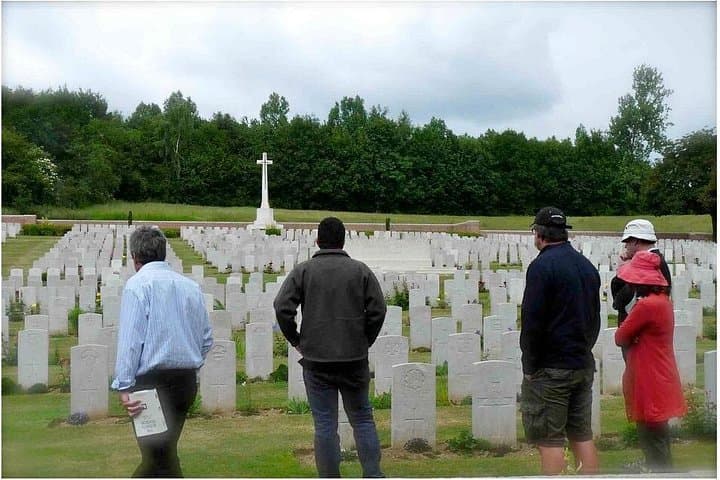
Culturally, the route threads British, Australian and German remembrance sites; guides are usually battlefield historians who balance operational detail with personal stories.
Practical notes: the day is vehicle-led with short, flat walks at each stop (expect 15–60 minute on-foot visits). Wear sturdy shoes and layered clothing — weather can change quickly — and bring water and a compact rain shell. Allow time for quiet reflection; photography is common but respectful behavior is required at memorials. Meet opposite Arras station; hotel pickup may be arranged on request.
easy.
8 hours.
Light physical fitness—short flat walks at multiple sites; no sustained hiking required
The tour is approximately eight hours and begins and ends opposite Arras train station; hotel pickup can sometimes be arranged on request.
The tour is described as physically easy with short, flat walks; stroller access is possible and guides can accommodate limited mobility, but some sites have uneven ground.
Access to the Somme 1916 underground museum and other site fees are included as noted in the tour inclusions; entry to some new centers depends on opening hours.
Service animals are allowed and strollers are accommodated; notify the operator of special requirements when booking.
The Battles of the Somme (1916 and 1918) were turning points in WWI; the landscape still bears engineered features — craters, bunkers and preserved trench lines — that reflect wartime mining and artillery.
Many sites are managed for both remembrance and ecological value; visitors are asked to stay on paths, avoid disturbing flora and leave no trace to protect fragile grasslands and memorial features.
Terres de Mémoire operates guided outdoor trips and adventures with an emphasis on safety, stewardship, and memorable experiences.
The minibus pulls away from the plaza outside Arras station and the flat fields of northern France begin to unfold — hedgerows, low stone walls and the long, even slopes where trenches once cut the earth. In a single eight-hour circuit the tour moves from the great hollow of the Lochnagar crater to the preserved trenches at Beaumont-Hamel, up to the Thiepval Memorial and across to Villers-Bretonneux, where Australia’s memorial faces the quiet lanes.
The minibus pulls away from the plaza outside Arras station and the flat fields of northern France begin to unfold — hedgerows, low stone walls and the long, even slopes where trenches once cut the earth. In a single eight-hour circuit the tour moves from the great hollow of the Lochnagar crater to the preserved trenches at Beaumont-Hamel, up to the Thiepval Memorial and across to Villers-Bretonneux, where Australia’s memorial faces the quiet lanes.
These places map the tactical and human scale of the Somme (1916, 1918): the geology of chalk and clay shaped tunneling and drainage; the ridge lines around Pozieres altered the course of attacks; towns like Albert were shattered and then rebuilt. Visitors will pass through preserved battlefield landscapes and enter the Somme 1916 underground museum — original wartime tunnels converted into exhibits — and, if open, the immersive Sir John Monash Centre that reframes the 1918 offensives.
Culturally, the route threads British, Australian and German remembrance sites; guides are usually battlefield historians who balance operational detail with personal stories.
Practical notes: the day is vehicle-led with short, flat walks at each stop (expect 15–60 minute on-foot visits). Wear sturdy shoes and layered clothing — weather can change quickly — and bring water and a compact rain shell. Allow time for quiet reflection; photography is common but respectful behavior is required at memorials. Meet opposite Arras station; hotel pickup may be arranged on request.