THE ADVENTURE COLLECTIVE® · Independent discovery and booking for outdoor travel

Float over bright corals and peer into sudden reef drop-offs on a private, SSI-guided snorkel out of Motobu. This 1–2 hour beach-entry tour balances close-up marine encounters with practical safety—ideal for first-timers and experienced snorkelers alike.
Float over bright corals and peer into sudden reef drop-offs on a private, SSI-guided snorkel out of Motobu. This 1–2 hour beach-entry tour balances close-up marine encounters with practical safety—ideal for first-timers and experienced snorkelers alike.
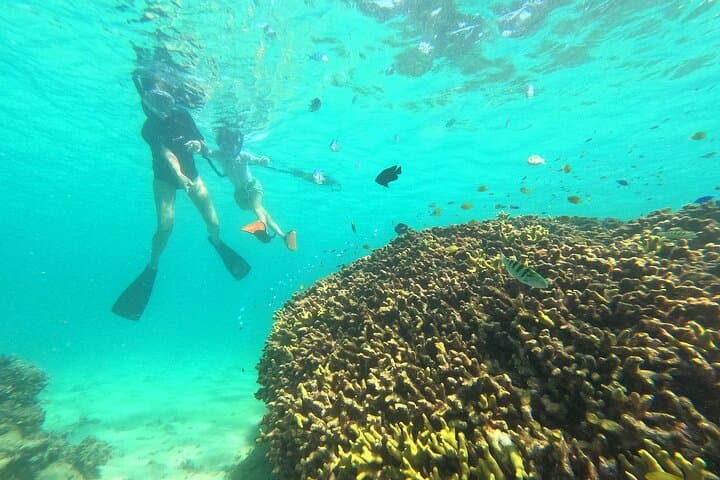
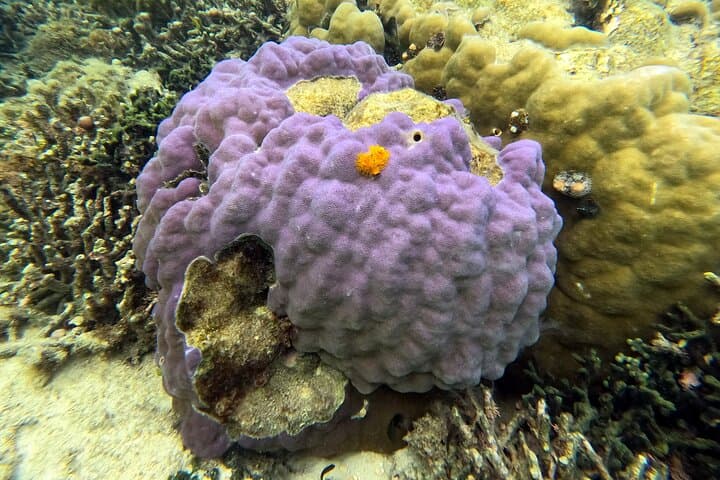
The guide's whistle cuts the chatter into neat, practical silence as the ocean takes over—clear, shallow water sliding over a carpet of hard and soft corals. You step from a volcanic sand shelf, boots gripping rough rock, and the sea folds you forward. Fish dart like living brushstrokes; a turtle bobs above a coral ledge and the reef drops away into an abrupt, deep blue that seems to dare you to follow.
Verified experiences and guided adventures in the surrounding area.
Operated by Padaloha · Motobu, Okinawa Prefecture
The guide's whistle cuts the chatter into neat, practical silence as the ocean takes over—clear, shallow water sliding over a carpet of hard and soft corals. You step from a volcanic sand shelf, boots gripping rough rock, and the sea folds you forward. Fish dart like living brushstrokes; a turtle bobs above a coral ledge and the reef drops away into an abrupt, deep blue that seems to dare you to follow.
This private, SSI-trained snorkel tour out of Motobu is built for people who want the reef up close without the crowds. Your native English-speaking guide tailors the pace: a relaxed beach-entry float for those who prefer to hover, and guided swims to dramatic drop-offs for anyone wanting to peer into the deeper reef bands. Afterward, a local snack and caffeine-free tea wait on the shore—simple comforts that feel earned after salt and sun.
Okinawa's reefs are young in geological terms, formed on limestone terraces uplifted by tectonic motion and sculpted by currents that sweep rich nutrients from the Kuroshio. The Motobu coast carries the cultural memory of the Ryukyu Kingdom—fishing, reef stewardship, and local craft traditions still threaded through coastal villages. Your guide will often point out foraging areas and explain how seasonal winds shift visibility and currents.
Practicalities here are straightforward. Tours run 60–120 minutes in the water, with flexible start times and hotel pickup across the Motobu–Nago corridor; meeting is confirmed at a local Lawson convenience store. The operator supplies neoprene, felt-bottom boots for walking on rock, life jackets, and masks, and will offer wetsuits if conditions ask for them. Snorkelling is not recommended for children under 10 or adults over 60, and the host advises moderate fitness—expect uneven footing on the beach entry and occasional short swims to reach the better coral patches.
To get the best experience, aim for early morning when the sea is glass-smooth and light slices cleanly into the shallows; late afternoon brings softer contrast and cooperates with photos. Respect the reef: no touching, no standing on coral, and use reef-safe sunscreen. If your stomach churns at the thought of open water, your guide can keep you close to shore with a snorkel float or vest. Weather cancellations are possible—full refunds if you cancel 24 hours ahead or if the operator calls it off for safety.
This is a compact, private window into Okinawa's underwater life—hands-on, guided, and considerate of reef health. It's a good option for travelers who want curated access to colorful reef systems without committing to a full scuba course, and who appreciate a guide who can both point out a rare find and keep the group safe in shifting conditions.
moderate.
1–2 hours.
Moderate level of fitness—able to walk uneven rock, swim short distances and float comfortably for up to an hour.
You'll meet at the designated Lawson convenience store—your driver or guide will message on arrival; hotel pickup is available in Motobu/Nago if requested.
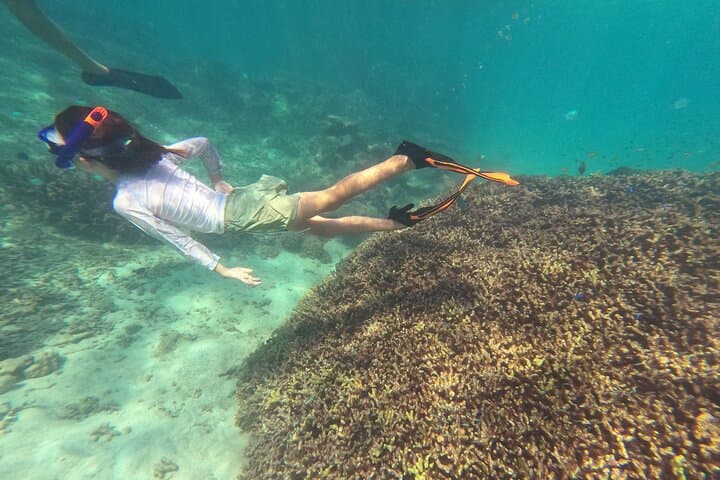
Yes—masks, snorkels, fins, neoprene and felt-bottom boots, life jackets and snorkel vests are provided; wetsuits are available on request.
The guide can keep you in shallow areas and provide a snorkel float or life jacket; participants must be at least moderately fit.
Not suitable for children under 10 years old per the operator's safety policy.
Tours are canceled if conditions are unsafe; full refunds are given for cancellations made at least 24 hours prior or if the operator cancels due to weather.
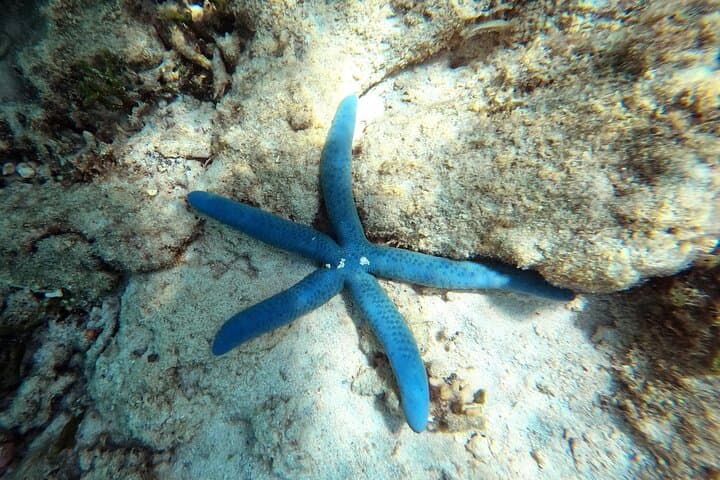
Yes—turtles, sea snakes, sea stars and colorful reef fish are commonly observed, though wildlife sightings are never guaranteed.
The Motobu coastline sits within the legacy of the Ryukyu Kingdom; local fishing practices and community stewardship have shaped reef use for generations.
Operators encourage no-touch policies, use of reef-safe sunscreen, and avoid anchoring on reefs—small changes that help protect coral and fish populations.
Padaloha operates guided outdoor trips and adventures with an emphasis on safety, stewardship, and memorable experiences.
The guide's whistle cuts the chatter into neat, practical silence as the ocean takes over—clear, shallow water sliding over a carpet of hard and soft corals. You step from a volcanic sand shelf, boots gripping rough rock, and the sea folds you forward. Fish dart like living brushstrokes; a turtle bobs above a coral ledge and the reef drops away into an abrupt, deep blue that seems to dare you to follow.
The guide's whistle cuts the chatter into neat, practical silence as the ocean takes over—clear, shallow water sliding over a carpet of hard and soft corals. You step from a volcanic sand shelf, boots gripping rough rock, and the sea folds you forward. Fish dart like living brushstrokes; a turtle bobs above a coral ledge and the reef drops away into an abrupt, deep blue that seems to dare you to follow.
This private, SSI-trained snorkel tour out of Motobu is built for people who want the reef up close without the crowds. Your native English-speaking guide tailors the pace: a relaxed beach-entry float for those who prefer to hover, and guided swims to dramatic drop-offs for anyone wanting to peer into the deeper reef bands. Afterward, a local snack and caffeine-free tea wait on the shore—simple comforts that feel earned after salt and sun.
Okinawa's reefs are young in geological terms, formed on limestone terraces uplifted by tectonic motion and sculpted by currents that sweep rich nutrients from the Kuroshio. The Motobu coast carries the cultural memory of the Ryukyu Kingdom—fishing, reef stewardship, and local craft traditions still threaded through coastal villages. Your guide will often point out foraging areas and explain how seasonal winds shift visibility and currents.
Practicalities here are straightforward. Tours run 60–120 minutes in the water, with flexible start times and hotel pickup across the Motobu–Nago corridor; meeting is confirmed at a local Lawson convenience store. The operator supplies neoprene, felt-bottom boots for walking on rock, life jackets, and masks, and will offer wetsuits if conditions ask for them. Snorkelling is not recommended for children under 10 or adults over 60, and the host advises moderate fitness—expect uneven footing on the beach entry and occasional short swims to reach the better coral patches.
To get the best experience, aim for early morning when the sea is glass-smooth and light slices cleanly into the shallows; late afternoon brings softer contrast and cooperates with photos. Respect the reef: no touching, no standing on coral, and use reef-safe sunscreen. If your stomach churns at the thought of open water, your guide can keep you close to shore with a snorkel float or vest. Weather cancellations are possible—full refunds if you cancel 24 hours ahead or if the operator calls it off for safety.
This is a compact, private window into Okinawa's underwater life—hands-on, guided, and considerate of reef health. It's a good option for travelers who want curated access to colorful reef systems without committing to a full scuba course, and who appreciate a guide who can both point out a rare find and keep the group safe in shifting conditions.