THE ADVENTURE COLLECTIVE® · Independent discovery and booking for outdoor travel

A focused two-hour private tour that moves past lines and into Pompeii’s living streets. Expert guides illuminate plaster casts, bakeries and the Forum while you walk solidified volcanic history.
A focused two-hour private tour that moves past lines and into Pompeii’s living streets. Expert guides illuminate plaster casts, bakeries and the Forum while you walk solidified volcanic history.
You step through a modern gate and the city of Pompeii opens like a street map frozen in motion: doorways paused mid-day, a horse trough weathered smooth, and plaster casts of lives interrupted. Your private guide leads with measured steps and scholarship, calling out graffiti that still gossips from an old wall and pointing to mosaic floors where oil lamps once burned.
Verified experiences and guided adventures in the surrounding area.
Operated by Best Naples Tours · Pompeii, Campania
You step through a modern gate and the city of Pompeii opens like a street map frozen in motion: doorways paused mid-day, a horse trough weathered smooth, and plaster casts of lives interrupted. Your private guide leads with measured steps and scholarship, calling out graffiti that still gossips from an old wall and pointing to mosaic floors where oil lamps once burned.
Built as a Roman town and buried in the eruption of 79 AD, Pompeii sits on volcanic ground that tells two stories: daily Roman life and the sudden force of Mount Vesuvius. Stone, ash and pyroclastic flows preserved temples, bakeries, public baths and the Forum; the grid of streets reveals commerce, class lines and civic ritual as clearly as any text.
Local culture after the eruption has been shaped by archaeology and preservation debates—excavations began in the 18th century and continue to inform modern Naples and Campania communities. Expect an interplay of geology and history: pumice and lapilli underfoot, columns leaning from centuries of exposure, and ongoing conservation work around fragile frescoes.
Practical guidance: this private, two-hour walk covers uneven volcanic stone and open sun. Bring sturdy, closed-toe shoes and sun protection; carry water and a light layer for coastal gusts. The best time to visit is early morning to avoid heat and crowds; photographic stops are quick, so plan questions in advance with your guide. Respect taped-off areas and follow your guide’s path to get the fullest, safest view of Pompeii’s remarkable, still-telling streets.
easy.
2 hours.
Suitable for most people who can walk on uneven ground for up to two hours; some standing and short climbs.
This tour is a private guided experience; entrance fees are separate unless specifically stated—confirm at booking.
Some main avenues are accessible, but many areas have steps and uneven surfaces; check with the operator about specific mobility needs.
Private tours usually rely on direct voice guidance; ask in advance if you need a microphone system for larger private parties.
Photography for personal use is generally allowed, though tripods or flash may be restricted near delicate frescoes—follow onsite rules.
Pompeii was a thriving Roman town until the 79 AD eruption of Vesuvius buried it in ash; excavation from the 18th century onward revealed an exceptional snapshot of Roman urban life.
Ongoing conservation balances public access with fragile remains—visitors help by staying on designated paths and avoiding contact with surfaces.
Best Naples Tours operates guided outdoor trips and adventures with an emphasis on safety, stewardship, and memorable experiences.
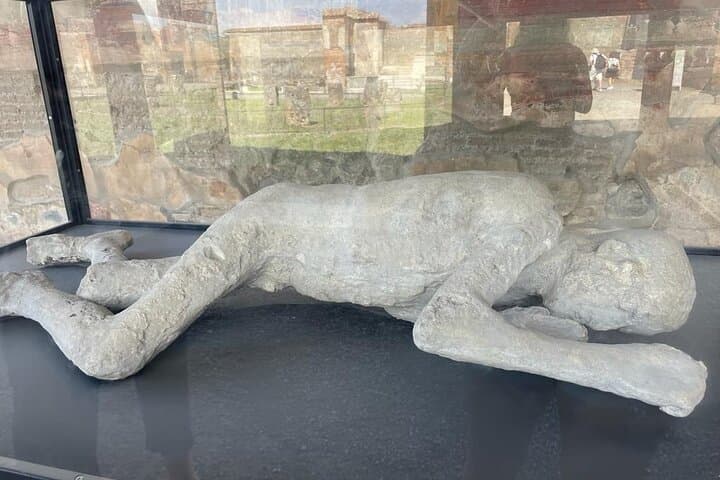
You step through a modern gate and the city of Pompeii opens like a street map frozen in motion: doorways paused mid-day, a horse trough weathered smooth, and plaster casts of lives interrupted. Your private guide leads with measured steps and scholarship, calling out graffiti that still gossips from an old wall and pointing to mosaic floors where oil lamps once burned.
You step through a modern gate and the city of Pompeii opens like a street map frozen in motion: doorways paused mid-day, a horse trough weathered smooth, and plaster casts of lives interrupted. Your private guide leads with measured steps and scholarship, calling out graffiti that still gossips from an old wall and pointing to mosaic floors where oil lamps once burned.
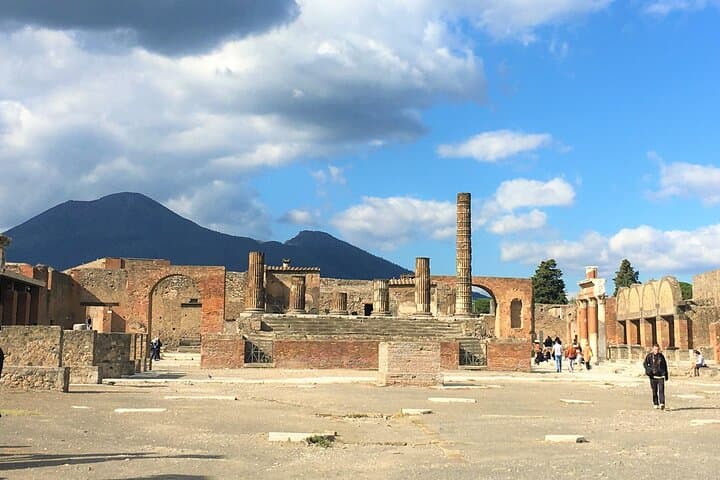
Built as a Roman town and buried in the eruption of 79 AD, Pompeii sits on volcanic ground that tells two stories: daily Roman life and the sudden force of Mount Vesuvius. Stone, ash and pyroclastic flows preserved temples, bakeries, public baths and the Forum; the grid of streets reveals commerce, class lines and civic ritual as clearly as any text.
Local culture after the eruption has been shaped by archaeology and preservation debates—excavations began in the 18th century and continue to inform modern Naples and Campania communities. Expect an interplay of geology and history: pumice and lapilli underfoot, columns leaning from centuries of exposure, and ongoing conservation work around fragile frescoes.
Practical guidance: this private, two-hour walk covers uneven volcanic stone and open sun. Bring sturdy, closed-toe shoes and sun protection; carry water and a light layer for coastal gusts. The best time to visit is early morning to avoid heat and crowds; photographic stops are quick, so plan questions in advance with your guide. Respect taped-off areas and follow your guide’s path to get the fullest, safest view of Pompeii’s remarkable, still-telling streets.