THE ADVENTURE COLLECTIVE® · Independent discovery and booking for outdoor travel

Experience two private hours under Siwa’s extraordinary dark sky—tea, snacks and a telescope bring the Milky Way, planets and moon into focus. Ideal for beginners and visitors seeking a quiet, low-effort night beneath the desert stars.
Experience two private hours under Siwa’s extraordinary dark sky—tea, snacks and a telescope bring the Milky Way, planets and moon into focus. Ideal for beginners and visitors seeking a quiet, low-effort night beneath the desert stars.
You arrive as the last colors bleed from the rim of the Western Desert and the oasis falls silent. Sand and salt flats darken to ink, and the first stars push through; the guide sets up a telescope while tea steams in paper cups. For two hours you alternate between naked-eye sweeps of the Milky Way and close, crisp views of lunar craters and planets through the eyepiece, the desert around you holding its breath as meteors streak occasionally.
Verified experiences and guided adventures in the surrounding area.
Operated by Windows of Siwa · Siwa, Matrouh Governorate
You arrive as the last colors bleed from the rim of the Western Desert and the oasis falls silent. Sand and salt flats darken to ink, and the first stars push through; the guide sets up a telescope while tea steams in paper cups. For two hours you alternate between naked-eye sweeps of the Milky Way and close, crisp views of lunar craters and planets through the eyepiece, the desert around you holding its breath as meteors streak occasionally.
Siwa sits at the edge of the Great Sand Sea and the Qattara Depression, a place shaped by limestone, salt pans and underground springs. Historically remote, Siwa hosted the Oracle of Amun in antiquity and retains a distinct Siwi culture—language, crafts and date groves that contrast the surrounding dunes. Nights here are a product of that isolation: almost no light pollution, a sky as clean as the desert air.
Practically, this is an easy, low-impact outing best scheduled on a moonless night for maximum star visibility. Expect a temperature drop after sunset—layers are essential—and limited nearby facilities, so use the provided bottled water and snacks. The telescope brings planets and the moon into sharp relief, but allow time for your eyes to adjust to true darkness before judging the view. Private groups mean flexible pacing and questions welcome: guides usually narrate star lore, point out constellations and help with astrophotography tips. Respect local customs, leave no trace, and plan transport in advance—Siwa’s remote charm is also what preserves its deep, wide sky.
easy.
2 hours.
Minimal fitness required; suitable for almost all ages and mobility levels
Expect close views of the Moon’s craters, bright planets (when visible), star clusters and occasional deep-sky objects depending on conditions and guide equipment.
Yes—this is family-friendly. Guides provide simple explanations; parents should bring warm clothing for kids and supervise near equipment.
Pickup options vary—confirm pickup location when booking; Siwa is remote so plan transport in advance and allow extra travel time.
Cloud cover reduces visibility and may limit what you can see; check cancellation and refund policy when booking and ask the operator about alternate dates.
Siwa’s isolation preserved the Oracle of Amun and a distinct Siwi culture; the oasis has long been a pilgrimage and trading stop in the Western Desert.
Low light pollution makes Siwa excellent for astronomy—minimize impact by packing out waste, using red lights and avoiding flash photography near fragile saline flats.
Windows of Siwa operates guided outdoor trips and adventures with an emphasis on safety, stewardship, and memorable experiences.
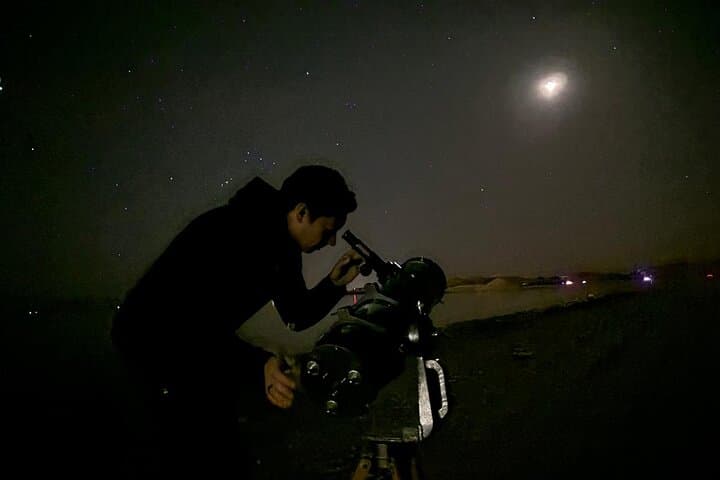
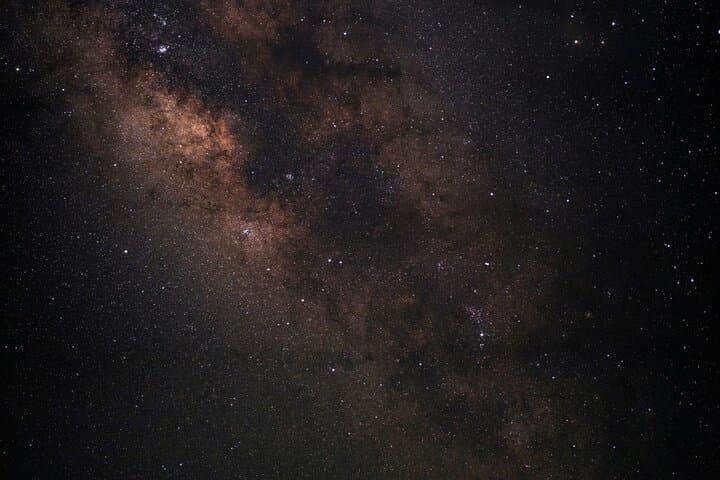
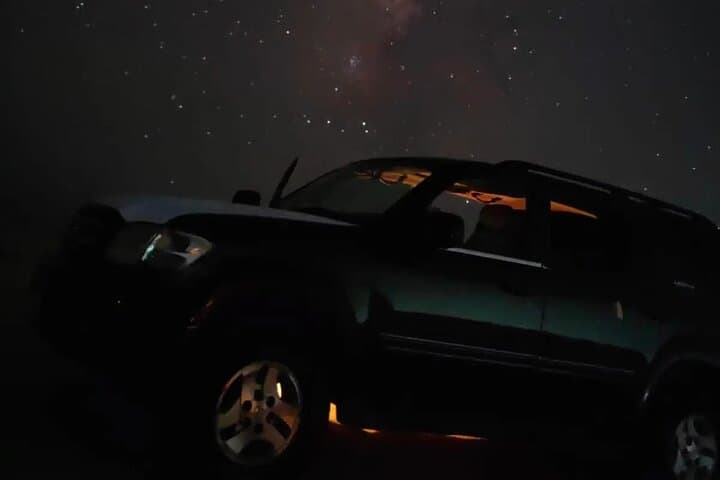
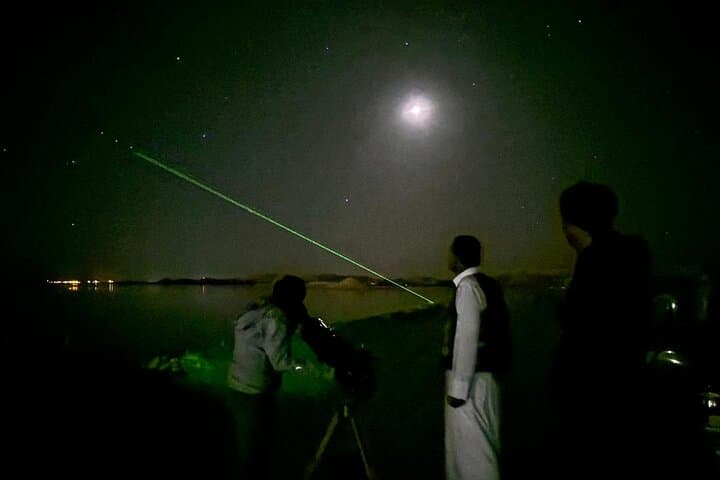
You arrive as the last colors bleed from the rim of the Western Desert and the oasis falls silent. Sand and salt flats darken to ink, and the first stars push through; the guide sets up a telescope while tea steams in paper cups. For two hours you alternate between naked-eye sweeps of the Milky Way and close, crisp views of lunar craters and planets through the eyepiece, the desert around you holding its breath as meteors streak occasionally.
You arrive as the last colors bleed from the rim of the Western Desert and the oasis falls silent. Sand and salt flats darken to ink, and the first stars push through; the guide sets up a telescope while tea steams in paper cups. For two hours you alternate between naked-eye sweeps of the Milky Way and close, crisp views of lunar craters and planets through the eyepiece, the desert around you holding its breath as meteors streak occasionally.
Siwa sits at the edge of the Great Sand Sea and the Qattara Depression, a place shaped by limestone, salt pans and underground springs. Historically remote, Siwa hosted the Oracle of Amun in antiquity and retains a distinct Siwi culture—language, crafts and date groves that contrast the surrounding dunes. Nights here are a product of that isolation: almost no light pollution, a sky as clean as the desert air.
Practically, this is an easy, low-impact outing best scheduled on a moonless night for maximum star visibility. Expect a temperature drop after sunset—layers are essential—and limited nearby facilities, so use the provided bottled water and snacks. The telescope brings planets and the moon into sharp relief, but allow time for your eyes to adjust to true darkness before judging the view. Private groups mean flexible pacing and questions welcome: guides usually narrate star lore, point out constellations and help with astrophotography tips. Respect local customs, leave no trace, and plan transport in advance—Siwa’s remote charm is also what preserves its deep, wide sky.