THE ADVENTURE COLLECTIVE® · Independent discovery and booking for outdoor travel

A compact 3–4 day private trek from Pokhara to Dhampus and Australian Camp that delivers sunrise views of the Annapurna massif with short daily walks and tea-house stays. Ideal for travelers who want Himalayan panoramas without a long expedition.
A compact 3–4 day private trek from Pokhara to Dhampus and Australian Camp that delivers sunrise views of the Annapurna massif with short daily walks and tea-house stays. Ideal for travelers who want Himalayan panoramas without a long expedition.
A clear pre-dawn chill rides the valley as you drive out of Pokhara toward Phedi, the city lights shrinking behind you. The path climbs quickly—first through terraced fields, then into rhododendron and oak forest—until Dhampus opens like a stage: a small village, a scattering of tea houses and a razor-edge view of snow peaks. The sun tests the range first, turning Annapurna South and Machapuchare a hard, cold gold.
Verified experiences and guided adventures in the surrounding area.
Operated by Nepal Tour Guide Team Trek & Expedition P. Ltd. · Pokhara, Gandaki Province
A clear pre-dawn chill rides the valley as you drive out of Pokhara toward Phedi, the city lights shrinking behind you. The path climbs quickly—first through terraced fields, then into rhododendron and oak forest—until Dhampus opens like a stage: a small village, a scattering of tea houses and a razor-edge view of snow peaks. The sun tests the range first, turning Annapurna South and Machapuchare a hard, cold gold.
Geologically the Annapurna massif is young and steep, carved by uplift and glacial action into narrow ridges and deep valleys; the trail reflects that—stone steps, short steep pitches and wide pasture benches. Culturally the route threads through Gurung, Magar and Brahmin settlements; you’ll pass simple shrines, stacked mani stones and terraces where millet and potatoes still grow by hand. Australian Camp, a popular viewpoint above Dhampus, earned its name from a 1970s trekking-era guesthouse patronage and now offers a panoramic counterpoint to the village light.
Practical guidance: this is a short, multi-day trek with daily walking of 2–4 hours—expect uneven stone steps and occasional muddy slopes after rain. Start early to catch sunrise; bring layered insulation and a windproof shell—temperatures shift fast above 1,500 m. Carry at least 1.5–2 liters of water, cash for tea-house snacks and small tips, and a headlamp for pre-dawn departures. Respect local custom by asking before photographing people and pack out non-biodegradable trash. For travelers short on time, the route gives high alpine exposure and Himalayan views with modest exertion—a compact slice of Annapurna that rewards simple preparation.
moderate.
4 days (daily walks 2–4 hours).
Suitable for hikers in basic aerobic shape who can handle uphill walking for a few hours and stair-like terrain.
Daily trekking is short—typically 2–4 hours on walking days, with long transfers by vehicle between Pokhara and trailheads.
No technical experience is required, but you should be comfortable walking uphill on uneven terrain for several hours.
Most tea houses supply blankets and hot water; bring a light sleeping liner for hygiene and extra warmth in winter.
Late September to November offers the most reliable visibility; spring (March–May) is also excellent with flowering rhododendrons.
The Annapurna region hosts Gurung and Magar communities with centuries of terrace farming and trans-Himalayan trade links; many village customs remain part of daily life.
Stick to marked trails, avoid single-use plastics, and support local tea houses—sustainable trekking keeps village economies viable and reduces waste and erosion.
Nepal Tour Guide Team Trek & Expedition P. Ltd. operates guided outdoor trips and adventures with an emphasis on safety, stewardship, and memorable experiences.
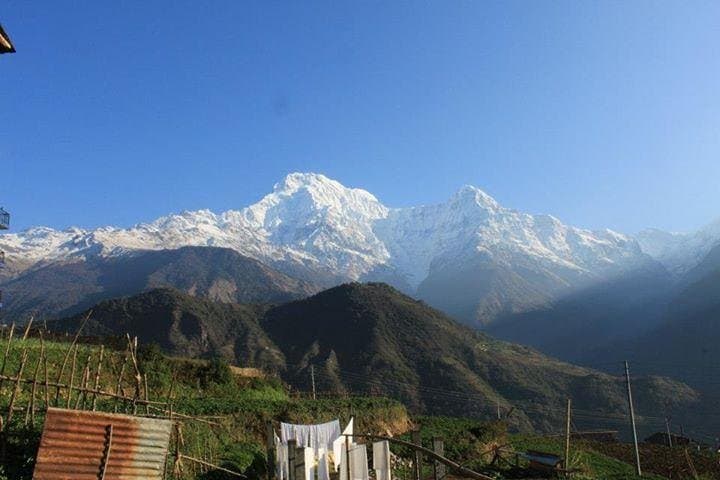
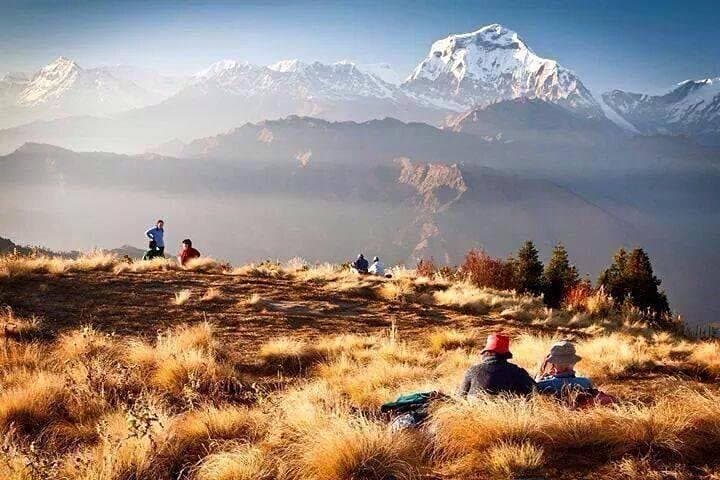
A clear pre-dawn chill rides the valley as you drive out of Pokhara toward Phedi, the city lights shrinking behind you. The path climbs quickly—first through terraced fields, then into rhododendron and oak forest—until Dhampus opens like a stage: a small village, a scattering of tea houses and a razor-edge view of snow peaks. The sun tests the range first, turning Annapurna South and Machapuchare a hard, cold gold.
A clear pre-dawn chill rides the valley as you drive out of Pokhara toward Phedi, the city lights shrinking behind you. The path climbs quickly—first through terraced fields, then into rhododendron and oak forest—until Dhampus opens like a stage: a small village, a scattering of tea houses and a razor-edge view of snow peaks. The sun tests the range first, turning Annapurna South and Machapuchare a hard, cold gold.
Geologically the Annapurna massif is young and steep, carved by uplift and glacial action into narrow ridges and deep valleys; the trail reflects that—stone steps, short steep pitches and wide pasture benches. Culturally the route threads through Gurung, Magar and Brahmin settlements; you’ll pass simple shrines, stacked mani stones and terraces where millet and potatoes still grow by hand. Australian Camp, a popular viewpoint above Dhampus, earned its name from a 1970s trekking-era guesthouse patronage and now offers a panoramic counterpoint to the village light.
Practical guidance: this is a short, multi-day trek with daily walking of 2–4 hours—expect uneven stone steps and occasional muddy slopes after rain. Start early to catch sunrise; bring layered insulation and a windproof shell—temperatures shift fast above 1,500 m. Carry at least 1.5–2 liters of water, cash for tea-house snacks and small tips, and a headlamp for pre-dawn departures. Respect local custom by asking before photographing people and pack out non-biodegradable trash. For travelers short on time, the route gives high alpine exposure and Himalayan views with modest exertion—a compact slice of Annapurna that rewards simple preparation.