THE ADVENTURE COLLECTIVE® · Independent discovery and booking for outdoor travel

A private 5‑hour shore excursion from Shimizu Port takes you to a reflective mountain lake, the veil-like Shiraito Falls, and Fujisan Hongu Sengen Taisha—perfect for cruise visitors wanting compact access to Mt. Fuji’s natural and cultural highlights.
A private 5‑hour shore excursion from Shimizu Port takes you to a reflective mountain lake, the veil-like Shiraito Falls, and Fujisan Hongu Sengen Taisha—perfect for cruise visitors wanting compact access to Mt. Fuji’s natural and cultural highlights.
You step off the ship into Shimizu’s harbor air—salt and pine—and Mt. Fuji looms, weather permitting, as a calm presence across the bay. A private, air-conditioned vehicle ferries you inland: first to a still mountain lake that often mirrors the peak, then under cathedral-like forest canopies to spray-cooled cliffs, and finally to a shrine whose torii frames Fuji itself.
Verified experiences and guided adventures in the surrounding area.
Operated by taxiGo DMC · Shimizu (Shizuoka), Shizuoka Prefecture
You step off the ship into Shimizu’s harbor air—salt and pine—and Mt. Fuji looms, weather permitting, as a calm presence across the bay. A private, air-conditioned vehicle ferries you inland: first to a still mountain lake that often mirrors the peak, then under cathedral-like forest canopies to spray-cooled cliffs, and finally to a shrine whose torii frames Fuji itself.
This five-hour route threads geology and culture. Mt. Fuji’s cone is a young volcanic landmark shaped by repeated eruptions; the springs feeding Shiraito Falls arise from porous lava layers that filter meltwater into delicate, thread-like curtains. Fujisan Hongu Sengen Taisha sits at the foot of the mountain, historically central to Fuji worship and pilgrimage—its rituals grew from the region’s reliance on the mountain as both a provider and threat.
Expect easy walking at each stop, brief interpretive talks from an English-speaking guide, and well-paced transfers so photographers and those with mobility concerns can move comfortably. Visibility of the summit is fickle—clear mornings and colder seasons give the best chance—but even when Fuji hides, lakes, falls, and shrine architecture offer rich rewards.
Practical notes: the tour is wheelchair-accessible for most segments, though approach paths at Shiraito are steeper and uneven. Bring layered clothing for coastal-to-mountain microclimates, a compact rain shell, and a camera with a polarizer for reflective shots. Departure and return are timed to cruise schedules, so plan for tight but manageable windows to enjoy each site.
easy.
5 hours.
Suitable for most fitness levels; light walking and short steps required at viewpoints.
Not guaranteed; visibility depends on weather and season—clear mornings and winter offer the highest likelihood.
Yes for most of the itinerary—vehicles are accessible and shrine grounds are reachable, but the approach to Shiraito Falls includes uneven steps and limited close-up access.
This private shore tour covers transportation and guiding; standard public access to sites like the lake and falls typically has no entrance fee, but ask the operator about any optional paid sites.
Pickup and drop-off occur at your cruise ship terminal in Shimizu Port; confirm exact meeting pier and embarkation time when booking.
Fujisan Hongu Sengen Taisha is an ancient Shinto center dedicated to the mountain deity; the shrine played a key role in Fuji pilgrimage and volcanic appeasement practices.
Sites around Mt. Fuji are managed to protect fragile spring-fed ecosystems and sacred grounds—stay on marked paths, avoid disturbing vegetation, and pack out waste.
taxiGo DMC operates guided outdoor trips and adventures with an emphasis on safety, stewardship, and memorable experiences.


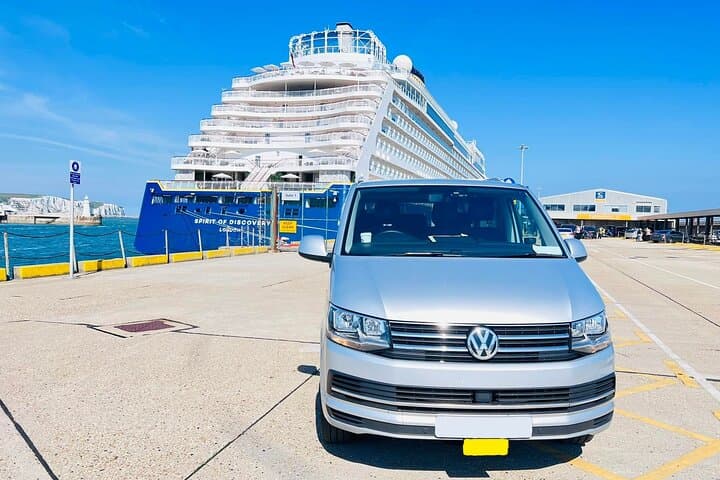
You step off the ship into Shimizu’s harbor air—salt and pine—and Mt. Fuji looms, weather permitting, as a calm presence across the bay. A private, air-conditioned vehicle ferries you inland: first to a still mountain lake that often mirrors the peak, then under cathedral-like forest canopies to spray-cooled cliffs, and finally to a shrine whose torii frames Fuji itself.
You step off the ship into Shimizu’s harbor air—salt and pine—and Mt. Fuji looms, weather permitting, as a calm presence across the bay. A private, air-conditioned vehicle ferries you inland: first to a still mountain lake that often mirrors the peak, then under cathedral-like forest canopies to spray-cooled cliffs, and finally to a shrine whose torii frames Fuji itself.
This five-hour route threads geology and culture. Mt. Fuji’s cone is a young volcanic landmark shaped by repeated eruptions; the springs feeding Shiraito Falls arise from porous lava layers that filter meltwater into delicate, thread-like curtains. Fujisan Hongu Sengen Taisha sits at the foot of the mountain, historically central to Fuji worship and pilgrimage—its rituals grew from the region’s reliance on the mountain as both a provider and threat.
Expect easy walking at each stop, brief interpretive talks from an English-speaking guide, and well-paced transfers so photographers and those with mobility concerns can move comfortably. Visibility of the summit is fickle—clear mornings and colder seasons give the best chance—but even when Fuji hides, lakes, falls, and shrine architecture offer rich rewards.
Practical notes: the tour is wheelchair-accessible for most segments, though approach paths at Shiraito are steeper and uneven. Bring layered clothing for coastal-to-mountain microclimates, a compact rain shell, and a camera with a polarizer for reflective shots. Departure and return are timed to cruise schedules, so plan for tight but manageable windows to enjoy each site.