THE ADVENTURE COLLECTIVE® · Independent discovery and booking for outdoor travel

A full‑day private tour from Siem Reap that pairs the rarely visited Pre‑Angkorian temples of Sambor Prei Kuk with the 12th‑century Spean Praptos bridge. Expect a long day in subtropical forest, detailed guided interpretation, and uneven archaeological terrain.
A full‑day private tour from Siem Reap that pairs the rarely visited Pre‑Angkorian temples of Sambor Prei Kuk with the 12th‑century Spean Praptos bridge. Expect a long day in subtropical forest, detailed guided interpretation, and uneven archaeological terrain.
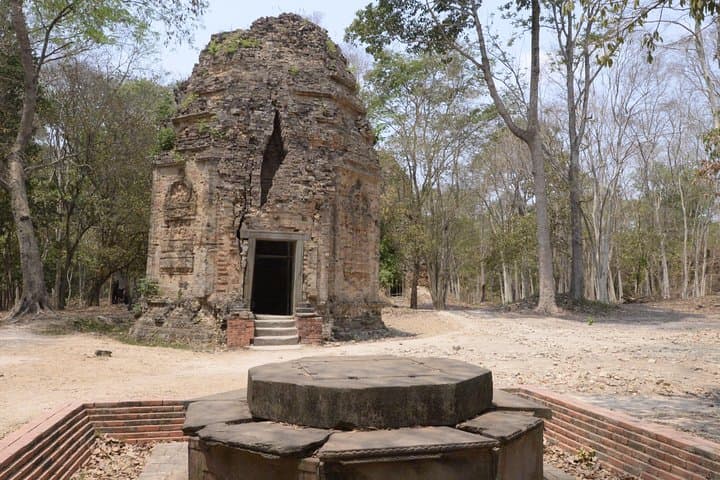
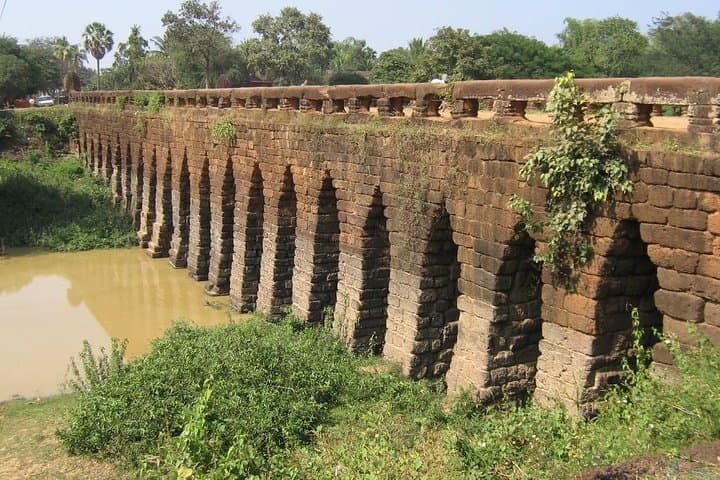
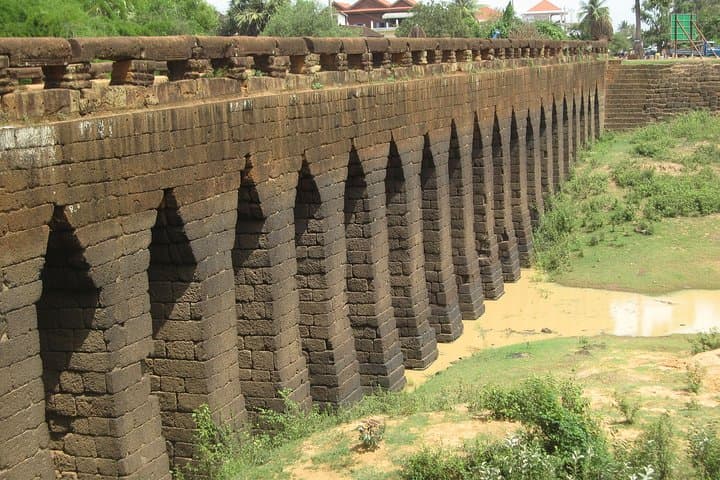
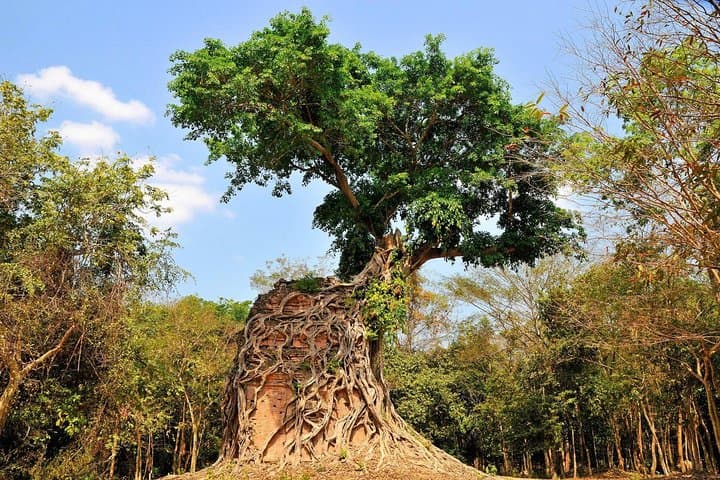
The morning air along Route 6 is humid and bright as the van slips away from Siem Reap; palms and scrub give way to low forest and the hint of ancient brick hidden among trees. By midmorning the stone ribs of Spean Praptos appear above the river, a narrow string of corbelled arches that once carried imperial traffic. Later, at Sambor Prei Kuk, you cross into a landscape where brick prasats—octagonal towers and lion carvings—rise like memory out of the subtropical wood, ponds reflecting cracked sandstone and the slow movement of cloud.
Verified experiences and guided adventures in the surrounding area.
Operated by Asia Voyage Tour · Kampong Thom, Kampong Thom Province
The morning air along Route 6 is humid and bright as the van slips away from Siem Reap; palms and scrub give way to low forest and the hint of ancient brick hidden among trees. By midmorning the stone ribs of Spean Praptos appear above the river, a narrow string of corbelled arches that once carried imperial traffic. Later, at Sambor Prei Kuk, you cross into a landscape where brick prasats—octagonal towers and lion carvings—rise like memory out of the subtropical wood, ponds reflecting cracked sandstone and the slow movement of cloud.
These sites bracket a long arc of Khmer history. Sambor Prei Kuk was Isanapura, the 7th‑century capital of the Chenla kingdom; its simple, pre‑Angkorian brick architecture predates later Angkorian ornate sandstone. Spean Praptos, built in the 12th century under Jayavarman VII, shows Khmer hydraulic and bridging skill with more than twenty narrow arches spanning roughly 87 meters.
Expect dirt tracks, uneven bricks and shaded clearings where guide and group pause. Local villages offer simple food and roadside markets en route; guides often explain inscriptions, lingams and the practical geometry of corbel arches.
Practical guidance: start early to avoid midday heat, carry cash for modest entrance fees and market purchases, and wear covered knees and shoulders out of respect for sacred ground. Sturdy walking shoes are essential—there are loose bricks and roots—and insect repellent is useful in shaded pools. The day is long (about 10–12 hours with drives), but the rhythm of river, bridge and ruined sanctuary keeps the day moving: the sites ask for curiosity and a steady pace rather than speed.
easy.
10–12 hours.
Suitable for travelers with basic mobility; expect a long day of short walks on uneven ground
Entrance to Sambor Prei Kuk is typically not included; bring local currency for site fees and small purchases.
Expect roughly 2–2.5 hours to Spean Praptos and another 2.5 hours to Sambor Prei Kuk; total round trip makes for a long day (about 10–12 hours including stops).
The tour involves uneven, often loose brick surfaces and steps; it’s not advised for wheelchair users or anyone with significant walking difficulties.
Photography is allowed, but climbing on monuments is prohibited to protect fragile structures and out of respect for cultural sites.
Sambor Prei Kuk served as the Chenla capital (7th century) and features early Khmer brick architecture; Spean Praptos is a surviving 12th‑century corbelled stone bridge from Jayavarman VII’s era.
Sambor Prei Kuk is a UNESCO World Heritage site with active preservation efforts; visitors should stay on paths, avoid touching masonry, and support local guides who help manage visitor impact.
Asia Voyage Tour operates guided outdoor trips and adventures with an emphasis on safety, stewardship, and memorable experiences.
The morning air along Route 6 is humid and bright as the van slips away from Siem Reap; palms and scrub give way to low forest and the hint of ancient brick hidden among trees. By midmorning the stone ribs of Spean Praptos appear above the river, a narrow string of corbelled arches that once carried imperial traffic. Later, at Sambor Prei Kuk, you cross into a landscape where brick prasats—octagonal towers and lion carvings—rise like memory out of the subtropical wood, ponds reflecting cracked sandstone and the slow movement of cloud.
The morning air along Route 6 is humid and bright as the van slips away from Siem Reap; palms and scrub give way to low forest and the hint of ancient brick hidden among trees. By midmorning the stone ribs of Spean Praptos appear above the river, a narrow string of corbelled arches that once carried imperial traffic. Later, at Sambor Prei Kuk, you cross into a landscape where brick prasats—octagonal towers and lion carvings—rise like memory out of the subtropical wood, ponds reflecting cracked sandstone and the slow movement of cloud.
These sites bracket a long arc of Khmer history. Sambor Prei Kuk was Isanapura, the 7th‑century capital of the Chenla kingdom; its simple, pre‑Angkorian brick architecture predates later Angkorian ornate sandstone. Spean Praptos, built in the 12th century under Jayavarman VII, shows Khmer hydraulic and bridging skill with more than twenty narrow arches spanning roughly 87 meters.
Expect dirt tracks, uneven bricks and shaded clearings where guide and group pause. Local villages offer simple food and roadside markets en route; guides often explain inscriptions, lingams and the practical geometry of corbel arches.
Practical guidance: start early to avoid midday heat, carry cash for modest entrance fees and market purchases, and wear covered knees and shoulders out of respect for sacred ground. Sturdy walking shoes are essential—there are loose bricks and roots—and insect repellent is useful in shaded pools. The day is long (about 10–12 hours with drives), but the rhythm of river, bridge and ruined sanctuary keeps the day moving: the sites ask for curiosity and a steady pace rather than speed.